Real estate reconstructed

Essay: Roadmap to Recovery

Inman News®

Editor's note: This guest essay is a part of the Roadmap to Recovery editorial project, which focuses on the future of the real estate industry. Essays should be 400 words or less and should detail your views on how to reinvent the industry and revive the housing market. Authors of essays published in full will get a free pass to the upcoming Real Estate Connect conference (for new registrants only), and the author of the top essay will receive $500. Send your essays to future@inman.com.

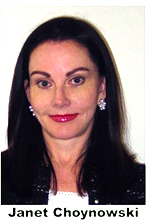
By JANET CHOYNOWSKI

I know what it's like to work in a real estate industry that has been decimated. And is starting over.

I started my first real estate business in Poland. The year was 1991.

At that time, there had been no real estate industry for decades. The success of my new business was due in part to freedom from assumptions. There were no rules, little history, and we simply had to find things that would work.

The "new market" brought a new sort of client -- foreign investors. I hired translators to help with the foreign clients who soon poured into Poland, while some other local agents complained about the lack of business, about the lack of liquidity, about the strange foreign clients who called them but could not speak Polish. Within a year, the company had 45 successful agents and an impressive list of foreign clients. It was an extraordinary time.

This experience lends perspective to my view of our current challenges and the market that will emerge from them. Miami or Orange County in 2008 is not early-'90s Warsaw, but the market of today does afford tenacious and open-minded entrepreneurs similar opportunities.

Here's what I see as I look forward:

First of all, the industry that will emerge from the current slump will be one that transcends our traditional market, multiple listing service, and neighborhood or "farm" boundaries. The need to dig deeper and work harder in this market will drive many agents and brokers to cast their net wider -- to create a global network. In 2007, the National Association of Realtors reported that nearly one third of agents did a deal with an overseas client. That number will increase as the industry adapts to an increasingly international marketplace.

Second, listings will lose their centrality in the working life of Realtors. By that, I mean that finding and evaluating listings will become far less important as consumers get access to listings in more places in more ways. This trend has been evident for some time but will accelerate as technology progresses and the market shrinks.

Brokers or agents who bring only listings to the table -- and for whom expertise means "chauffeur" or "key bearer" -- won't be part of our post-recovery industry.

The industry to emerge from this period will consist of true counselors -- deeply knowledgeable and studied professionals who can provide the kind of nuanced guidance a Web site can never offer. The sort of professionals who can give buyers an offer strategy; who can produce sophisticated analyses, not just a few comps; and who can develop a marketing plan for a listing that is more than a template checklist.

These people exist right now. They've navigated an obstacle course of lesser practitioners for the past 10 years. The future is theirs.

The real estate industry I see coming will reward those who discard "the way things have been done," invest in sharpening their skills, and anticipate the needs of the marketplace that emerges.

When the cold of this market thaws, be ready.

Janet Choynowski is CEO of Immobel, a global listings syndication and translation company.

***

What's your opinion? Leave your comments below or send a letter to the editor.

Share with REmessenger

You must login or register to post a comment.

 
Submitted by Bill Fooks on December 8, 2008 - 4:41am.

Bill FooksTFT realty Marketing ServiceWarwick, RI  http://www.fooksteam.com  Good article. You will always experience change as the merkets move. Experience is the key. Learning from history is another key. Learning everything about your market is another. Learning all the new things to help people make a decision is another. Learning to build realtionships of trust based on knowledge and the wise use of this knowledge is another. A majority of these tools have been with us, but seldom used. I often wonder if they will be used in the future.You see one thing I have learned from history, is, "People don't learn from history"

 
Submitted by Catherine Read on December 8, 2008 - 4:52am.

Well said Janet! Tools have come and gone over the centuries, and what carries the day is the continuous development of knowledge, skills and imagination. I say imagination because there are those who are able to transcend "the way it's always been done" to envision and craft a new way of doing business. Technology is a powerful tool, but it's still just a tool, and it's constantly changing and evolving at amazing speed. Professionals in every industry must adapt to the changing expectations of those with whom they do business. All eyes should be focused on the consumer in anticipating and meeting their needs. I agree with you that the real estate industry is going to look very different when we come out of this on the other side.

Catherine S. Read
Creative Read, Inc.

 
Submitted by Margaret Summers on December 8, 2008 - 5:01am.

I like your words "sophisticated analysis"....the only problem is that I have found that consumers do not want to hear the truth and I have found this to be true no matter what market we are in. Emotion plays a huge role in the purchase of just about everything, but even more so with real estate. And when someone wants to sell or buy, an analysis is only a guideline and will not take the place of "selling" which is what we really are doing. We are salespeople with realtor titles and designations. I'm not sure how even technology is going to replace our innate abilities of dealing with people and putting deals together. Post-recovery in this market has more to do with consumers regaining confidence, but it doesn't mean that we will be operating without carrying listings or taking buyers around. Yes, deals are harder to put together and stay together right now...but, that is just because it is a differennt economic climate, not because people want more analysis. Maybe the new real estate company will be less "brick and mortars", but the new Realtor will still be carrying out the old activities of past - with technolody in hand, of course.

 
Submitted by REALonomics .net on December 8, 2008 - 6:54am.

Janet's essay incorporates many issues that are central to any sort of "recovery" we might envision.

The transition of the industry toward a more mature and "sophisticated" relationship with clients is something more profound than we might first realize.

During the decade long market run-up from 1996 through 2006, the industry was still an old line retail model with a view that a closed transaction was the desired end.

We have just now started to realize that our ability to truly analyze the financial aspects of transactions on behalf of our clients and to advise them of the inherent pluses and minuses of their investment was something we didn't do very well.

Janet's comments about the demise of the value of listings and the elevation of our skill levels is RIGHT ON TRACK with what it will take to transform our industry.

Truth be known, we are not highly trained with respect to analysis of the financial dimensions of a transaction...but we should be. And, finally, there are some contracts we should not write, ever again because their performance will harm our clients.

Nice work on this one, Janet!

Donald Teel - Founder
President & CEO
www.ePartnerUSA.com
www.REALonomics.net

 
Submitted by Robert A. Hulme on December 8, 2008 - 7:40am.

Tomorrow's Realtor will certainly need to continually evaluate how they conduct their real estate business. I know I have expanded mine to concentrating on providing most my resources to helping buyers in the marketplace. More qualifed and educated buyers will drive our business in the future. This is a complete reversal from where I have been the last four years, that of working mostly with sellers. The change has given me a whole new perspective of the real estate business, I really enjoy where it has taken me.

Robert A. Hulme
Realtor, GRI, e-PRO
Prudential Utah Real Estate
www.UtahCountyRealEstate.us
www.LoansByRobert.net
801-885-2586

 
Submitted by Janet Choynowski on December 8, 2008 - 7:46am.

Technology will not and certainly should not replace the real estate professional. That would be a sad situation for all, but especially for consumers who want advice and guidance on what is often the largest single financial transaction of their lifetime.
However, Realtors will need to carve out new roles for themselves, more centered on providing that advice and guidance.
And yes, these decisions will likely be emotional ones. But people buy homes to live in, even when market conditions caution them to wait.
In this situation, credible advice on how to minimize the risk and maybe more importantly now, maximize that investment, will be the stock in trade of the successful professional.