
Four months into my real estate career, something happened that surprised everyone around me — including me. I made more money in those first four months than I had made the entire previous year working in my corporate job.
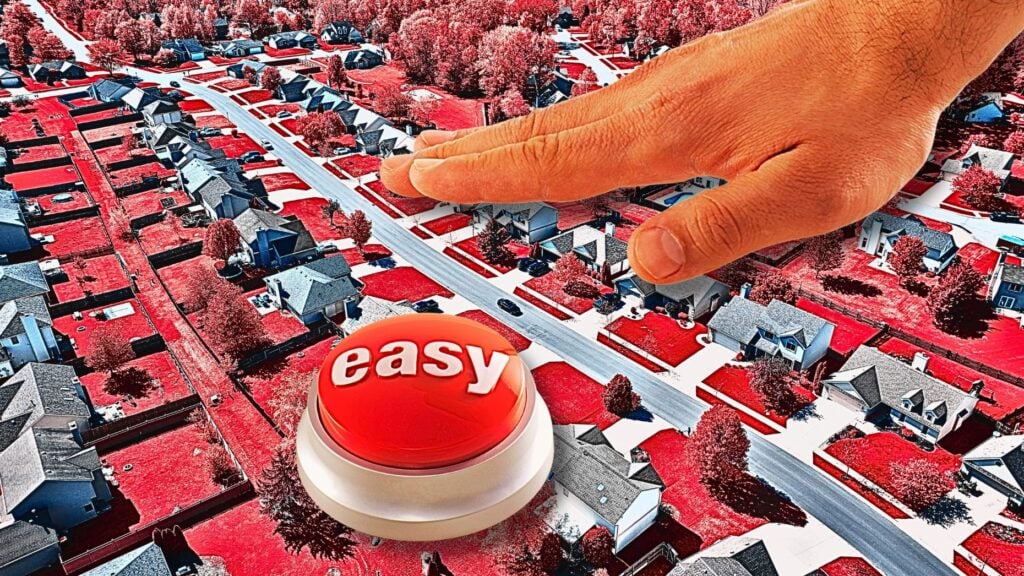
To some people, that might sound like proof that real estate is easy. That it’s a quick path to big commissions and flexible hours. That the dream sold on television and social media might actually be true.
But what people didn’t see were the months leading up to it.
When I first got into the business, I quickly realized something important: There were many things happening inside my brokerage that people simply didn’t want to do.
- They didn’t want to spend time studying contracts.
- They didn’t want to role-play objections.
- They didn’t want to host open houses multiple days a week.
- They didn’t want to practice scripts or learn the legal language of the transaction.
So I did.
I learned our contracts paragraph by paragraph and word by word. I wanted to understand exactly what I was asking clients to sign. I role-played scenarios so I would know how to handle difficult conversations and objections. And I held open houses — not just occasionally, but multiple days a week, sometimes several in the same week.
While other agents waited for opportunity, I was trying to create it
That work paid off faster than I expected. Within those first four months, not only had I surpassed my previous corporate salary, but I also landed a builder client that my broker had previously represented for several years.
It didn’t happen because of luck. And it certainly didn’t happen because of an easy button. It happened because I was willing to do the work others avoided.
Somewhere along the way, real estate developed a reputation as a business where success happens quickly and easily. Television shows like Million Dollar Listing and Selling Sunset have amplified the illusion, showcasing luxury homes, glamorous listings and commission checks that seem to appear overnight.
The reality for most professionals in this industry looks very different.
Behind every closing is a long list of activities that rarely make it onto television screens: prospecting, follow-ups, pricing strategy, negotiation, marketing, inspection issues, financing delays, emotional clients and endless problem-solving. It’s a profession built on consistency, persistence and the willingness to show up every day and do the work that moves the business forward.
Today’s ‘easy button’? AI
Yet today, the new version of the “easy button” conversation has shifted to technology — specifically, artificial intelligence.
There’s no doubt AI is transforming the way agents run their businesses. From marketing automation to content creation to lead follow-up systems, AI can help eliminate repetitive tasks and free up time for higher-value work. Agents who embrace AI will absolutely outwork and outmarket those who ignore it.
But the idea that AI will somehow replace the role of the real estate professional misses the bigger picture.
We’ve seen this pattern before. When Y2K approached, the prediction was widespread technological failure. Banks would shut down, power grids would collapse, transportation systems would fail, and chaos would follow when computers couldn’t recognize the new year.
The clock struck midnight on Jan. 1, 2000 — and none of that happened. Technology advanced. Systems improved. Businesses adapted. But entire industries didn’t disappear overnight.
Here’s the true foundation of real estate
Real estate will follow a similar path. Technology will continue to improve efficiency, streamline processes and enhance marketing capabilities. But the core of this business will remain unchanged because the foundation of real estate has never been technology.
It’s relationships.
People don’t hire a real estate professional because of software. They hire someone they trust. Someone who answers the phone. Someone who can guide them through uncertainty and help them navigate one of the most significant financial decisions of their lives.
Algorithms can provide information. Technology can streamline communication. AI can help manage systems. But none of those tools replace human connection.
If there truly is a “secret sauce” in real estate, it’s surprisingly simple.
Work.
Legendary football coach Vince Lombardi once said, “The only place success comes before work is in the dictionary.” That statement holds just as true in real estate today as it did decades ago.
Successful professionals regularly ask themselves the questions that matter most:
- Am I putting in the work every day?
- Do I have systems in place that automate the repetitive tasks in my business so I can focus on relationships?
- Am I networking, prospecting and building connections consistently?
- Have I managed my online reputation?
- Do I respond quickly to calls, texts and emails — or am I the silent agent clients struggle to reach?
Technology can support those efforts, but it cannot replace them.
At its core, this industry still operates on a simple progression.
- Connections turn into conversations.
- Conversations turn into relationships.
- Relationships turn into transactions.
And the professionals who understand that — the ones willing to show up every day and put in the work — are the ones who build careers that last.
There may never be an easy button in real estate. But for those willing to do the work, there is something far more valuable: a business built on trust, relationships and the opportunity to help people navigate one of the most important decisions of their lives.
That kind of success isn’t created overnight. It’s earned.
Lori Muller is the president of Fathom Realty in Cary, North Carolina. Connect with her on Facebook or LinkedIn.