Hidden costs are holding real estate marketers back, and most don’t even realize it’s happening.
In an industry where margins matter and every dollar counts, real estate companies are losing thousands each month through fragmented marketing expenses that fly under the radar. The problem isn’t flashy advertising campaigns or expensive technology; it’s the accumulation of small, scattered costs that quietly add up to significant waste.
The costs you don’t see but definitely pay for
The Property Franchise Group (TPFG), the U.K.’s largest multi-brand real estate organization managing 1,900 locations globally, recently discovered that providing consistent in-house design coverage across its network of 700 offices would cost $22 million. This wasn’t a conscious budget line item, but the cumulative cost of individual design needs across their diverse portfolio. A lot of those design needs revolved around ensuring brand consistency.
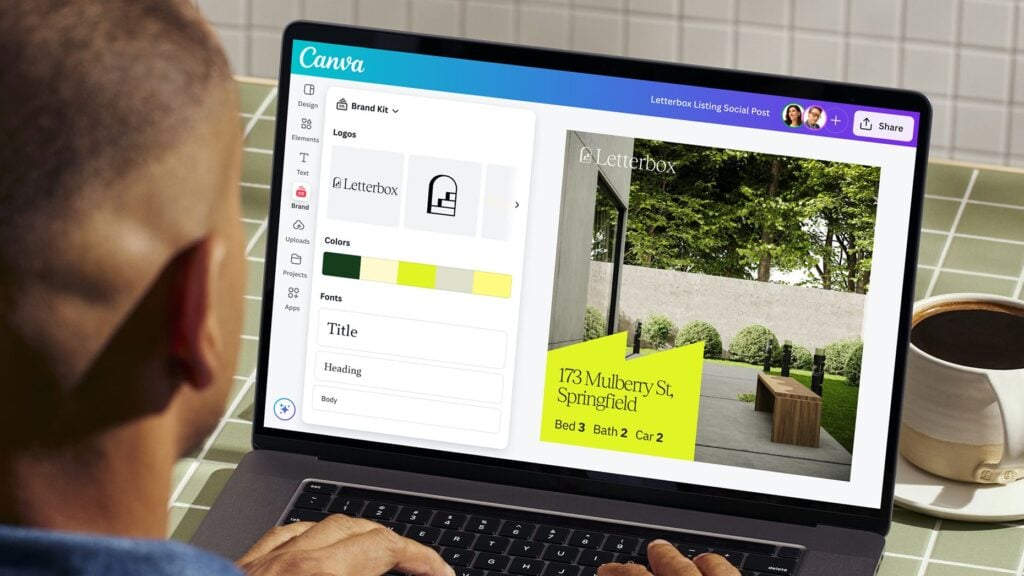
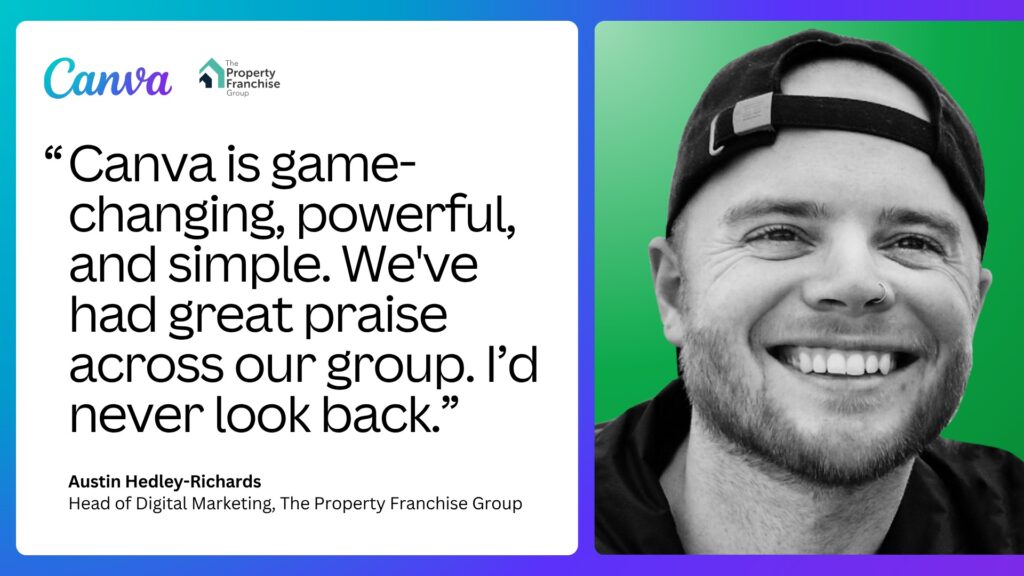
“Before Canva, one of the biggest pain points was brand control,” explains Austin Hedley-Richards, Head of Digital Marketing at The Property Franchise Group. “With such a diverse network of brands, we didn’t have the tools to ensure consistent branding at the highest standard. Canva transformed our ability to control the brand. Our entire brand identity — fonts, colors, imagery, icons, logos — everything sits within Brand Kits.”
This scenario plays out across the real estate industry daily. Companies focus on major marketing expenditures while overlooking micro-purchases that collectively drain budgets.
The quiet drain on your marketing budget
Most real estate marketing budgets suffer from “invisible spend” — costs so distributed and routine they become background noise. These typically include:
Redundant creative production: When teams lack access to existing assets, they often recreate materials, leading to wasted effort and duplicated costs.
Stock imagery and graphics: Small individual purchases across teams and departments can quickly add up.
Template and design tool subscriptions: Multiple software licenses across teams, leading to overlapping functionalities and underused features.
Ray White, one of Australia’s largest real estate groups, turned to Canva Enterprise to move away from scattered tools and empower franchisees to create, collaborate, share and publish all within a single platform.
Design outsourcing for simple tasks: Sending basic marketing updates to external designers for projects that could be managed in-house with appropriate tools and templates.
Tecnocasa, Europe’s largest real estate network, was relying heavily on external design support before they adopted Canva.
The real estate marketing audit
Smart real estate firms are auditing their marketing tools and expenses to identify hidden costs by mapping subscriptions and recurring expenses across teams and properties.
TPFG’s experience offers a roadmap. By adopting Canva Enterprise, they consolidated everything into a single platform. They eliminated the need for that potential $22 million investment, dramatically reduced turnaround times and enabled teams to produce professional materials in-house.
“Our design team creates templates once in Canva that instantly work for all 700 offices,” says Austin. “Without this system, we’d need to invest about $22 million to offer the same in-house design coverage across our network.”
Teams went from taking weeks to produce marketing assets to creating them in minutes. The Creative team was freed up to focus on strategic projects that drive business growth.
Turning waste into competitive advantage
For real estate companies serious about marketing budget optimization, the path forward is clear: Conduct a thorough audit of scattered marketing expenses, consolidate redundant tools and invest in powerful, all-in-one solutions that can scale alongside your team.
TPFG’s $22 million in avoided costs allowed for investment in strategic marketing initiatives that foster significant business growth.
Does your business have hidden marketing waste?
Chris Hadges leads Canva’s Real Estate and Mortgage vertical, helping top industry brands elevate their visual marketing. With over a decade of experience in big tech, he specializes in driving digital transformation for the world’s largest companies.