Federal Reserve Governor Lisa Cook can continue to serve on the central bank’s rate-setting policy committee until at least January, when the Supreme Court will hear oral arguments on the Trump administration’s bid to overturn lower court rulings that have thwarted the president’s attempts to fire her.
Cook is contesting the legality of President Trump’s Aug. 25 order removing her from her position. The order cited allegations that she claimed two homes as principal residences. Cook has denied wrongdoing and, like two other Democrats facing similar allegations, has not been charged with a crime.
U.S. District Court Judge Jia Cobb ruled on Sept. 9 that Cook can continue to serve on the Federal Reserve Board while appealing Trump’s August removal order, as it’s unclear whether the allegations against her meet “for cause” requirements for removing Fed governors — and that doing so would likely violate her right to due process.
An appeals court denied the Trump administration’s appeal of that decision in a Sept. 15 order that has allowed Cook to remain on the central bank’s board while she contests the legality of attempts to remove her.
In appealing to the Supreme Court for an emergency stay, the Trump administration maintained that unlike teachers or lower-level civil servants, “principal officers” are not entitled to a notice and hearing before removal.
Requiring the executive branch to jump through such hoops, “would wreak havoc on sensitive presidential decision-making,” Solicitor General John Sauer argued in a Sept. 18 filing.
The Supreme Court on Wednesday deferred its decision on the Trump administration’s appeal for a stay until it hears oral arguments early next year.
Cook’s attorneys argue that allowing Trump to remove her before she’s had her day in court would “eviscerate the independence of the Federal Reserve Board,” and “dramatically alter the status quo, ignore centuries of history, and transform the Federal Reserve into a body subservient to the President’s will.”
In a “friend of the court” brief, 18 economic policy experts including former Federal Reserve chairs Ben Bernanke, Alan Greenspan and Janet Yellen made the same argument — warning that “financial markets, the public, employers, and lenders” are watching the dispute “to judge how credible the Fed will be going forward.”
“Allowing the removal to go into effect immediately would raise serious questions about the Fed’s independence and erode the public’s perception of that independence,” the bipartisan group said — risking higher inflation and higher borrowing costs.
If bond market investors lose their appetite for government debt and mortgage-backed securities, that could push long-term interest rates higher, even if the Fed cuts short-term rates — as happened last year, when inflation flared up after the Fed cut rates by a full percentage point and mortgage rates went in the other direction.
“On the flip side, leaving Governor Cook as one of 12 voting members of the [Federal Open Market Committee] during the pendency of the case would maintain the status quo of independent policymaking, shore up the public’s perception of the Fed’s commitment to the long-term health of the economy, and allow Governor Cook’s challenge to her removal to play out at the ordinary pace of litigation,” the Sept. 25 amicus brief stated.
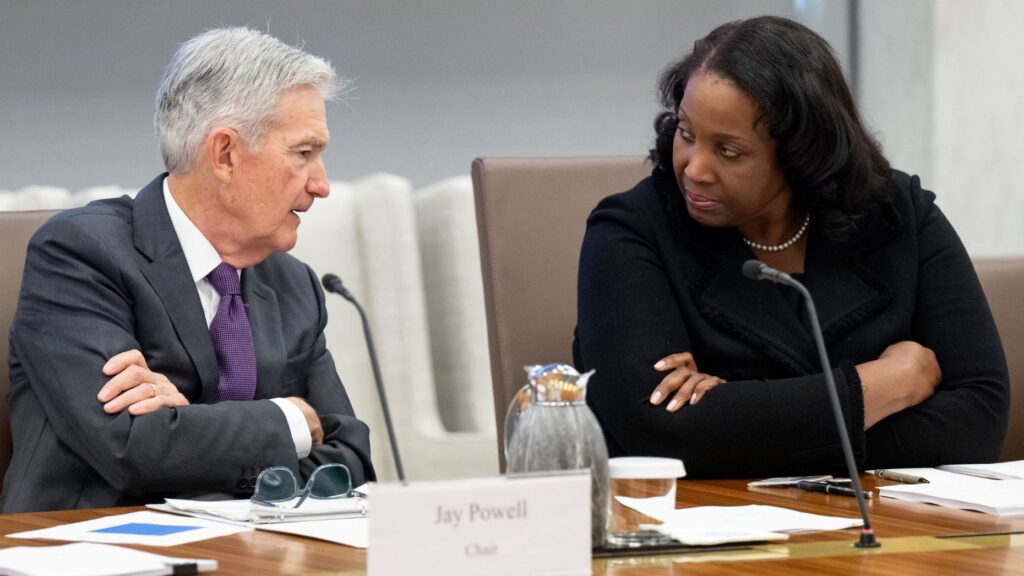
Federal Reserve Chair Jerome Powell has resisted pressure by Trump and his allies to lower interest rates or resign. Although his term as board chair expires in May 2026, he’s slated to remain on the Federal Reserve board until Jan. 31, 2028.
If Trump succeeds in ousting Cook, he will have appointed four of the seven members of the Fed’s Board of Governors. The Trump administration is weighing flexing that power to approve or reject appointments of regional bank presidents in February, Bloomberg News has reported.
Mortgage fraud allegations, but no charges
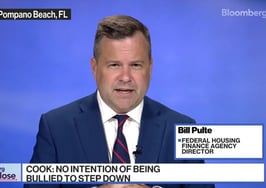
Cook is one of three Democrats who have been the subjects of criminal referrals alleging suspected mortgage fraud to the Department of Justice by Bill Pulte, the head of Fannie Mae and Freddie Mac’s federal regulator, the Federal Housing Finance Agency.
Like Cook, the targets of the other criminal referrals — New York Attorney General Letitia James and California Sen. Adam Schiff — deny wrongdoing and say they are victims of political retribution.
Although Cook, James and Schiff have yet to be charged, President Trump has publicly pressured Attorney General Pam Bondi to move forward with criminal cases against James, Schiff and former FBI Director James Comey.
“They’re all guilty as hell, but nothing is going to be done,” Trump complained in a Sept. 20 Truth Social post to Bondi.
U.S. Attorney Erik Siebert, who had been investigating allegations against James and Comey, resigned the same day under pressure from Trump, who had nominated him in May to be the U.S. Attorney for the Eastern District of Virginia.
Siebert’s successor, Lindsey Halligan, provided the lone signature on the controversial Sept. 25 grand jury indictment of Comey, which stems from testimony he gave nearly five years ago before the Senate Judiciary Committee.
Get Inman’s Mortgage Brief Newsletter delivered right to your inbox. A weekly roundup of all the biggest news in the world of mortgages and closings delivered every Wednesday. Click here to subscribe.