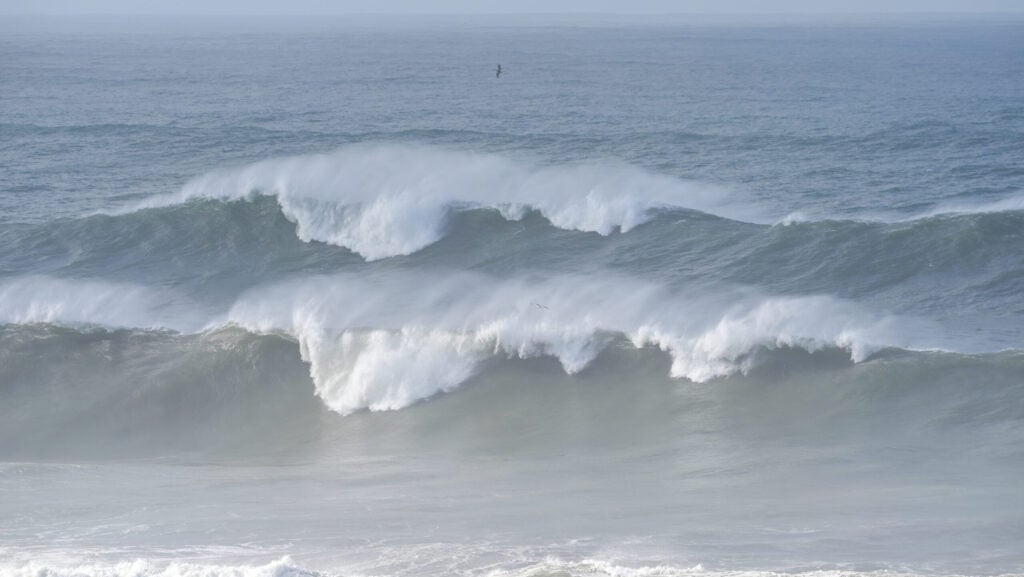
Waves pushed over the sand berms protecting Seal Beach’s beachfront homes over the weekend, flooding the strand and entering houses the city had spent days preparing to defend.
The flooding came as an El Niño that federal forecasters have said could reach record strength builds in the Pacific, a week before another round of high tides. Most California homeowners lack the coverage that would pay for that kind of damage.
Of California homes, 1.4 percent carry flood insurance, while 2.3 million properties face flood risk over the next 30 years, according to an analysis by Neptune Flood, a private flood insurer that sells the coverage. According to the report, the danger is no longer limited to areas people typically think of as flood-prone. Neptune said atmospheric rivers, urban development, aging infrastructure and conditions after wildfires are all adding to the risk for homeowners across the state.
The federal program that writes most flood policies is authorized through Dec. 11, according to the Congressional Research Service, and past lapses have stalled home closings in high-risk flood zones.
View this post on Instagram
The coverage gap
Standard homeowners policies and the California FAIR Plan, the state’s insurer of last resort, exclude wind-driven wave damage, storm surge and flooding unless a policyholder buys separate coverage, Insurance Business reported.
“Too many consumers learn after a flood that their homeowners policy does not cover flood damage,” Karen Collins, vice president of property and environmental for the American Property Casualty Insurance Association, said in a statement.
Of the 183,000 California homes in FEMA high-risk flood zones, 65 percent have no federal flood policy, according to an Insurify analysis shared with KQED. National Flood Insurance Program coverage caps at $250,000 per residence, leaving many insured California homes underinsured, according to AM Best.
What it means for transactions
Lenders must require flood insurance on homes in FEMA high-risk zones that are secured with federally backed mortgages, according to the Government Accountability Office. In California, a seller’s agent must disclose to buyers when a home sits in one of those zones, under state civil code.
The 30-day waiting period that applies to most new flood policies does not apply when coverage is purchased in connection with a mortgage, according to FEMA guidance for real estate professionals. An owner who buys a policy without a new loan waits 30 days for coverage to start, ABC7 reported.
Congress has passed more than 30 short-term extensions of the program since 2017, Carrier Management reported. During past lapses, borrowers could not get flood insurance to close, renew or increase loans on properties in high-risk zones until Congress reauthorized the program, according to the Congressional Research Service. The most recent full lapse ran from Oct. 1 to Nov. 12, 2025.
Damage so far
Seal Beach crews reinforced berms and maintained storm drains, tide valves and pumps before the storm, the city said. The waves topped the berms despite that work, FOX 11 reported.
Laguna Beach and Dana Point declared local emergencies in September over erosion, and Newport Beach followed in October.
Hurricane Marie’s swells led Dana Point to red-tag 10 homes on Beach Road in September, according to city figures reported by FOX 11. On the Long Beach Peninsula, about 20 homes were evacuated Sept. 7 after the seawall was compromised, ABC7 reported, and waves from Tropical Storm Rachel left eight structures unsafe to enter in October, according to city figures reported by NBC Los Angeles.
A forecast that prompted early action
Gov. Gavin Newsom proclaimed a statewide state of emergency on Sept. 21 due to the developing El Niño. The proclamation cites an Aug. 13 Climate Prediction Center report that found a greater-than-90-percent chance of a very strong event and a 69 percent chance it would exceed every El Niño on record since 1950. It directs the Coastal Commission to act on urgent emergency permit requests within 24 hours and orders the state to stage sandbags, pumps and other flood-fight supplies.
In its Nov. 12 update, the Climate Prediction Center said El Niño continues to strengthen and puts the chance of a strong-to-very-strong event lasting through January-March 2027 at greater than 79 percent. It lowered the odds of a record-strength event to about 60 percent for October through January, down from 83 percent in its October update.
Daniel Swain, a climate scientist with the University of California Agriculture and Natural Resources, wrote in a fact sheet that coastal flood risk peaks from late November through late January and “could be severe or record-breaking,” with the greatest risk if a storm coincides with king tides. During the 1982-83 El Niño, 33 oceanfront homes were destroyed and about 3,000 damaged, according to a U.S. Army Corps of Engineers report cited by the California Coastal Commission.
Before the next tides
King tides return to the Southern California coast Nov. 22. Federal and state agencies have published guidance agents can pass along to clients before then.
For sellers
- Offer the flood policy to the buyer. A seller can transfer an NFIP policy to the new owner “regardless of whether there is a mortgage involved,” according to FEMA’s guidance for real estate professionals.
- Find the elevation certificate. An elevation certificate can lower flood premiums. FEMA says owners can check for one with the local permit or planning office, a previous owner or an insurance agent.
- Inspect and secure the property. The Coastal Commission tells shoreline owners to inspect seawalls, revetments and bluffs for signs of distress and blocked drainage, and to clear unsecured furniture from beach-facing areas.
- Check before building protection. An Oct. 27 executive order suspends Coastal Act permits for sand berms and sandbags placed to prepare for El Niño. A November commission staff report describes the order as directing state agencies and does not say whether it covers private homeowners. Seawalls and rock revetments still need a coastal development permit, and the commission asks owners to contact its staff and local government first.
For buyers
- Ask about flood coverage in any zone. FEMA says some lenders require flood insurance outside high-risk zones and encourages clients to discuss coverage regardless of flood zone.
- Check the map. Flood maps are free at FEMA’s Map Service Center. High-risk zones begin with A or V.
- Price building and contents coverage. Contents coverage is separate from building coverage and carries its own deductible, and FEMA encourages buying both.
- Watch the Dec. 11 deadline. A policy bought with a mortgage takes effect without the 30-day wait, but a lapse in the federal program would block new policies on homes in high-risk zones until Congress acts.
For current owners
- Review coverage now. Insurance Commissioner Ricardo Lara urged Californians to consider flood insurance before storms arrive because of the 30-day waiting period, and noted that private flood insurance is available alongside the NFIP, according to a Department of Insurance alert.
- FAIR Plan holders need separate coverage. The FAIR Plan excludes flood and wave damage unless the owner buys a separate difference-in-conditions policy, according to Insurance Business.
Seal Beach is asking residents to place sandbags, move vehicles out of flood-prone areas and clear drains. King tides return Nov. 22-27, then Dec. 22-26 and again in January.