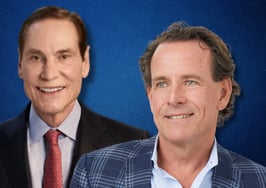

In a recent conversation with Inman, Keller Williams CEO and President Chris Czarnecki said the company is looking at growth on several fronts, including larger acquisitions, service-focused deals and transactions pursued by local franchisees.
The Austin, Texas-based company, which remains the nation’s largest real estate franchise brand by agent count, announced Monday that it had agreed to acquire the Jason Mitchell Group, a 1,200-agent independent brokerage and lead-conversion platform that generated nearly $5.9 billion in sales volume in 2025.
JMG gives Keller Williams both a sizable brokerage operation and a referral business built around relationships with major mortgage lenders and real estate platforms. In an interview ahead of the announcement, Czarnecki discussed how the deal came together, how JMG will fit into Keller Williams, the broader wave of industry consolidation and the company’s position on private listings.
The following conversation has been edited for length and clarity.
Inman: Why Jason Mitchell Group, why now, and how did the deal come together?
Chris Czarnecki: It’s something that we’ve been working on with Jason, in some ways, all the way back to last summer. It was not something that was quite actionable at that moment, but I began to get to know Jason and his business around this time last year.
I was relatively new to KW, but through that process, I was immediately drawn to the model he had built and the way he had scaled his business. It was very much in line with the theory that I came to KW with.
The great part about what I’ve been tasked with is adding value — not just pie-in-the-sky value, but value to agents and our franchisees. Jason’s business is very much in that spirit of helping agents be more productive through all of the relationships he has built over a multiyear period.
When I understood who JMG was, what they did and the way they did it, it immediately fit with that value-add mentality that I had been excited and tasked to execute on coming into KW. There was an instant connection on a business-rationale level.
As it evolved and we continued to stay in touch, Jason was more ready to talk about a transaction.
We got really deep into understanding their model, how they built their success, the depth and quality of their relationships, and the thoughtfulness of the process they use to run a lead-based business. We spent a multimonth period getting into the weeds and ultimately thinking about where this could go and how he could continue to grow his business within the KW ecosystem.
Some real estate deals are framed primarily around cultural fit, while others are more about bringing together complementary businesses or capabilities. Where does the JMG acquisition fit on that spectrum, and what does JMG bring to Keller Williams?
Czarnecki: Cultural alignment was high. A lot of what I talked about was cultural alignment from the perspective of serving agents and helping their businesses grow.
As I’ve evolved my view on these opportunities, I bucket them into three different categories.
One is service. When we’re thinking about M&A opportunities in this space, it’s services that benefit our agents, our franchisees or both. One example is that we purchased a marketing firm that had supported our ecosystem for a long time, and we made its services available.
Then there is the classic way of growing the platform. Jason’s transaction is certainly about growing the platform. A big “teamerage-style” brokerage coming to work with us is incredibly exciting, but I also think it is an opportunity, as we work through the integration, to provide a service to our ecosystem.
There is obviously more to come on this, but ultimately, we envision his future growth coming through our ecosystem in partnership with them. The crux of this is that Jason is going to grow the JMG-style offering and take in more leads through KW, rather than standing alone and existing on an island.
The other part of M&A that I think about a lot is supporting our franchisees in their own M&A efforts. Those can be slightly smaller-scale opportunities involving independent brokerages in their communities and networks.
We’ve built a financing program internally that helps our franchisees take advantage of some of those opportunities and grow their businesses. We’re continuing to build out our internal capabilities to support them, guide them and help them work through transactions.
Those localized opportunities are also fertile ground and are very aligned with what our franchisees want to accomplish. For us, it’s those three buckets: services, more traditional M&A and franchisee-level M&A. We want to support all three.
Will JMG continue to operate as a separate business within Keller Williams, or will it be more fully integrated into the broader company?
Czarnecki: Jason is going to stay on and lead the business. He’s going to continue focusing on bringing in business in a world-class way and growing that.
Ultimately, we will work to bring that growth to the KW ecosystem through him. He will be a member of our executive team, and it is an incredibly interesting and fun part of our business going forward.
Does the JMG acquisition serve as a template for other deals Keller Williams might pursue?
Czarnecki: It certainly is illustrative of the points I talked about.
Within those three buckets in the M&A landscape, we would seek to do other opportunities like this. Jason’s business is unique in the way that it brings in and ingests leads and puts those leads with agents who can work them.
But he is also effectively the largest team in America. That is how his model operates.
I think it is also interesting from a recruitment perspective, on an organic basis rather than an inorganic basis, that he sees KW as a place where he can grow his market share.
We call it the teamerage model. If it works for the largest teamerage, and we are out trying to recruit other similar teams that operate in the same fashion, I think it is absolutely a template — or at least an inspiration — for future opportunities.
Some industry observers have compared what is happening in residential real estate to consolidation in sectors such as airlines or pharmaceuticals. Are we moving toward an industry controlled by only a handful of national companies?
Czarnecki: That is probably more extreme than I would go.
I entered a space that has been very dynamic on the acquisition and growth front in the 15 months I’ve been here. The Stone Point investment in KW was one of the first transactions that kicked off this current wave. I don’t know that it launched all of it, but it was one of the first, and then we’ve seen the others stack on top of each other.
The point I would make is that I do think it is harder to be in the middle. That is not a comment about JMG, but it is harder to be in the middle or to be a smaller brokerage.
When I think about the landscape and what we provide as a franchisor at our scale, or what some of the other large brokerages provide, you have to keep pushing, you have to keep investing, and you have to have the capital and the excitement to keep doing it.
We’ve had four years of suboptimal transactions, and I think that gets harder and harder if you’re not operating at scale.
Would more consolidation surprise me? Not at all.
As you work your way down to smaller opportunities, there is probably more of that happening in individual marketplaces. That is why we are focused on helping our franchisees work on those transactions and M&A opportunities as well. Some of their local peers may also be thinking about an exit.
It all fits together because this is a space that has evolved a lot in 15 months.
Is this being driven by a combination of the down market, the compliance pressure that followed the NAR settlement and the cost of providing technology and other services? What is pushing more independent brokerages toward larger partners?
Czarnecki: I think it is all the things you named.
Providing a robust technology suite, especially at scale, is a big one. I think more people want to be in a connected ecosystem again.
The training, education and human-development platform that we’ve built our name on is hard to provide if you’re not doing it at scale.
You’ve also seen more production move, at least in this down market, to higher-producing agents. If you’re a more boutique or independent player, the economics could be harder if some of your middle-tier agents aren’t producing the way they used to and more of the production has moved up to those who already are.
To me, those are the three things that probably cause those discussions to happen more than anything.
Gary Keller recently laid out Keller Williams’ position on private listings and the role of the MLS in a video commentary. Has the company’s position on pre-marketing and private listings changed since then?
Czarnecki: No. We maintain a position that is in line with the public op-eds and publications Gary Keller put out. I had the pleasure of watching him craft those and helping to refine them with others. That is who we are at our core.
We support the view that transparent markets are incredibly important to our business and to being an advocate for both buyers and sellers. I think that puts the best version of the real estate industry first.
It is surprising that this may not be shared by everybody, but that’s not for me to say one way or the other. We’ve staked out our position there and feel like that is a spot we’re proud to occupy. Since those pieces were published, I’ve been in front of a number of MLS gatherings. We continue to advocate strongly for common-sense rules and rules that are actually enforced.
We don’t want our people to be disadvantaged if we are following the rules. Our ask is that, if we are going to have rules that make sense, then we need to enforce them. That is how the MLS system can work well.
What do you believe is in consumers’ best interest when it comes to pre-marketing and private listings?
Czarnecki: Pre-market or coming-soon listings, however you want to characterize them, have been around for a long time in different forms. A large number of MLSs allow for them.
When we looked at Zillow’s coming-soon program, the Preview program, what we liked and felt confident in was that it followed MLS rules that had been codified for a long time. It was very clear whether an agent in a particular market could participate and for how long. It was very defined.
If that is a fit for a seller, and their agent feels that is the best marketing plan for them, that is OK. But we ultimately think that the home ending up on the MLS exposes it to the widest number of eyeballs, gives it the best chance of setting the best price, gets the most buyers involved and gives buyers the broadest view of listings.
We were confident signing up for that program because it stayed within the same spirit that has existed for a long time with many MLSs. That is where we land.
What is your message to Keller Williams agents amid all of this industry change?
Czarnecki: Our message is clear and consistent.
Over the past 12 to 15 months, we have been focused on delivering more value and helping our agents and franchisees run their most profitable businesses. That is what we get up and do every day.
There are plenty of quotes from Gary that I would not make my own, but in difficult markets, true empires and big businesses are built. I very much agree with that.
There is always an opportunity to be successful in this business. We have so many agents who are doing well and having some of their best years. It is inspirational, it is fun to support them, and we are going to keep doing that.