
Shortly after closing the largest local association merger in National Association of Realtors history, Miami Realtors + RWorld recently did it again, this time swallowing a Treasure Coast group and extending its reach across the entire length of Southeast Florida.
The combined association announced on July 24 that it has merged with Martin County Realtors of the Treasure Coast (MCRTC), folding the smaller group into a single association and MLS. The deal pushes membership to roughly 94,000 Realtors across a five-county footprint — Miami-Dade, Broward, Palm Beach, Martin and St. Lucie — spanning nearly 120 miles of Florida coastline.
It’s the second merger in just over two months for the entity, which formed May 11 when the Miami Association of Realtors and Broward, Palm Beaches & St. Lucie Realtors (RWorld) combined roughly 93,000 members in what NAR called the largest and fastest local association-and-MLS merger in its history.
The addition continues a consolidation wave with no obvious endpoint, as local associations and MLSs nationally keep pursuing the scale, unified rules and shared tooling that smaller fragmented groups increasingly struggle to offer on their own.
Alfredo Pujol, current chairman of the board at Miami Realtors, will become the combined association’s first chairman. RWorld President Jonathan Dolphus will serve as 2026 chair-elect before taking over as chairman in 2027, with Katherine Arteta stepping in as 2027 chair-elect.
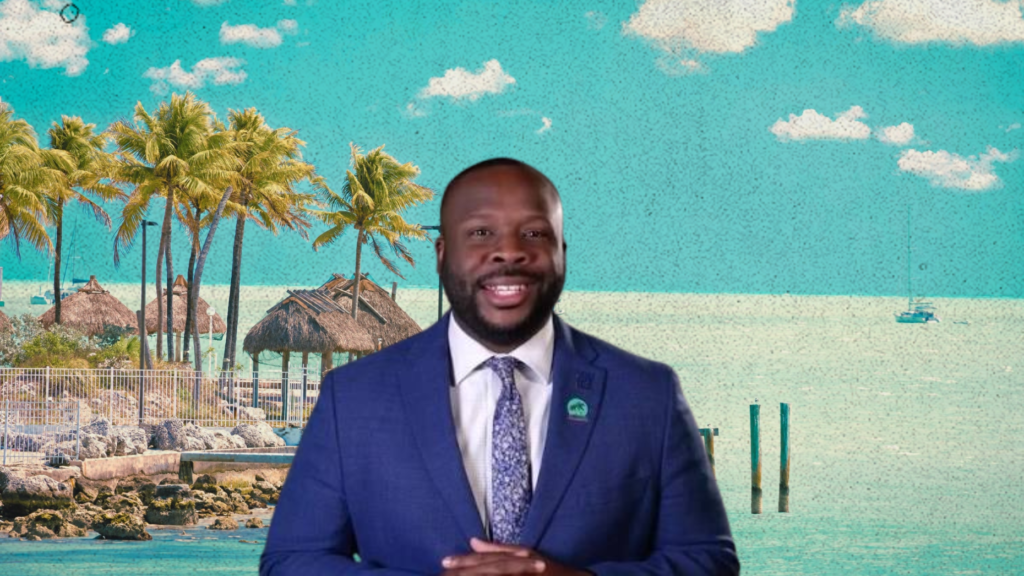
Inman caught up with Dolphus, who also leads the Dolphus Group at eXp Realty, at Inman Connect San Diego. Dolphus discussed why unified rules are a critical reason for the mergers, the tech and tools strategy post-merger, and the booming South Florida real estate market.
The following conversation has been edited for length and clarity.
Inman: Tell us more about the merger between the Miami Association of Realtors and RWorld that happened earlier this year, along with the Martin County merger.
Jonathan Dolphus: Martin County is a smaller association, but it completes the picture geographically. St. Lucie is our board, up on the beach in St. Lucie, and Martin County sits between St. Lucie and Palm Beach.
If you’re familiar with Stuart, that’s the main area of Stuart. Palm City is in Martin County. They were a small association, and although we had the majority of the data, there was still fragmentation.
We’ve always had a good relationship with their leadership, so they came to us about the possibility of merging, and we said sure. The conversations were easy. Some of what they wanted, we’d already built in, so it was pretty seamless. They’re on the same platform we use, so plugging them in wasn’t a big deal.
But it’s a key piece for the marketplace, because now we get a full, unfragmented data set from St. Lucie all the way down to Miami-Dade. You don’t have one group holding on and skewing the data set.
Now everyone’s playing by the same rules, which is what we’re working through right now: merging our rules and regulations. That’s not the sexy part of a merger, but it’s the important part.
What was happening is you had a flow of native Floridians getting priced out and moving north to Palm Beach, which is too expensive, or up to the Stuart area or St. Lucie. And in that flow, you have agents from Miami operating under one set of rules, our group under another, and Martin County under a third.
When you’re talking about 94,000-plus Realtors, each following different rules, you can’t hold bad actors accountable. And with that many people, there are going to be plenty of bad actors, one-off Realtors or people who just don’t know better.
Merging the rules and regs isn’t sexy, but it’s wonderful for those of us doing this full-time. Having one set of rules and one standard of compliance across 120 miles of coastline is huge.
What’s the driving force behind all of this consolidation?
People are coming in on teams and brokerages, pairing up with more experienced partners who’ve been through different up-and-down markets. South Florida has a solid market, but there are waves, and you need to align with brands and people who know how to navigate them. That’s where experience really takes hold and digs in deeper roots, [by] being able to recruit people and provide the tools and support needed.
The association is really focused on what tools agents are using. Right now we’re assessing all of our combined tools — post-merger — figuring out what to keep, what to cut, what has high usage and excites agents, and where the redundancies are. We have a tech group that evaluates all our products and is now reassessing the combined set to eliminate what’s underused so we can bring new products to the forefront.
There’s a ton of new products, especially AI-heavy ones, but for us, it’s about finding what’s actually best — not just something that checks a box — and using that to negotiate favorable contracts with volume pricing.
On the MLS side, we’re also working on making the ad-edit input the best it can be so everything flows directly through there. We’re rolling out artificial intelligence — I’m forgetting the exact product name — that analyzes listing photos and pre-populates the features throughout the MLS, double-checking accuracy and making it faster to add a listing.
We’re trying to make it as fast as possible for any agent to run their business. That’s the real question: How can we be better business partners, not just on advocacy, but by providing the tools members actually use to grow and operate their business?
I wanted to ask about the South Florida real estate market in general. I saw a recent market report from the Miami Association of Realtors, and it looks like South Florida is doing really well.
It’s doing great. The big draw is no state income tax and favorable business regulations, so you’re getting a lot of billionaires moving their HQs down to South Florida.
We have the Brightline, a luxury train connecting South Florida. They’re trying to extend it into the Treasure Coast, but right now it runs from West Palm up to Orlando, connecting the whole corridor with an easy on-and-off ride, free Wi-Fi, drinks, the works. That train could fix a lot of South Florida’s transportation issues, since otherwise, you’re stuck in traffic.
Miami keeps getting called “Wall Street South.” It’s really filled in between Miami and downtown West Palm Beach. Palm Beach is getting a Vanderbilt-approved campus. They’re calling it a main campus, not even a satellite.
These areas keep developing and drawing more business, which means more housing demand, and we’re seeing a massive uptick in the luxury market, especially the $1 million to $5 million range. Executives are coming in who are used to much higher price points elsewhere, so to them, paying cash at prices that feel “wild” to native South Floridians is normal.
It’s a bit of a frenzy, but the market is solid — growing, land-constrained, so people are redeveloping and rebuilding. South Florida is kind of an anomaly compared to the rest of the nation because so many people and businesses keep planting roots here.
You see billionaires like Ken Griffin and Stephen Ross saying, “We’re in, here are our projects for the next five to 10 years,” and encouraging other billionaires to follow.
Is that creating a K-shaped market, with luxury doing really well but it’s tougher at the lower end for affordable housing and starter homes?
It’s tougher for affordable housing. We’re trying to figure it out. Florida has legislation making it more favorable, but it’s not a full fix. The biggest question is always: What counts as “affordable”?
As a native, I’d say $400,000 to 500,000 right now, but even that’s not affordable for most people; they need to be under that range. That price point under a million is still ultra-competitive, and there hasn’t been a real solution yet. They’re building, but not enough to meet demand.
That pressure spills into the multifamily and rental market, too, which ends up more expensive. That said, they’re building more multifamily than for-sale homes. In Palm Beach, rental levels are starting to level out a bit, though in Miami, they’re still boosted up. It’s tough in a booming area.
I tell clients: If you can purchase now, purchase — you’ll see equity gains in the next year or two. I don’t think rates are dropping by year’s end; I think we’ll stay pretty steady, so don’t wait on rates. If you can make it work, adjust your budget and do it, because the market’s going to keep climbing.
It’s interesting. We’ve got inflation, global economic uncertainty, wars, trade issues, and then you look at our local market, and it’s a totally different animal. Real estate truly is local. I’m seeing a lot of remote workers moving to South Florida just for the lifestyle, keeping other properties and snowbirding around.
Actually, something I’d love to dig into: Our snowbirds are getting younger. It used to be the typical retired snowbird; now it’s more of a hybrid between the digital nomad and the snowbird. Young executives with the freedom to split time between here and the Northeast, getting the best of both worlds.
We’re proud of where things stand. It’s been a lot of work with the mergers, but we’re excited about what we can do to help brokers and agents, not just on advocacy, but on products, tools, classes and education, both free and paid.
One series I love: We run corporate-style events where we tour people through places like the airport or Joe DiMaggio Children’s Hospital, so agents understand what’s in their backyard and can speak to it when selling the area.
Those events bring in people you don’t normally see at association events, because there’s a direct benefit. That’s where associations need to get better with programming. Not “we think this class will be good,” but “what will actually benefit the member?” That’s what we’re hyper-focused on right now.