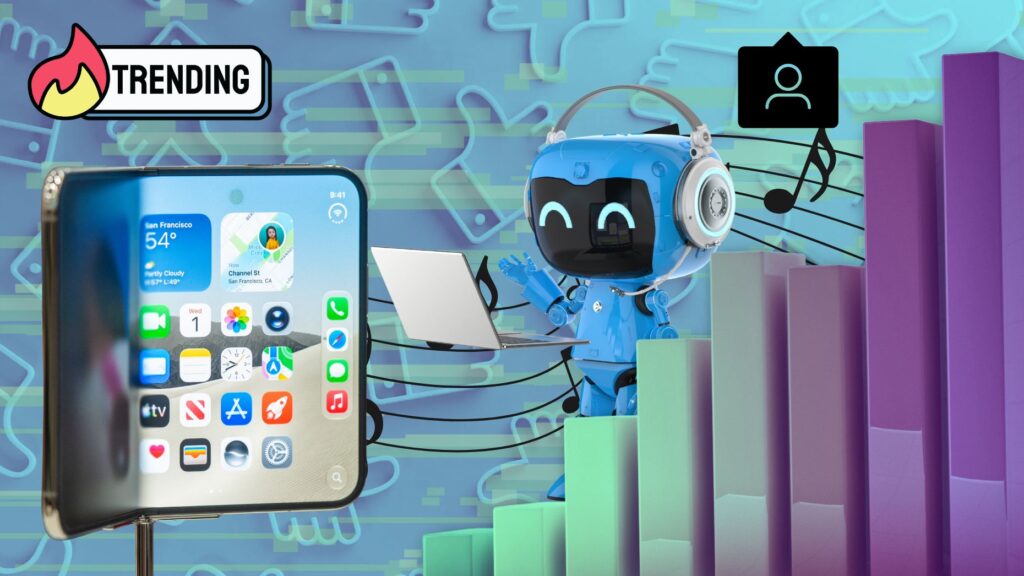

An AI agent that reads more about you than you can see yourself. A foldable phone built on a hinge that hasn’t been tested by time. A song that isn’t real outranking the artist who is. All are good reminders to verify what’s behind a new tool before deciding to use it.
Meta’s Muse cracks App Store top 5
Meta’s new AI agent, Muse, climbed to No. 2 on Apple’s US App Store this week, according to TechCrunch. Android adoption is weaker, with Muse sitting at No. 338 in Google Play’s productivity category.
A hands-on test from The Verge found Muse capable of clearing out an inbox and completing an Amazon purchase, but the agent also pulled detailed personal interests from the user’s Instagram account through its API, data the outlet said wasn’t visible anywhere in Instagram’s own settings.
A Meta spokesperson confirmed Muse infers interests from a connected Instagram account and said users can disconnect it through Accounts Center. The launch follows Meta’s $18 billion multistate settlement over social media’s consumer harms and a history of FTC privacy fines.
What this means for real estate professionals: Agentic AI tools that handle tasks on a user’s behalf are moving from concept to consumer product, and agents can likely expect buyers and sellers to start delegating research, scheduling and communication to these tools sooner rather than later. The data-privacy trade-offs behind that convenience carry compliance weight for brokerages down the line.
Apple unveils its first foldable phone, the iPhone Duo
Apple introduced the iPhone Duo, its first foldable phone, at its “Surprise and Shine” event, the same day new CEO John Ternus delivered his first keynote after taking over the company Sept. 1. The Duo opens from a 5.4-inch screen to 7.6 inches, supports Apple Pencil and starts at $1,999 for 256 gigabytes. Preorders begin Oct. 16. Apple also released the iPhone 18 Pro and Pro Max, starting at $1,199, along with updated AirPods and Apple Watch models.
The event’s other headline came from Siri, which now pulls personal context from apps, including Mail and Messages, and can take action across roughly 3,000 apps. The assistant is built into the Camera app and supports writing and editing text anywhere on the device. Siri’s upgrade is available in beta in English, with additional languages coming next month.
What this means for real estate professionals: A larger foldable screen and an assistant that reads across apps and writes on command could reshape how agents review listings, photos and client messages from a phone in the field.
Instagram lets users add tagged posts to their profile grid
Instagram now lets users display posts they’re tagged in directly on their profile grid, adding a tag icon to the thumbnail. The option appears as “Add to grid” when viewing a tagged post and builds on prior collaboration features including post collaborators, collaborative Stories and photo remixing.
The update comes as Reels consumption accounts for about 50 percent of total time spent on Instagram, with engagement gains on both Facebook and Instagram tied to Reels. Competing primarily on video puts Instagram against TikTok, YouTube and Netflix, making features that encourage direct user-to-user interaction a point of differentiation the platform has reason to protect.
What this means for real estate professionals: Agents tagged in a collaboration, open house or client post can now surface it on their own grid without reposting, giving co-listing and team content another way to reach followers.
AI-generated fake Eminem track outranks the real thing on YouTube
An AI-generated song titled “I’m Back,” credited to Eminem but created without his involvement, has drawn more than 120,000 views on YouTube and surfaces above several of the rapper’s official tracks in search results for his name. The video carries no official AI label from YouTube and includes only a vague disclaimer buried in its description. The account behind it runs similar unofficial tracks under other rap artists’ names, including Meek Mill and 21 Savage.
The track adds to a wave of AI-generated music circulating under real artists’ names without permission, a trend record labels have struggled to contain even as some sign deals with AI companies. Universal Music, which owns Eminem’s label, Shady Records, has entered partnerships with AI firms including Nvidia and Udio.
What this means for real estate professionals: AI-generated content convincing enough to pass as authentic, and to outrank the real source in search, is a trust problem that extends to listings, reviews and marketing photos. Verifying what’s genuine before sharing it is becoming part of the job.
TL;DR (Too Long, Didn’t Read)
- Meta’s Muse AI agent hit No. 2 on the App Store, but testing found it pulling hidden Instagram data.
- Apple unveiled its first foldable phone, the iPhone Duo, along with new iPhones, AirPods and watches.
- Instagram now lets users add tagged posts to their own profile grid.
- A fake AI-generated Eminem track has outranked his real music on YouTube.
Adoption speed matters less than understanding what a tool does with data, what it claims versus what it delivers, and whether the content behind it is genuine. That verification work belongs to agents before it reaches a client.
Each week on Trending, Inman’s Jessi Healey dives into what’s buzzing in social media and why it matters for real estate professionals. From viral trends to platform changes, she’ll break it all down so you know what’s worth your time — and what’s not.