A year ago, if someone had told me nearly half of tour viewers bail after the first room, I’d have gone looking for whatever we were doing wrong.
Well, that’s what our numbers say. In the last 30 days, 45 percent of the tour sessions we served ended on the first scene.
I’d still argue it isn’t a problem, or at least not the one it looks like. The reason is at the other end of the chart.
What 2.3M sessions look like
We pulled 30 days of data from our tour backend, about 2.34 million sessions, and counted how many scenes (rooms, basically) each viewer opened.
I expected a gentle slope. Lots of people looking at a few rooms, fewer and fewer looking at more. We got something closer to a U.
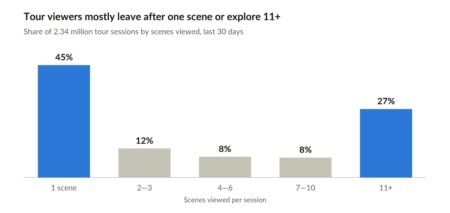
When data bunches up at both ends like this, you’re usually looking at two different groups. My read: One group is glancing at a listing, and the other is properly shopping for a home.
The deep viewers are telling you something
Take the 27 percent who opened 11 scenes or more. Nobody does that by accident. They’re walking the house room by room, doubling back to the kitchen, working out which bedroom is next to which. It’s a first showing, done from the couch.
For some buyers, it’s the only showing they get. Jeremy Jordan, a real estate photographer who uses our tours, said that about half of the agents he works with have had buyers purchase a home without ever visiting in person. That matters most for people buying from another state or another country, where a viewing trip means flights, time off work and, with fuel prices where they are, a real bill.
Even when buyers do visit, a lot of the sorting is done before anyone books a showing.
That puts the 45 percent in a kinder light. Someone who opens the living room, sees the layout won’t work for them and closes the tab hasn’t been lost. They’ve saved you an afternoon.
It’s also worth knowing where those viewers came from. Our tour analytics show which channel each visitor arrived through, so you can see whether a portal is sending you mostly one-scene glances while your own email list sends people who walk the whole house. That’s a good reason to move time and budget toward the channels that send the second kind.
For almost half your viewers, the 1st scene is the tour
Back to that 45 percent. Some of them might have bought, and they decided on one frame. For them, the opening scene is doing the job of your lead photo.
Often, nobody chose it. It’s just the hallway, because that’s where the capture started.
So pick it on purpose. People who want the full walkthrough will find the front door themselves.
With a city apartment, that’s usually the view. In a suburban house, it’s often the kitchen, especially if it opens onto the yard. With an older home, lead with whatever the listing is already bragging about, like the fireplace or the original floors.
And most of it happens on a phone
One more number. Two-thirds of sessions (67 percent) were on a phone. Desktop was 30 percent, tablets under 3 percent.
So the quick glance and the 11-room walkthrough are both mostly happening on a screen a few inches wide.
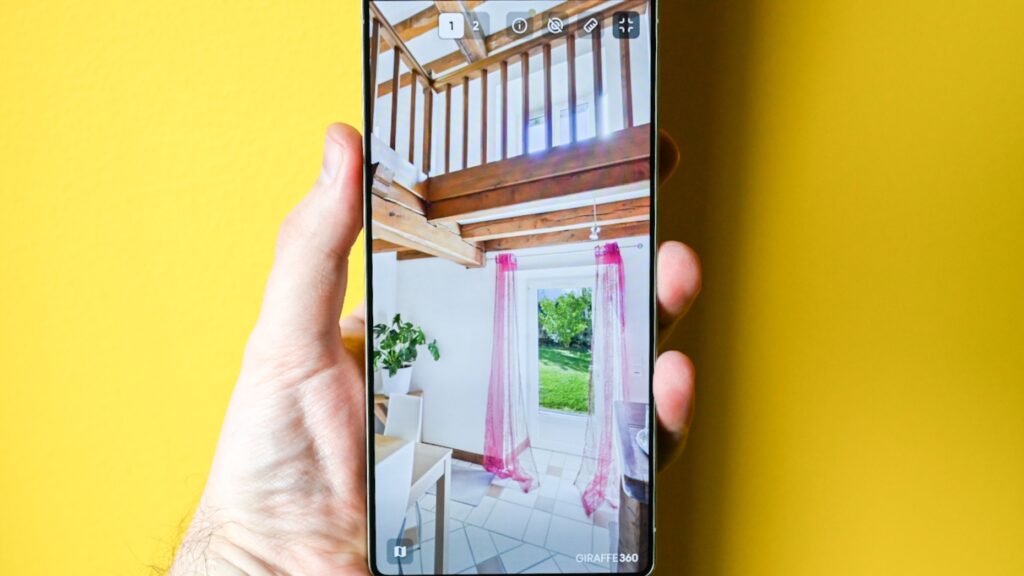
A phone held upright shows a narrower slice of a 360-degree scene than a monitor does, so whatever you want noticed has to be straight ahead when the scene loads. Busy rooms turn into clutter, and a dim room that feels moody on a laptop just looks dark.
3 things worth doing
None of this needs new tools.
- Pick your opening scene deliberately. Give it the same thought you’d give your lead photo.
- Use the tour data you already have. Follow up differently with people who walked every room, and put more effort into the channels that send them.
- Open every tour on your phone before it goes live, and ask yourself honestly whether the first scene makes you want the second.
Losing the right people
I’ve stopped expecting a tour to hold everyone. No home suits every viewer, and judging a tour by how many people it keeps is a bit like judging an open house by how many visitors make an offer.
A good tour lets the wrong people leave fast and gives the right ones everything. Our data suggests that’s mostly happening already. The part agents can actually control is that first scene, and too often, it’s left to chance.