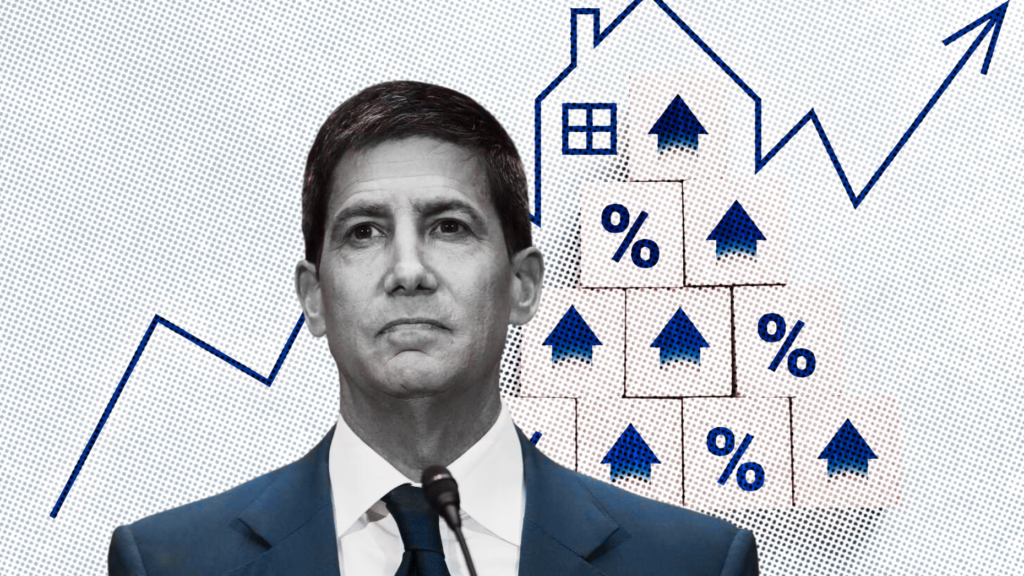

Less than four months after Kevin Warsh took over as chairman of the Federal Reserve, the honeymoon period for the central bank’s new leader appears to be over.
Mortgage rates are once again brushing up against 7 percent, threatening to further sideline weary homebuyers and add pressure to an already challenging housing market heading into the fall.
The average 30-year fixed mortgage climbed to 6.97 percent Wednesday, according to Mortgage News Daily, an 8-basis-point jump from the previous day that left rates just shy of the psychologically significant 7 percent mark. Many borrowers are already seeing quotes at or above that level, the trade outlet reported.
The move brings borrowing costs back to levels not seen in more than a year, erasing much of the relief buyers had gained as mortgage rates retreated from their 2025 highs.
Why borrowing rates are rising
The latest move has less to do with a single Federal Reserve decision than with what markets increasingly expect the central bank to do next.
Warsh warned during his Aug. 28 speech in Jackson Hole that inflation remains too high and that the Fed’s focus should remain on price stability. Economists said at the time that mortgage markets had already begun pricing in the possibility of higher short-term interest rates, while fresh inflation data this week has only strengthened expectations that the Fed could raise rates at its Sept. 15-16 meeting.
Those expectations intensified Thursday after the producer price index showed wholesale prices rising 5.4 percent from a year earlier, slightly hotter than economists expected. Traders subsequently put the odds of a Fed rate hike next week at roughly 70 percent.
Mortgage rates do not move directly with the federal funds rate, but they tend to follow longer-term bond yields — particularly the 10-year Treasury. The 10-year Treasury yield climbed to roughly 4.92 percent in Thursday trading, according to MarketWatch, after ending Wednesday at 4.83 percent, Treasury Department data shows.
Mortgage News Daily has also highlighted the close relationship between oil prices, Treasury yields and mortgage rates in recent weeks.
Back to 7% mortgage rates
Freddie Mac’s weekly Primary Mortgage Market Survey has not yet caught the full extent of this week’s move.
Freddie Mac’s latest weekly survey put the average 30-year fixed mortgage at 6.71 percent as of Sept. 3, up from 6.66 percent a week earlier. Mortgage News Daily’s daily index has moved faster, climbing from 6.89 percent Tuesday to 6.97 percent Wednesday. The move puts mortgage rates at their highest level since May 2025, according to Mortgage News Daily, reversing much of the relief buyers had seen over the past year.
The increase could also add to an already pronounced imbalance between buyers and sellers.
Redfin researchers reported this week that there were 57.9 percent more sellers than buyers in August, the widest gap in records dating back to 2013, as high housing costs and economic uncertainty continued to suppress demand. Higher borrowing costs could further sideline would-be buyers, potentially strengthening the negotiating position of those who remain active in the market.
For buyers who had been hoping 2026 would finally bring sustained relief on borrowing costs, the return toward 7 percent adds further pressure to an already affordability-challenged housing market.