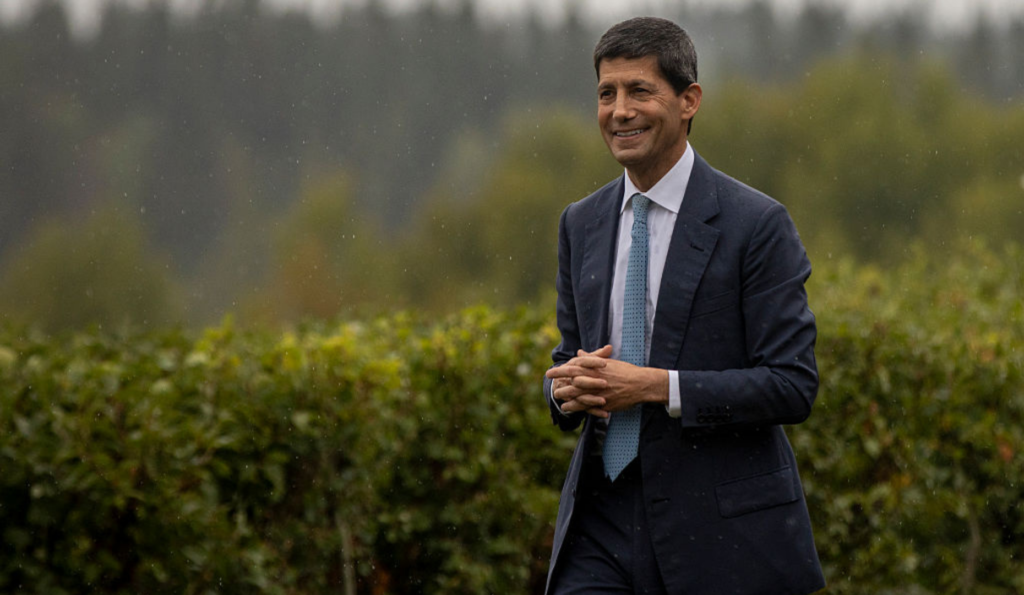

Federal Reserve Chairman Kevin Warsh made clear on Friday that the fight against inflation is far from over, a public acknowledgment that is expected to send mortgage rates even higher.
In a speech delivered Friday morning in Jackson Hole, Wyoming, Warsh acknowledged that the Fed has failed one of its core goals of maintaining an inflation rate below 2 percent after over five years of missing that mark.
“The Fed’s preferred measure of inflation, the 12-month change in the PCE price index, stands at 3.7 percent, while the six-month change is 4.1 percent,” Warsh said. “None of these measures are perfect, but they all tell a similar story: Inflation is running above our 2 percent target. So the Fed’s predominant focus right now should be on prices.”
He added that lower-income households suffer more when inflation is running high.
“If the Fed gets inflation wrong and judges the economy wrong, who gets the worst of it? Not the financial high-fliers. Hard-working Americans are the ones left to deal with inflation that is too high or jobs that suddenly appear less secure.”
The immediate reaction to the speech is that the Federal Reserve Board is poised to increase the federal funds rate that impacts all borrowing costs, indirectly including mortgage rates. That’s according to Mark Fleming, chief economist for First American.

Mark Fleming | Photo credit: First American
“Warsh’s message was hawkish and clear: the inflation fight isn’t over, rates are likely headed higher, and the Fed will be less inclined to telegraph its next move,” Fleming said. “For homebuyers, some of that rate pressure is already baked into today’s mortgage rates.”
The 30-year fixed-rate mortgage averaged 6.66 percent as of Thursday, according to the mortgage giant Freddie Mac. That’s up from an average of 6.56 percent a year earlier.
The market may have already baked in the impacts of higher inflation, so an expected increase in the federal funds rate might not move much more based on Warsh’s comments, Fleming added.
“Mortgage rates have already increased as the 10-year and 30-year treasury yields have increased in recent weeks on the expectation of higher short-term rates,” Fleming added. “Some of the future expected higher rates are already ‘baked in’ to mortgage rates.”
Warsh only mentioned the housing sector once in his speech.
“Certain sectors — like housing and agriculture — are showing strains,” he said. “But, on balance, I would be hard pressed to describe broad financial conditions as restrictive.”