Rechat’s artificial intelligence assistant, Lucy, has been spinning up single-property websites in under a minute since 2023. Now it’s building full storefronts.
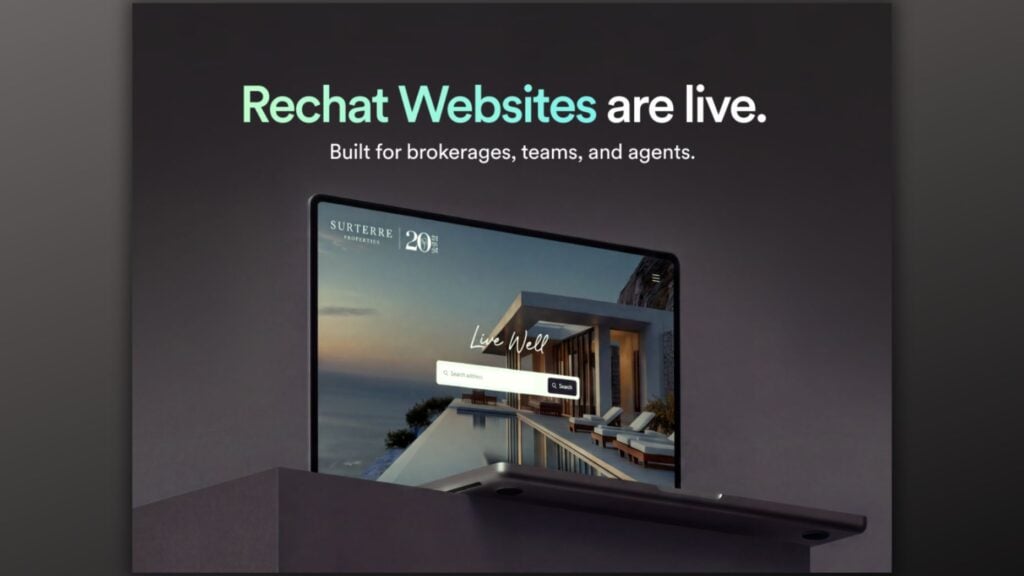
The Austin, Texas-based proptech firm launched Rechat Websites on Monday, extending Lucy’s site-building capabilities to full websites for brokerages, teams and agents. The sites are generated from the roster, listings, testimonials and client data already inside Rechat.
The company is pitching them as optimized for AI answer engines like ChatGPT and Claude rather than only for traditional SEO search. Rechat Websites is available now to all brokerages, teams and agents.
Brokerages already live on the product include Surterre Properties, Acropolis Realty Group and Clay Stapp + Co, according to the company.
Websites that watch and learn
In an interview with Inman ahead of the launch, Rechat founder and CEO Shayan Hamidi acknowledged that websites on their own aren’t much of a story.

Shayan Hamidi
“There’s always been websites,” Hamidi told Inman. “But there’s a major shift happening, and it’s about the role of the website.”
Hamidi breaks the industry’s site history into three eras. In the 2000s, websites simply got brokerages online and “made us look pretty.” From roughly 2010 onward, polished templates and Google SEO took over. Now, he argues, the site has to function as part of the business itself.
His shorthand, repeated in the release, is that the website is the “eyes and ears” of the brokerage, and Rechat is the brain that acts on what it sees.
“The next visitor to your website is probably not a person anymore,” Hamidi said.
In practice, that means site activity feeds back into Rechat’s CRM, where Lucy can use it to curate content and emails. That activity includes which listings a prospect lingers on, which searches they save and what content they engage with. Hamidi compared it to watching shoppers in a store pick up products and put them back down.
“For the most part, in our industry, we have no real sensor on all of that intelligence,” he said.
According to the release, leads from a brokerage site route into Rechat’s CRM, where admins can track follow-up. Leads from an agent’s site go directly to that agent.
Agent pages pull in listings, sold history, bios and reviews from Testimonials, Rechat’s client review product.
When the visitor is an AI agent
The bigger question is who, or what, is doing the browsing.
“The next visitor to your website is probably not a person anymore,” Hamidi said. “It’s probably an AI agent that’s deciding whether they should recommend you or not.”
Consumers might type a question straight into ChatGPT or use some other app. Either way, Hamidi said, a frontier model is likely doing the reading underneath, and it ranks sources differently than Google’s search engine crawlers do.
His argument is that static sites built once and left alone will lose out to sites continuously fed with live listings, local information and fresh reviews.
“When AI looks at it, they would say there’s credible information on this website, there’s quantifiable information, there’s local information,” Hamidi said, “and then include you in those recommendations.”
How Lucy builds a site
In a demo for Inman, Hamidi used an existing website as inspiration for Lucy and described the style he wanted.
Within moments, he had a branded team site with live listings already populated. Edits happen conversationally, such as asking Lucy to make a section “more modern.”
He also showed a seller-facing page built to support a price reduction. It’s not a CMA, Hamidi said, but it pulls in buyer personas, historical numbers and market context to help an agent make the case to a seller.
Everything goes through an approval step before it goes live. Hamidi said brokerages can set guardrails for branding and regional compliance, and Rechat’s open APIs let clients build their own layers on top.
One client’s Pennsylvania offices, he said, built a workflow that lets office staff audit AI-generated content before it’s approved.
Hamidi said the moment, more than the product category, is what makes websites worth talking about again.
“A couple years ago, I wouldn’t be as excited to be on this call,” he said.