Ashley Okland and Beverly Carter’s names are carved into the industry’s memory. Both women’s tragic murders highlight the dangers that lie within a job that requires professionals to interact with the public at large through one-on-one meetings, open houses, private tours, portal chats and endless threads of direct messages on social media.
Their cases galvanized agents, brokers and associations to adopt better safety standards and protocols, which has led to a sizable decline in recorded agent deaths due to assaults or violent acts. However, in the National Association of Realtors’ most recent safety survey, roughly 1 in 5 Realtors reported experiencing a situation that made them fear for their safety — highlighting the continuing need to improve safety measures.
Here’s a look back at Okland and Carter’s deaths, and how they changed agent safety:
‘We don’t want another one’
In 2011, 27-year-old agent Ashley Okland was found dead inside a model townhome located in West Des Moines, Iowa. Okland had been preparing the townhome for an open house when Kristin Ramsey — the title officer who’d be charged with Okland’s murder 15 years later — said she arrived and found the young agent on the floor bleeding profusely.
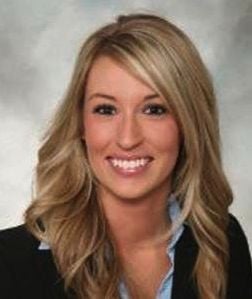
Ashley Okland
Ramsey’s story changed over the years, with her giving four different accounts of her contact with Okland before the murder, how and when she discovered Okland’s body, and who she contacted for help. Ramsey’s accounts didn’t match those of witnesses in neighboring townhomes or the townhome developer, who said Ramsey appeared “excited or frazzled” when she asked whether he’d seen Okland.
Law enforcement searched Ramsey’s home in 2011 and found multiple firearms, illegal substances and materials with threatening messages. However, those findings weren’t enough to press charges.
In 2019, the West Des Moines Police Department launched a website to gather tips about Okland’s death, but it wasn’t until 2025 that the Iowa Cold Case Unit revisited Ramsey and conducted a second search, again uncovering firearms, illegal substances and threatening materials.
“When I think about the last time I saw her, yeah, 14 years feels like a long time,” Josh Okland told KCCI 8 after Ramsey’s arrest. “April 7th, we spent the entire afternoon together. Her real estate career was booming, and she hired me to be her assistant to work on small stuff for her, make pamphlets. So we sat at Panera in Ankeny for four hours, and she was training me, but yeah, I will never forget that day.”
“I am proud to be her brother,” he added. “She impacted so many people in such a positive way and [was] such a good role model for a short 27-year life. Her legacy lives on.”
Ramsey, a former title officer, was charged with first-degree murder in March 2026 and given a $2 million cash-only bond, which she fulfilled alongside agreeing to GPS monitoring, a curfew, pretrial supervision and surrendering her passport. She maintains her innocence and is awaiting a January 2027 jury trial date.
Four years after Ramsey’s death, the Des Moines Area Association of Realtors introduced a safety pledge and guidelines urging Realtors to:
- Under no circumstances show a home to a stranger without first meeting them at the office or asking them to submit identification.
- Educate clients that open houses are a safety concern both for the homeowner and the agent.
- Limit open houses as a marketing strategy and/or make prudent and safe decisions about open house marketing efforts.
- Follow intuition, and [do] not step into situations that the agent feels uneasy about.
- Use the buddy system whenever the agent is unsure or uneasy about a showing or meeting.
- Be available to fellow agents as a “showing buddy” should they ever feel the need to take someone along or feel unsafe.
- Seriously consider the nature of personal marketing and its potential impact on safety.
“Ashley was our ‘one too many,’ and we don’t want another one,” former DMAAR President Robin Polder said of the pledge in 2015.
A real estate agent death mobilizes the industry
Three years after Okland’s death, another agent’s murder shook the industry.
Arkansas real estate agent Beverly Carter was brutally murdered in 2014 after showing a home to a couple who were masquerading as potential homebuyers. The couple, Arron Lewis and Crystal Lowery, lured Carter to the home in the hopes they could kidnap her and garner a $100,000 ransom.
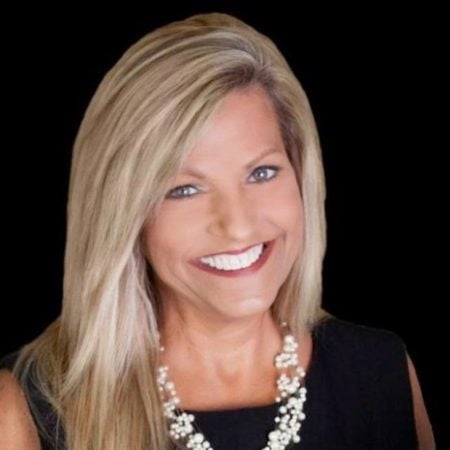
Beverly Carter
However, when they realized Carter didn’t have the six-figure sum, they killed her and buried her 30 miles away from the listing in Cabot, a small town near Little Rock. Her body was discovered after a five-day search that involved a horde of volunteers scouring the farmlands and forests of central Arkansas.
Lewis and Lowery were both charged with capital kidnapping and murder in 2016. However, Lowery’s sentence was shortened to 30 years after testifying against her now-estranged husband. Lewis was given two consecutive life sentences without the possibility of parole.
In 2017, Carter’s son Carl Carter, Jr., established the Beverly Carter Foundation as a way of remembering his mother’s legacy and providing easy and accessible safety education. In a previous Inman interview, Carter talked through the foundation’s mission and the breakneck schedule of his team, who hosted dozens of instructor-led safety sessions for Associations, multiple listing services and brokerages across the nation in the aftermath of its founding.
The Carter family also pushed for brokerages to hold legal liability when an agent is murdered, lodging a wrongful death and negligence lawsuit against Crye-Leike, the firm Carter was affiliated with at the time of her murder. The lawsuit was dismissed because the family missed the three-year window to file the suit.
The Carter family’s advocacy resulted in a landmark change for Arkansas agents, with the state’s real estate commission implementing a requirement that every licensee take one hour of safety training every year to keep their active status.
Carl has taken a small step back from the foundation due to his mental health, according to an August LinkedIn post about a 5K race in his mother’s honor. However, he said the Beverly Carter Foundation will continue to advocate for better safety measures. “As each person crossed the finish line, we celebrated not only their morning accomplishment but also the entirety of their being,” he wrote. “The message of personal safety was conveyed from a place of warmth and excitement rather than fear.”
Carter’s impact reached well beyond Arkansas, with the National Association of Realtors strengthening its safety program after the agent’s death.
The Association rolled out new programming in 2015, and in May 2016, it approved an update to its Core Standards requiring every local and state association to annually certify whether it has conducted a Realtor safety activity. In 2023, NAR also launched a safety podcast featuring Realtor Tracey “The Safety Lady” Hawkins.
The improvements are working — but now’s not the time to relax
Since the deaths of Okland and Carter, there have been several agent murders that have highlighted the continued need for agent safety procedures, including Minnesota agent Monique Baugh, Virginia agent Soren Arn-Oelschlegel and Florida agent Sara Trost, who were all killed on the job.
Technology has complicated the landscape, with bad actors using artificial intelligence and deepfake technology to swindle agents into financial or physical harm. However, an equal number of innovators and safety experts are fighting back on behalf of agents — creating tools such as Bond, Tether RE and Forewarn to mitigate some of the danger that comes with such a public-facing job.
The safety measures that have come into the industry since 2015 have decreased the number of agent deaths on the job. The latest figures from the Bureau of Labor Statistics show that five real estate professionals died on the job in 2024 — a far cry from the 2010 peak of 63 deaths, which prompted Inman to publish a three-part series about the uptick in assaults against real estate professionals.
Although statistics are moving in the right direction, national safety expert Beth Andress said now is not the time to relax. In fact, the safety expert is calling on policymakers to codify the requirements in various Association safety pledges and brokerage handbooks into law, adding another layer of safety for agents.
“Right now, that decision is left up to the individual agent, and it’s inconsistent across the industry,” she told NBC. “Some agents ask for ID, some don’t, and that inconsistency risks lives. This isn’t about making things complicated — it’s about creating a baseline where there’s accountability before the meeting ever happens.”