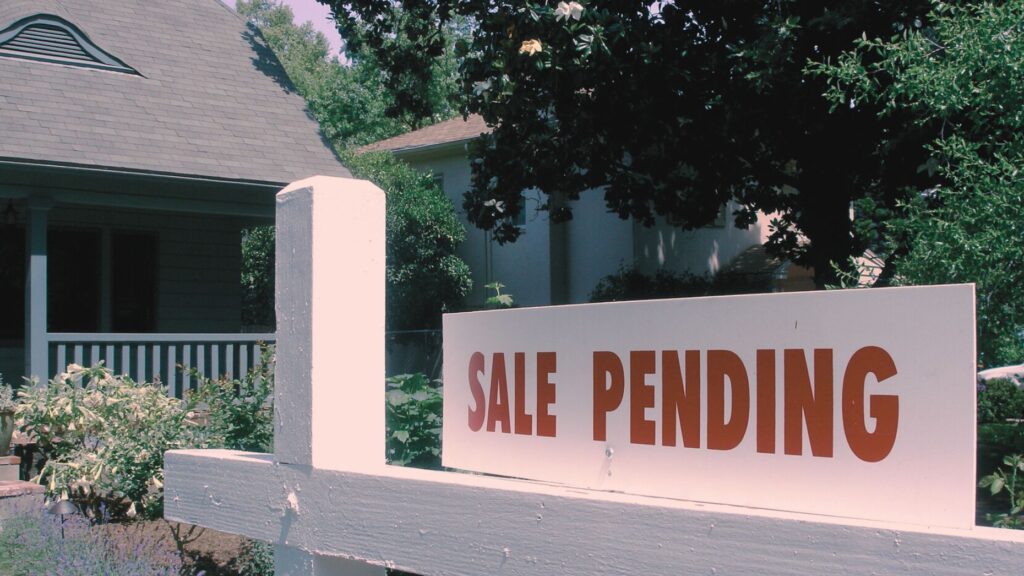

Homebuyers are continuing to retreat from the market, according to the National Association of Realtors’ June pending home sales report.
Pending home sales, which account for the number of listings under contract, declined 0.8 percent from May and 2.8 percent from June 2024. Pending home sales dropped the most in the West, with contract signings falling 3.9 percent month over month and 7.3 percent year over year.
The South and Midwest also experienced monthly and annual declines ranging between 0.7 percent and 2.9 percent. The Northeast was the only outlier, with contract signings increasing 2.1 percent from May and remaining unchanged from the previous year.

Lawrence Yun
NAR Chief Economist Lawrence Yun said the steady drop in pending home sales is unconcerning as mortgage applications continue to rise, a trend that’s likely to continue if the Federal Reserve moves forward with a September short-term interest rate cut.
Agents are hoping a short-term interest rate will open the door to softening mortgage rates (the Fed doesn’t have direct control of mortgage rates); however, when the Fed cut rates by 1 percentage point at the end of 2024, mortgage rates went up by the same amount.
“The data shows a continuation of small declines in contract signings despite inventory in the market increasing. Pending sales in the Northeast increased incrementally even though home price growth in the region has been the strongest in the country,” he said in a prepared statement. “The Realtors Confidence Index shows early indications of potential contract signings increasing moving forward.”
“Realtors are optimistic that homebuying and selling activity will increase,” he added. “That confidence is supported by the fact that mortgage applications have been rising.”
Although Yun was bullish on future sales, Bright MLS Chief Economist Lisa Sturtevant said June’s pending sales are a canary in the coal mine.

Dr. Lisa Sturtevant
“The June pending home sales data provides further evidence of a stuck housing market, increasing the likelihood that we will end the year with fewer transactions than last year’s 30-year low,” she said in an emailed statement to Inman.
Although mortgage rates and inventory in many parts of the country are moving in a more positive direction, Sturtevant said that doesn’t solve homebuyers’ fears about the overall state of politics and economics in the U.S.
“It’s not just about mortgage rates. The average rate on a 30-year fixed-rate mortgage was 10 to 15 basis points lower than a year ago, but pending sales activity was still no higher. Affordability is a major challenge for homebuyers right now,” she said. “The median sold price nationally hit a new record high in June, and prices of existing homes are now higher than new home prices.
“It’s also not about a lack of inventory. In today’s report, pending sales were lower in the South and West regions, where inventory has been increasing quickly. In the Northeast and Midwest regions, pending sales activity was higher than a year ago, which has been leading to faster home price appreciation in those markets,” she added. “Prospective homebuyers are increasingly anxious about the overall economy and their own personal financial situations.”
The Bright MLS economist dashed hopes of a fall rebound, saying that a September rate cut likely wouldn’t be enough to lift sales by year’s end.
“Unfortunately, there is little to suggest any sort of major rebound in home sales as we head into fall,” she said. “The Federal Reserve has telegraphed no rate cut in July, and even if the central bank did cut rates in September, it is likely that mortgage rates will remain in the mid- to high-6 percent range amidst continued economic uncertainty.”
“And while home price growth is slowing, there are no signs of any major price drops at the national level,” she said. “As a result, I think it is likely that 2025 will continue to be a ‘stuck’ housing market with both buyers and sellers waiting until 2026 for more certainty.”