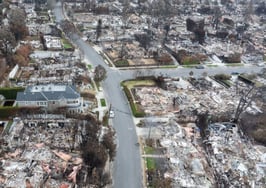

“It’s very apocalyptic up there. That’s the best way I can describe it,” Spokane, Washington, real estate agent Alyssa Curnutt said of the scene in her Five Mile neighborhood this week.

Alyssa Curnutt
Curnutt told Inman Wednesday that she had recently returned to her neighborhood on foot, even as the area remained under a Level 3 evacuation order and vehicle access was still restricted. She said authorities were not formally allowing residents to return but were not stopping people who entered on foot.
Her home was still standing, but she said it had sustained extensive smoke damage. Just a few doors away, other homes were gone.
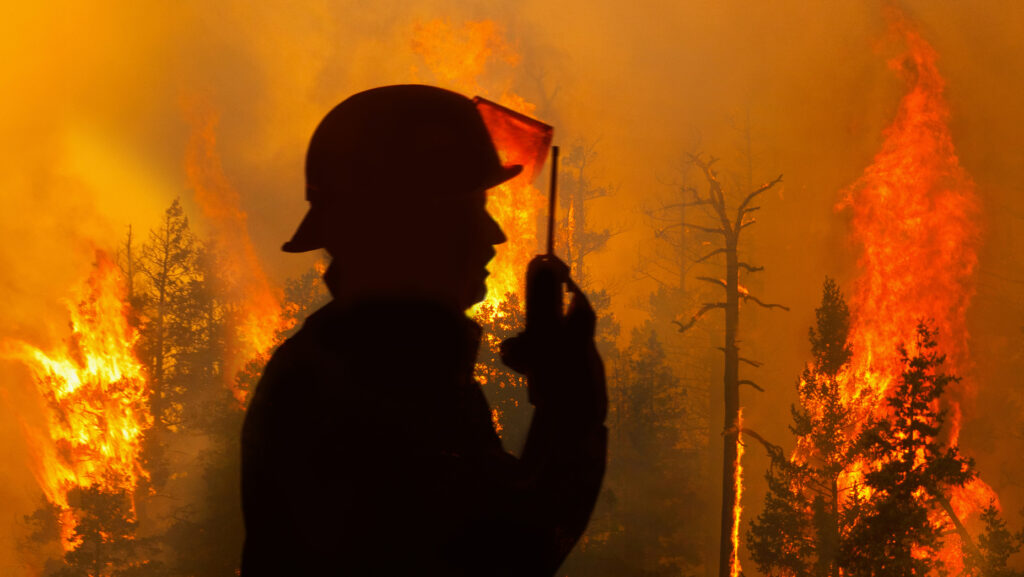
A series of fast-moving wildfires tore through northwest Spokane beginning Saturday, destroying hundreds of buildings and forcing tens of thousands of residents to evacuate.
Curnutt was out of town for her birthday when she received a Level 3 evacuation notice. Within minutes, a fire that initially seemed too distant to threaten her home had climbed toward Five Mile, where she lives with her children.
Curnutt said she had called her mother after receiving the evacuation alert, and at first, neither believed the fire would reach her neighborhood. About 10 minutes later, her mother called back and said she was heading to Curnutt’s house to retrieve passports and other belongings, but authorities had already blocked access. Curnutt changed her flight and returned to Spokane early.
“There’s a haze everywhere, and the homes are rubble, and cars melted to the driveway,” Curnutt said. “So I won’t be in for weeks. My friend, who I was with on my trip, she lost her home.”
The destruction Curnutt described is part of a much larger disaster unfolding around Spokane. The fires have destroyed more than 850 buildings, according to local officials cited by the Associated Press, while tens of thousands of residents were ordered to evacuate at the height of the emergency. Curnutt said the Old Trails Fire spread rapidly through northwest Spokane, jumped the Spokane River and tore into residential neighborhoods. The Autumn Fire was also among the major fires affecting the area.
For local housing professionals, the scale of the losses has quickly turned the fires from an emergency response into a housing problem. Unlike wildfires that largely consume remote forestland or scattered rural properties, Curnutt said much of the destruction she witnessed occurred in established suburban neighborhoods.
“It is not wooded or rural,” she said of the Five Mile area. “It’s very suburban.”
Some of the neighborhoods were also relatively new. Curnutt said much of her own development was built between 2020 and 2024.
But that vulnerability was not entirely unforeseen.
Spokane County’s 2026 hazard mitigation plan warned that growth in population and the number of structures had significantly increased the county’s vulnerability to natural hazards, particularly wildfires. The plan said wildfires had also increased significantly in occurrence and extent since the county’s previous update.
Displacement tests Spokane’s housing supply
Before the fires, Spokane County’s housing market had been showing signs of tilting in buyers’ favor, Curnutt told Inman. She said homes around Spokane’s average price point could still move quickly when priced well, while other listings were taking two or three months to sell.
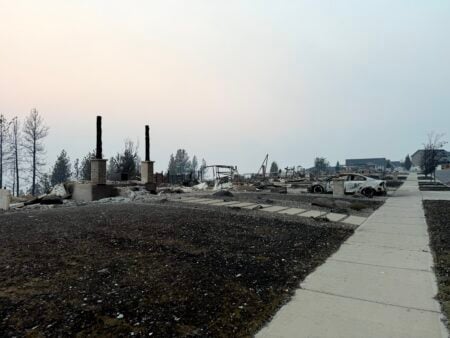
A photo shared with Inman by Alyssa Curnutt
The median listing price stood at $499,900, down nearly 4 percent from a year earlier, according to Realtor.com. Homes spent a median 36 days on the market, up more than 19 percent year over year. Parcl Labs, meanwhile, counted 2,930 active listings in Spokane County as of Aug. 7. More than 41 percent had received a price cut, while prices measured on a per-square-foot basis remained 4.7 percent above year-ago levels but 16 percent below their June 2022 peak.
How much of that available inventory can absorb residents suddenly displaced by the fires is much harder to determine.
“I think we’re just now getting a full grasp on how we can help and kind of getting out of the shock of it,” Curnutt said. “There was so much confusion and people don’t know where to donate and what to do.”
Agents and residents have already begun cobbling together temporary housing.
Spokane agent Matt Brunner, founder of the brokerage Project Spokane, created an online fire-relief housing board that allows people displaced by the fires to connect directly with residents offering spare rooms, RV spaces and entire homes.
As of Friday morning, Brunner shared in an Instagram post that 114 people registered through the site were still looking for housing, compared with 98 available housing options. He said more than 2,500 people had visited the site in three days.
Brunner also posted a message from one housing provider asking to remove a property from the board after connecting with people who planned to stay there.
Brunner’s effort offers only a small window into the overall demand created by the fires. It remains unclear how many households will ultimately need temporary housing, how many will be displaced for months or years, or how many destroyed homes will eventually be rebuilt.
Insurance and rebuilding challenges emerge
The fires are also beginning to complicate transactions that were already underway.
Curnutt said one transaction she was involved in was nearly disrupted this week after the sellers, who were also buying another home contingent on the sale, were told that their insurance binder was being pulled. They were able to find another insurer before closing, she said.
Curnutt said she had also heard from lenders and other industry professionals that properties close to the fires were facing additional scrutiny, including new appraisal or inspection requirements intended to verify that homes had not suffered fire or smoke damage.
Those reports could not immediately be independently verified, but they highlight how the fallout from a wildfire can extend well beyond the homes that burn. Properties left standing can still face insurance problems, financing delays and costly smoke remediation.
“If the home is not in the same condition, the buyer has the right to not close,” Curnutt said.
The longer-term challenge will be rebuilding. Curnutt said Spokane was already struggling with a slow permitting process before the fires. Replacing hundreds of structures could put additional pressure on contractors, building materials, local permitting departments and insurers.
There are also questions about whether homeowners whose properties rapidly appreciated during the pandemic carry enough coverage to fully replace what they lost. Curnutt said prices in her newer neighborhood rose sharply after 2020.
“Did people adjust their insurance? I don’t know,” she said. “There are a lot of concerns if people are even insured enough.”
Those concerns echo the aftermath of major wildfires elsewhere in the country.
California communities including Altadena and Pacific Palisades have spent the past year confronting many of the same challenges after devastating fires destroyed thousands of homes around Los Angeles. Residents faced scarce temporary housing, insurance uncertainty, permitting hurdles, allegations of price gouging and the enormous cost and logistical challenge of rebuilding entire neighborhoods.
Similar questions followed the destruction of Lahaina in the 2023 Maui wildfires. The Spokane fires now place another housing market in that position.
For residents such as Curnutt, however, the longer-term questions about inventory, insurance and rebuilding remain secondary to the immediate reality of a neighborhood that changed almost overnight. For now, she said, residents are simply trying to find places to live.
“I think the rebuilding process, once the immediate fire danger goes away, is when the community is going to need help,” Curnutt said.