
Redfin has partnered with The Weather Company to display historical weather data on for-sale listings, according to an announcement on Wednesday.
The metrics include month-by-month averages for temperature, precipitation, snowfall, humidity and the UV index. The information is displayed alongside Redfin’s Sunscore, a new 0-100 property-level index that shows how much sunlight a home gets.
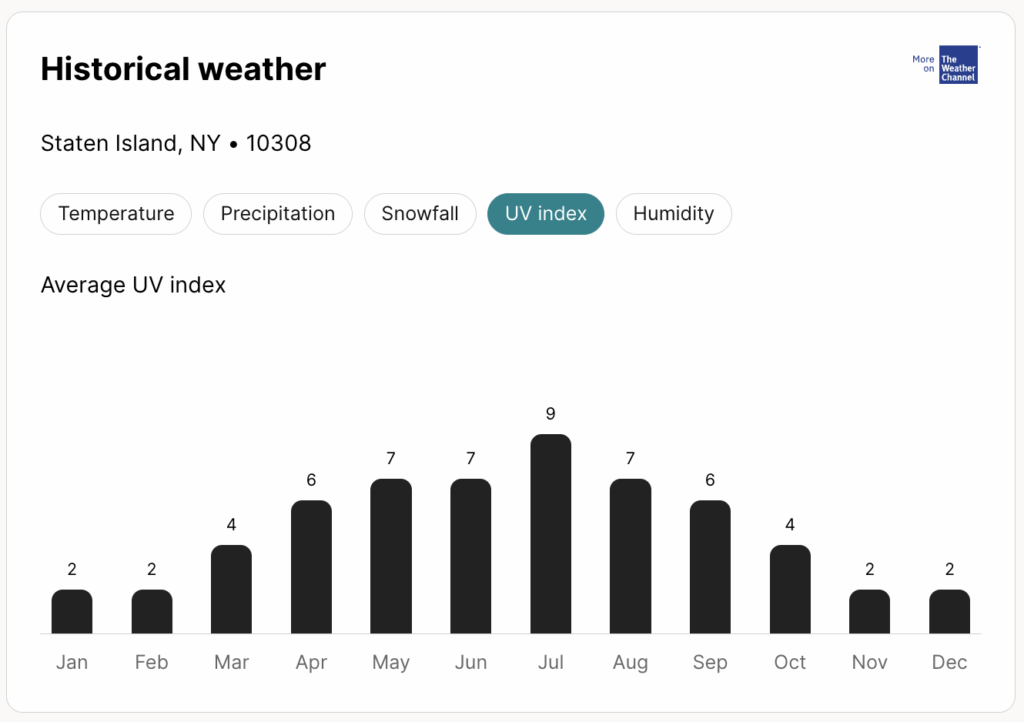
A screenshot of weather data on Redfin.com.
The portal said weather is becoming an increasingly important factor in homebuyers’ decisions, with 22 percent of Americans saying that “better weather” influenced their decision to move to another state. Another 21 percent said climate change and natural disasters were a motivating factor — ranking ahead of affordability, job opportunities and proximity to family.
“By bringing weather data directly into the home search experience, Redfin makes it easier to compare neighborhoods based on the factors that matter most to you — not just the home itself,” the announcement read. “By integrating these insights directly into every listing, buyers can better understand the climate they’ll experience throughout the year — not just the weather on the day they schedule a tour.”
The integration of historical weather metrics builds on Redfin’s dedication to providing climate-related metrics, even as Zillow decided to pull climate risk data from listings in November.
A December Redfin report said searches for climate risk data tend to spike after natural disasters — the national click-through rate for this data rose after Hurricanes Helene and Milton (3.3 percent to 4.1 percent), the Los Angeles wildfires (3.5 percent to 3.9 percent) and the Texas Hill Country floods (3.3 percent to 3.6 percent). The boost often lasted for one to three months before returning to pre-disaster trends.
“Humans often have short memories when it comes to natural disasters,” Redfin Chief Economist Daryl Fairweather said in the report. “A major fire or storm can jolt homebuyers into paying attention to climate risk because the event feels fresh and likely to happen again, but this urgency is fleeting.”
“That’s why local leaders have a small but crucial window after a disaster to educate people on disaster preparedness and resilience,” she added. “Homeowners should think about natural disasters as an ongoing risk and have an action plan in case catastrophe strikes.”
Access to weather and climate risk data will likely rise to the top of homebuyers’ minds this year, as NOAA’s Climate Prediction Center El Niño Watch places the probability of El Niño conditions emerging at 82 percent by May–July 2026, with a 96 percent chance the pattern persists through winter 2026–27.