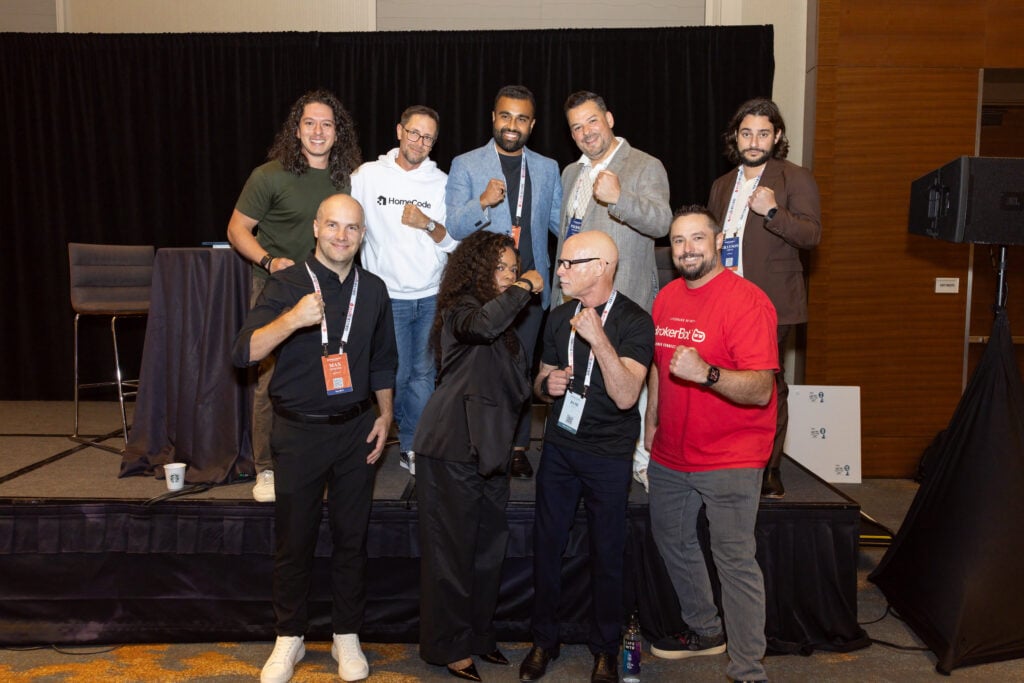

I recently put out a LinkedIn post asking founders and product teams to come show me what they’ve been building, and the response was overwhelming — more than a dozen conversations in five days, a mix of companies I’d been following for years and a few I’d never heard of until they made their way onto my calendar.
Among the AI tools that emerged from those conversations, there was a common throughline: Instead of trying to adapt new tech to old processes, these founders are rethinking the way real estate agents work by starting from desired outcomes and reverse-engineering the tools that would create them.
What follows is what I saw, what stuck with me and what I think the industry should be paying attention to.
Contre — contract intelligence Cory Turnbull | contre.ai
This product was born from a $10,000 mistake — a seller credit buried in a purchase agreement that nobody caught, not the TC, not the broker, and it had to be paid out of pocket at the closing table. Cory Turnbull built Contre to make that kind of failure preventable.
The platform reads every document in a transaction — purchase agreements, HOA docs, title reports, inspections, disclosures — cross-references them for missing signatures, date conflicts and compliance gaps and wraps it all in a brokerage-trained chatbot so agents can get instant answers about their own rules and state law.
They’ve been live less than a month and are already in pilots with major brokerages, with SkySlope’s sales team preparing to push the product to their entire customer base.
The AI isn’t the star here; the real insight is that real estate has a chronic reading problem, and Contre is building a system that forces documents to speak for themselves before agents and clients get hurt.
Oppy — AI employees for real estate Alex Gustafson
Alex Gustafson kept coming back to the same refrain throughout our conversation: Stop thinking of this as software you set up, and start thinking of it as a person you hire. Oppy lets you build and deploy AI employees — they call them Oppies — across every channel your business already uses: phone, text, email and web chat.
Describe a role the way you’d write a job description or an SOP for a human assistant, and the platform handles the rest. A broker who can articulate what they’d expect from a great transaction coordinator already has everything they need to build a capable Oppy.
The platform has clearly matured fast; they’re shipping two to three features a week, and things like real-time website visitor engagement and pre-meeting research running automatically on your calendar feel genuinely useful rather than just demo-friendly.
Homes.com — conversational AI search Alex Jacobs
Alex Jacobs walked me through the AI search experience Homes.com has been building into the platform — fully conversational, voice-driven, available in 50 languages, no filters required.
Inside a Matterport tour, you can ask it to remove furniture, check if your king bed fits, pull school ratings, and draft a client email focused on the features that matter most — all in one unbroken conversation.
The membership model for agents includes priority listing placement, retargeting ads across 30,000 sites, lead verification and robust analytics.
Agently — Agent production engine Maxim Grebenuk
The product is barely recognizable from what it was a year ago. Agently started as a learning management system — a place for brokerages to store training videos — but Maxim Grebenuk made a clear-eyed pivot: training doesn’t close deals. Actions do.
Agently’s newest iteration is The AI Team Leader. As Maxim puts it, “We used to sell Agently as a tool. Now we sell outcomes.”
That means, instead of: Hey, buy this tool to help you onboard, train and coach agents, Agently offers: Hey, buy this tool that will onboard, train and coach agents for you.
The platform itself has been rebuilt as a gamified mobile tool where every prospecting call, conversation, and appointment has a dollar value attached to it, filling up a visual “house” that represents the agent’s next commission check. Hook up your CRM, and it updates automatically.
His philosophy on accountability was delivered without much sentimentality: motivation, coaching and persuasion all evaporate. What actually works is showing clients like Team Fast the direct, visible line between the action they’re taking right now and the money they’ll eventually put in their pocket.
He’s not trying to turn every agent into a top producer — he’s honest that it’s really designed for that middle 30 percent of agents with potential who aren’t getting the structure and feedback they need to become consistent.
Cloze — Real estate platform and brokerage intelligence Alex Coté and Dan Foody
Cloze built its product from outside the industry, started mobile-first, and that DNA shows in how they think. The platform automatically pulls in an agent’s email, calendar, and real phone text messages — not a secondary line — runs it through AI to surface what needs attention, and now includes on-device meeting transcription that never sends audio to the cloud.
In recent years, marketing and lead management capabilities expanded beyond Cloze’s original CRM capabilities, while newer additions bring hundreds of integrations with tools like RealScout, SkySlope and Canva directly into the agent’s workflow without bouncing between tabs, and a voice assistant that can act across third-party apps from inside Cloze itself.
But Dan Foody’s point about proprietary data is solid: Everyone is rushing to adopt AI, but if you feed the same data into the same foundational models as every other brokerage, you get the same outputs.
Cloze unifies data across a brokerage’s systems so that it can be used more effectively. The brokerages that will actually pull ahead are the ones who figure out what data only they have — the depth of their agents’ relationships, the history of their conversations, the patterns in their pipeline — and use that as the input. Listing data is a commodity. Your relationships aren’t.
Conrad — One system for the full transaction Leo Jorge
Leo Jorge built Conrad around a simple thesis: Zillow and Redfin are catalogs. Conrad wants to be the store.
The platform connects consumers, agents and loan officers in a single AI-driven system, and has found its early traction with mortgage brokerages.
An AI assistant named Link reaches out to incoming leads via text, handles objections with vertical-specific knowledge, and progressively extracts the information needed to keep a deal moving — feeding into a home search portal that shows buyers exactly what they can afford based on their actual approval with integrated lenders.
Licensed as a brokerage in seven states now, the real estate side is still catching up to the mortgage side. But the logic is sound: Start with the loan officer, attach home search to real approval data, and weave the agent into the same system to thread the needle that bigger players have been trying and failing to thread for years.
The best founders aren’t chasing the shiniest problem. They are solving something specific that has personally cost them time, money or sleep, and then building the thing they wished had existed. At the end of the day, that’s still the best reason to start a company.
If you’d like to have your product or service featured in Troy’s next Diary roundup, drop him a line at HomeCodeReviews.com.
Troy Palmquist is the founder and principal at HomeCode Advisors. Connect with him on LinkedIn.