
The economic picture has shifted again this summer, as renewed uncertainty overseas puts upward pressure on oil prices, interest rates and mortgage rates here at home. That’s creating some headwinds for the housing market, but it may also be opening a window of opportunity for buyers.
The first number to know this month: $85. That is the price of a barrel of oil as of Aug. 17, up 25 percent from its midsummer low on July 6.
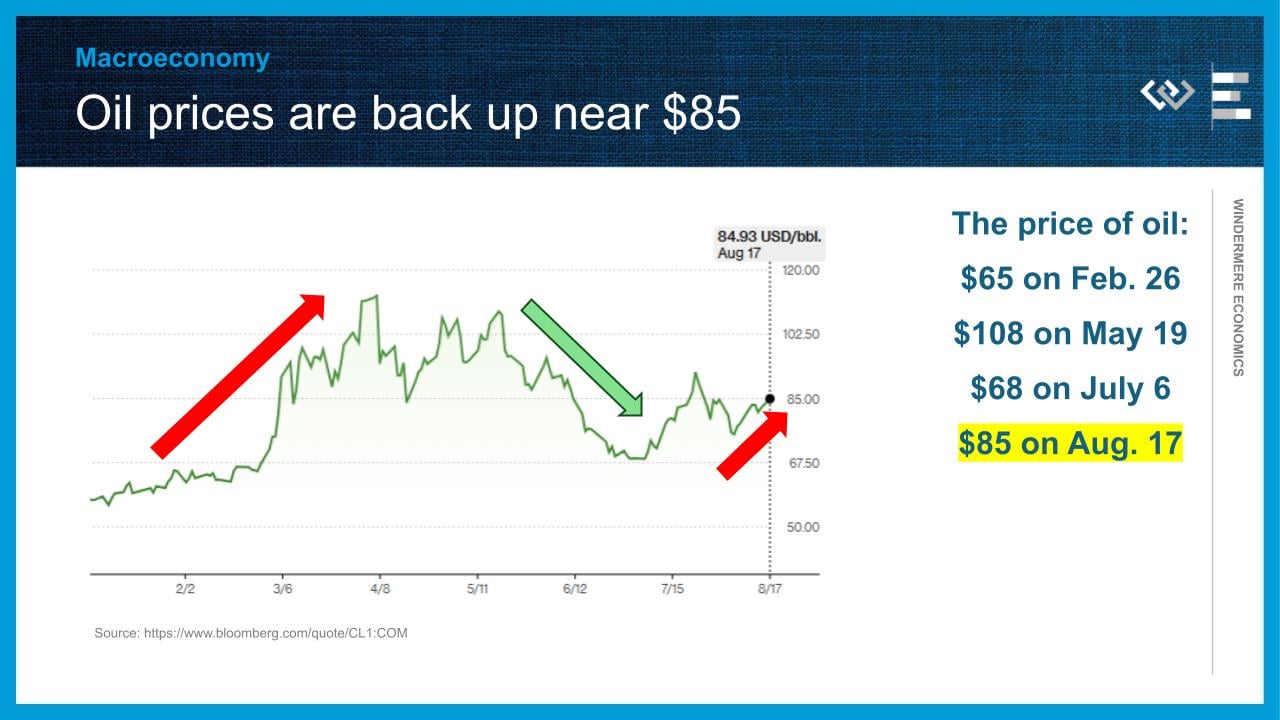
The exact level of prices is not so important as the fact that rising prices reflect markets’ growing uncertainty that the war in Iran, and shipping through the strait of Hormuz, will return to peaceful normalcy anytime soon. And that means continued, elevated uncertainty, inflation and interest rates.
Which brings me to the second number to know this month: 4.7 percent. That is the yield that 10-year Treasuries reached on Aug. 17, and it’s within spitting distance of the highest 10-year yield since 2007. That reflects market concerns about energy prices, inflation and the ample supplies of government debt being issued by the United States and other countries.
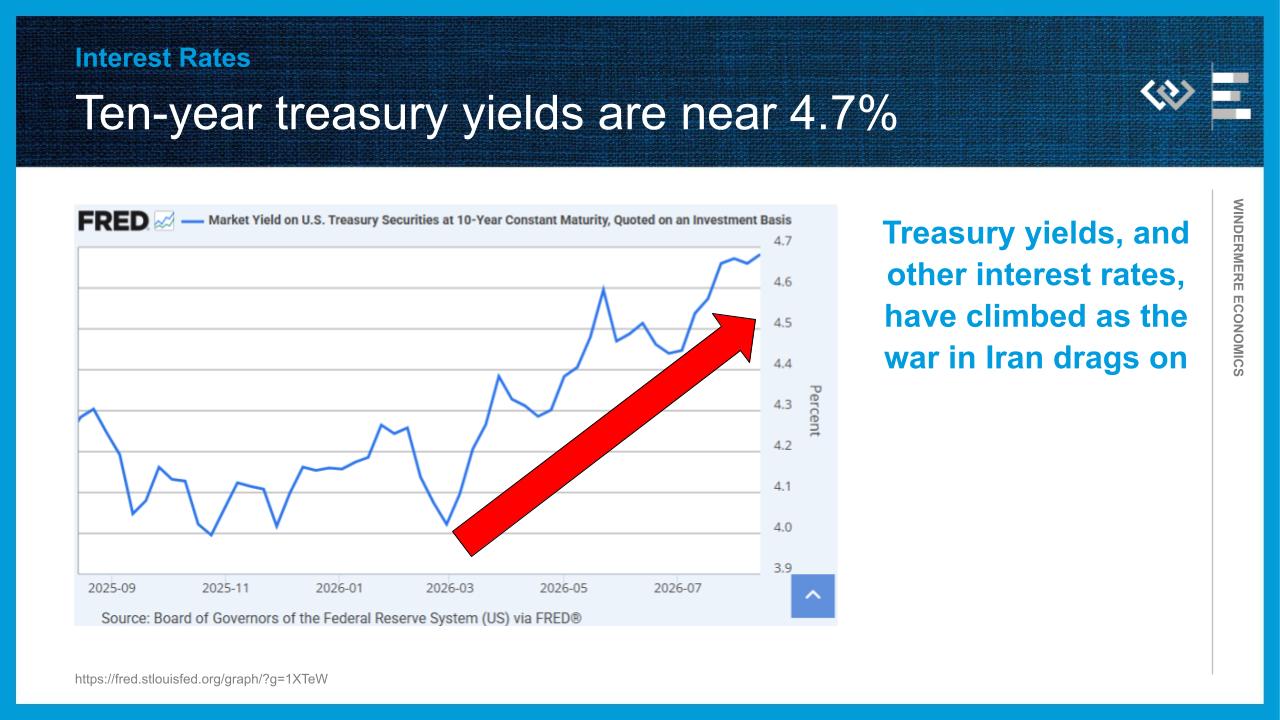
And where the 10-year Treasury yield goes, mortgage rates tend to follow. Here in the dog days of summer, mortgage rates are staying almost three-fourths of a point above 6 percent, which they touched on the eve of the war in Iran.
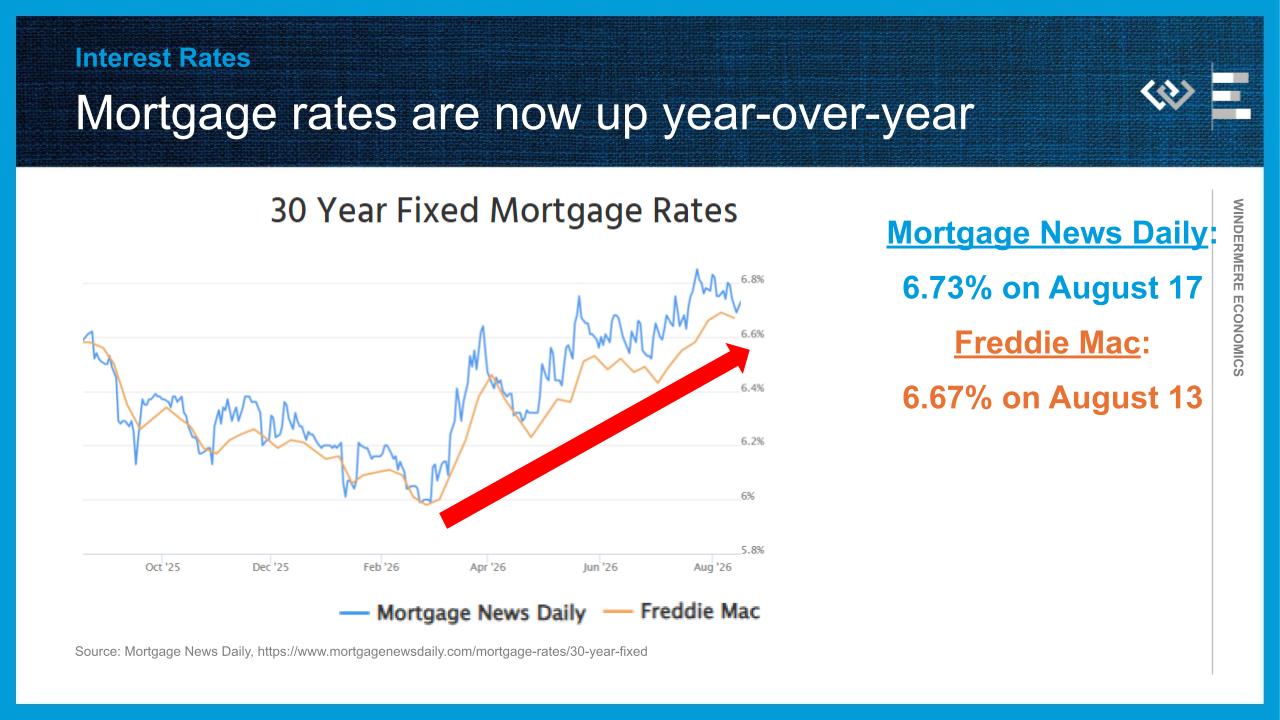
This week also marked a watershed where mortgage rates are now higher than the same time a year ago, which will likely make for a headwind on home purchase demand, compared to year-ago levels, for the rest of Q3.
The fourth number to know: 1,126,000. That is how many active listings were on the market nationally at the end of July, according to Realtor.com. That is just above the 1.1 million active listings in July of last year.
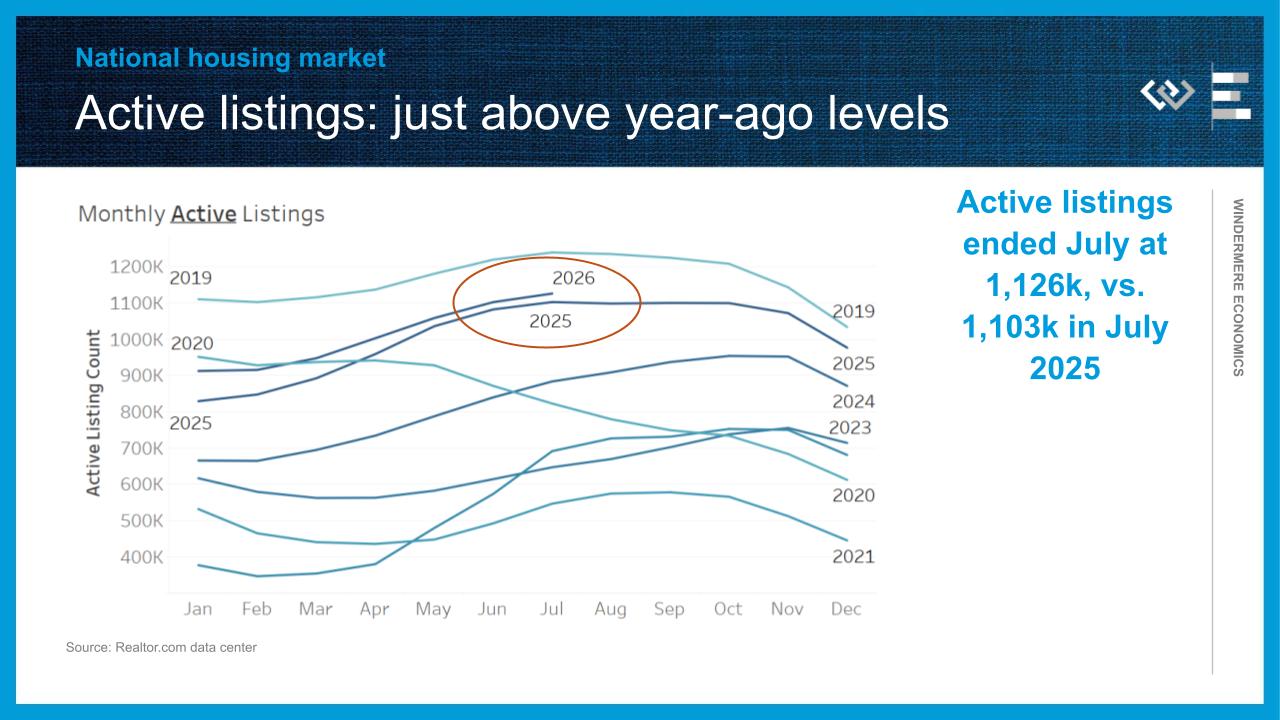
Put another way, active listings were up just 2 percent year-over-year in July. That’s the third month in a row with that low and steady rate of growth, after a sharp slowdown in growth since May of 2025, when inventory was up 32 percent year-over-year.
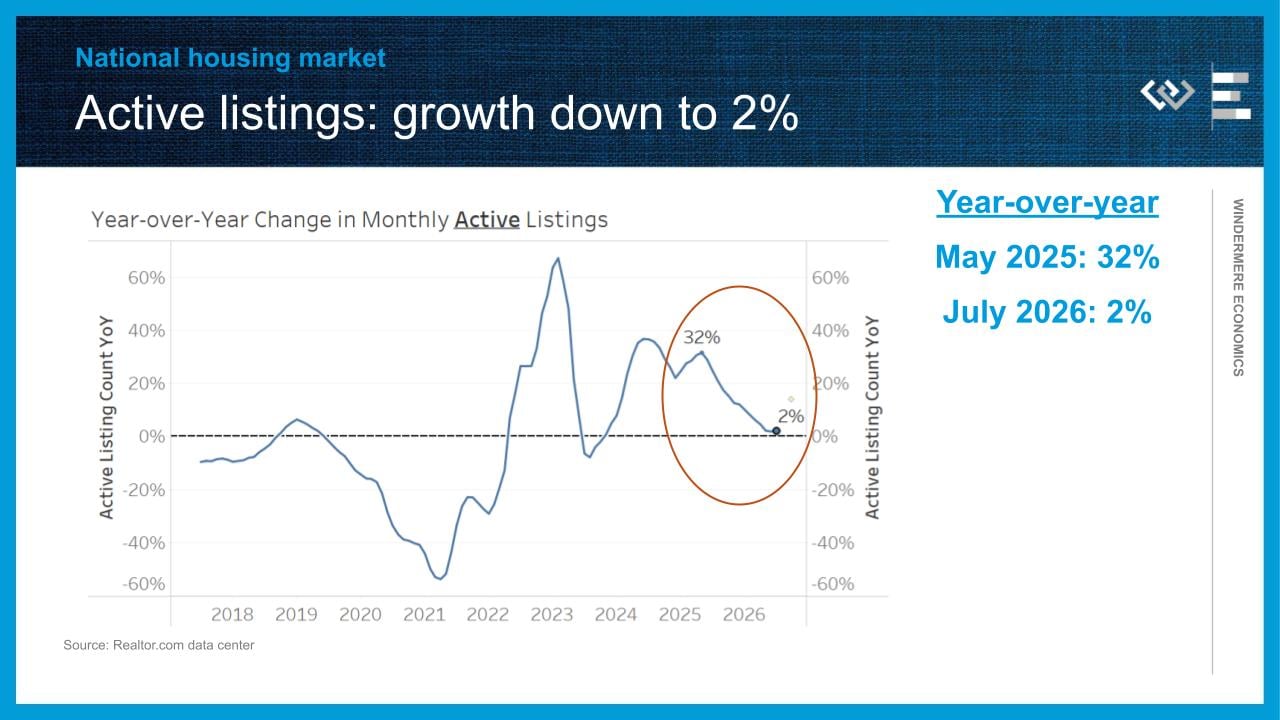
And finally, pending sales were up only 2 percent year-over-year in July. After a few months of more like 5 percent growth, that might signal the start of a downshift in sales activity as buyers grow tired of elevated mortgage rates.
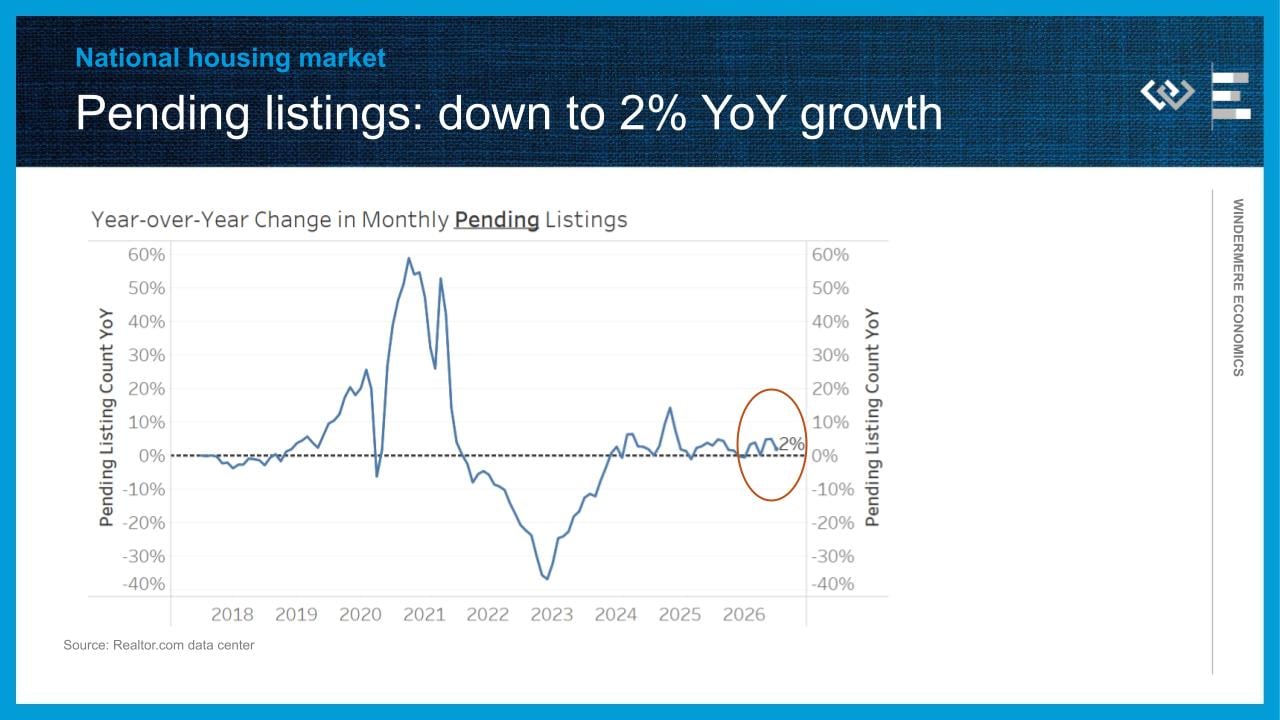
Between the flat inventory growth and flat sales, this looks like a fairly balanced market between buyers and sellers for this time of year. But don’t forget that late summer is usually one of the best times to buy, because the level of inventory is high, and, right now, competition from other buyers is not nearly as fierce as it will likely be next spring.
Jeff Tucker is the Principal Economist for Windermere Real Estate in Seattle, Washington. Connect with him on X or Facebook.