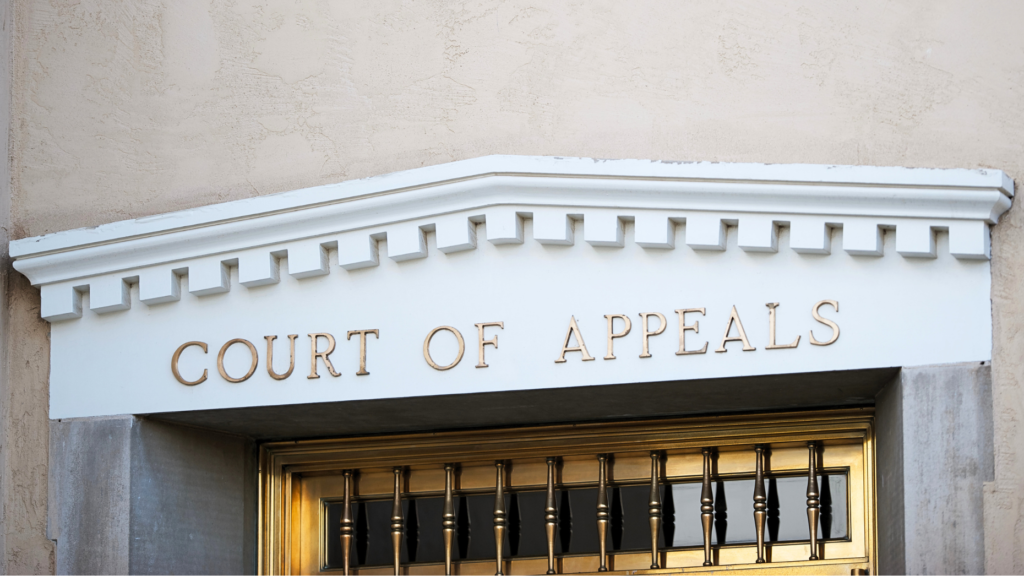

Two objectors who challenged the Sitzer | Burnett commission settlement on appeal are asking the 8th Circuit to take another look at its Aug. 19 ruling. Robert Friedman and Monty March, both of whom challenged the Sitzer | Burnett settlement on appeal, have filed separate petitions seeking either a panel rehearing or rehearing en banc.
Friedman filed his petition on Sept. 1 and argued that the appeals court used the wrong legal standard and improperly allowed the nationwide settlement to release separate commission claims involving the Real Estate Board of New York (REBNY). Friedman’s challenge focuses largely on whether claims involving REBNY and its Residential Listing Service in New York City arise from the same underlying factual basis as the claims resolved through the nationwide Sitzer | Burnett settlement.
His petition argues that the panel applied a deferential abuse-of-discretion standard rather than considering anew whether the REBNY claims and the settlement claims arise from an “identical factual predicate” — a key question in determining how broadly a class-action settlement can release claims.
“No deference under an abuse of discretion standard is thus warranted in reviewing a District Court’s application of the identical factual predicate doctrine,” Friedman wrote in his petition. “For this reason, the panel’s decision conflicts with the well-settled principle that the preclusive effect of a settlement agreement is a question this Court should have reviewed de novo.”
March filed his own petition Sept. 2, raising largely the same arguments. His petition argues that the panel applied the wrong standard of review, that the REBNY claims arise from a different alleged conspiracy involving different rules, and that the district court violated due process by requiring objectors represented by counsel to personally appear at the final approval hearing.
Friedman also points to earlier representations from REBNY and several New York brokerage defendants that REBNY operates independently of the National Association of Realtors and maintains its own rules and code of ethics. He argues those distinctions make the New York claims materially different from those released through the nationwide settlement. March made a similar argument, pointing to previous statements from REBNY and brokerage defendants to the Judicial Panel on Multidistrict Litigation describing the New York litigation as factually distinct from the NAR cases.
Both petitions also renew a due-process challenge involving U.S. District Judge Stephen Bough’s requirement that objectors personally appear at settlement hearings.
In a statement shared with Inman, an NAR spokesperson said the trade group believes the 8th Circuit reached the correct result.
“NAR believes the 8th Circuit Court of Appeals made the correct decision to affirm the settlement approval. We will respond to this petition through the appropriate legal process and continue to work to foster fair, transparent, and pro-consumer real estate markets while providing resources and value to our Realtor members nationwide.”
The petitions come within two weeks of the ruling — and near the close of the window for seeking rehearing — after a three-judge 8th Circuit panel unanimously affirmed the Sitzer | Burnett settlement, preserving more than $1 billion in commission settlements and the practice changes that followed the litigation. Friedman and March face a high bar — rehearing en banc is an extraordinary form of appellate review generally reserved for conflicts within a circuit or questions of exceptional importance, rather than a routine second look at a panel decision.
The filings do not mean the 8th Circuit has agreed to reconsider its Aug. 19 ruling. But they keep the appellate process active for now and represent remaining avenues for objectors seeking to challenge the settlement before it reaches final appellate resolution.
Reporter’s note: This story was updated after it was originally published to include reporting on a rehearing petition filed by objector Monty March and a statement from the National Association of Realtors.