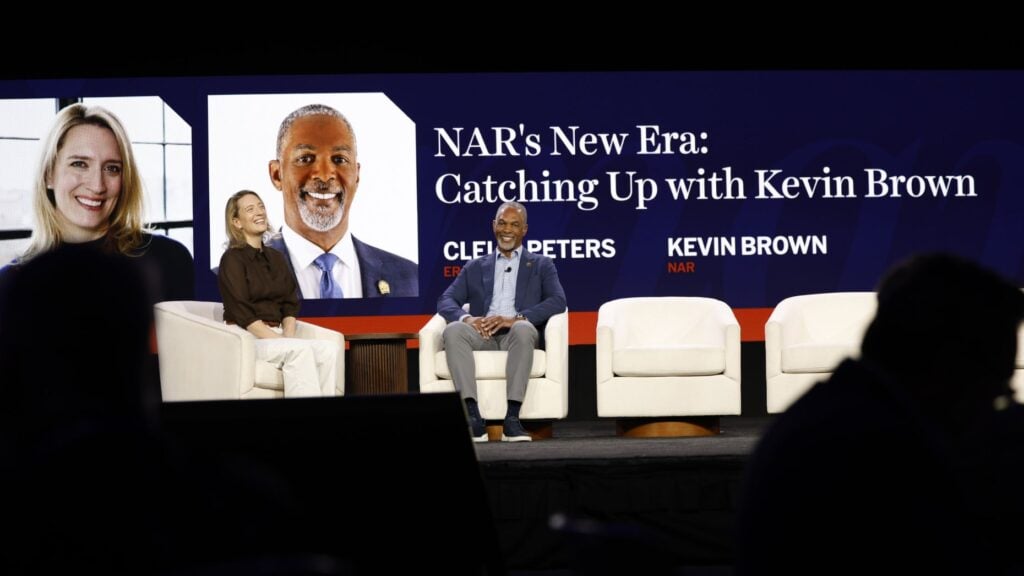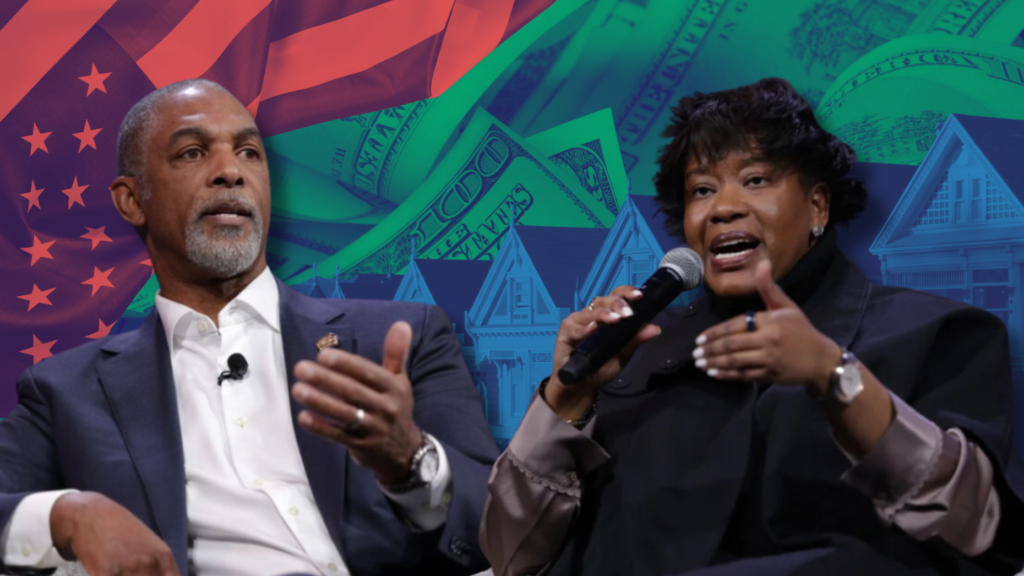

This is the second installment of a three-part series examining the National Association of Realtors and the American Real Estate Association and their roles in an industry navigating immense change — from the rise of AI to the potential fall of the current multiple listing service system.
When Nykia Wright came to the National Association of Realtors in October 2023, she was handed the keys to a house on fire.
A New York Times exposé detailed “a culture of harassment, retaliation and evasion” at the Association, leading former President Kenny Parcell to swiftly end his term amid multiple sexual harassment claims. As then-CEO Bob Goldberg and President-Elect Tracy Kasper tried to sweep up the pieces, NAR suffered another blow when a Missouri jury awarded 500,000 homesellers in the Sitzer|Burnett lawsuit $1.78 billion in damages, which could have been trebled to $5.36 billion.
The exposé and the jury’s verdict, which affirmed the plaintiffs’ argument that the Association’s cooperative compensation rule, also known as the Participation Rule, undergirded a conspiracy to make homesellers pay inflated commission costs, resulted in a financial and reputational nightmare, with consumers and Realtors alike distrusting NAR.
Wright served as a new — and steady — voice through the early days of the fallout, as NAR ditched an initial plan to appeal the Sitzer | Burnett lawsuit and instead settled, paying $418 million and changing its Participation Rule. Her performance led the group to name her permanent CEO in August 2024, becoming the first woman to lead the 118-year-old group.
Since then, Wright and her leadership team have gone about starting a new era at NAR; a process that first started with a hard-bitten chapter of staff cuts, team reorganizations, strict budgeting, risk mitigation, policy changes and tough conversations with Realtors still upset over years of bad publicity, mistrust and legal setbacks. Now, the group is focused on building the future, with a three-year Strategic Plan at the center.
“Over the past year, the National Association of Realtors initiated the most significant transformation in real estate history,” Wright said of the plan in January. “NAR — with its legacy of more than a century — stands at the threshold of a new era, one defined by transparency, innovation and unwavering service to Realtors and the broader real estate industry.”
Although Realtors have widely accepted the plan as a good first step, they’re wondering how far NAR is willing to go to truly make amends.
3 years, 75 projects
The National Association of Realtors started 2026 by unveiling a three-year strategic plan centered on increasing transparency, putting the organization back at the forefront of technological and industry innovation, and refocusing its efforts on helping Realtors thrive in their day-to-day business as the market continues to move toward a new — and often unpredictable — normal.
Wright and 2026 President Kevin Brown both said the 41-page plan signaled the dawn of a new day at NAR.
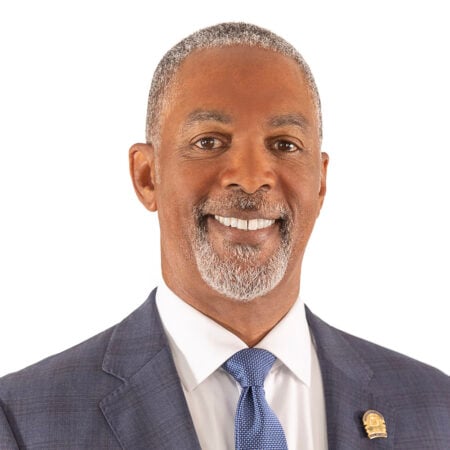
Kevin Brown
“In 2026, we’re taking NAR to the next level by getting back to business,” Brown said in January. “Our organization has been serving Realtors for more than a century, and I see this strategic plan as the first three years of our next 100 years of business.”
Since January, NAR has released two quarterly updates: The first revealed the Association had started on two-thirds of the 75 projects outlined in the plan, and the second put a spotlight on NAR’s risk mitigation work through its MLS Executive Advisory Group and the preliminary approval of a $52.25 million settlement in the Tuccori homebuyer commission lawsuit.
However, the crowning jewel of both updates seemed to be NAR’s advocacy work, primarily the passage of the 21st Century ROAD to Housing Act, which has been heralded as one of the most significant pieces of housing legislation in nearly 40 years.
Wright, Brown and other NAR leaders have upheld the Act’s passage as a prime example of NAR’s value, with Brown using most of his stage time at Inman Connect San Diego in July to explain the effort it took to get to the finish line — a 10-person lobbying team led by Shannon McGann, 535 federal political coordinators who met with each voting member of Congress 10,000 times over two years, and a number of testimonies before senate commitees.
“The American Dream of homeownership earned its moniker from decades of providing safety, security, prosperity, intergenerational wealth [and] economic independence,” Brown said. “It is literally the transformative impact of homeownership that has transformed people’s lives and moved them from the lower to the middle class.”
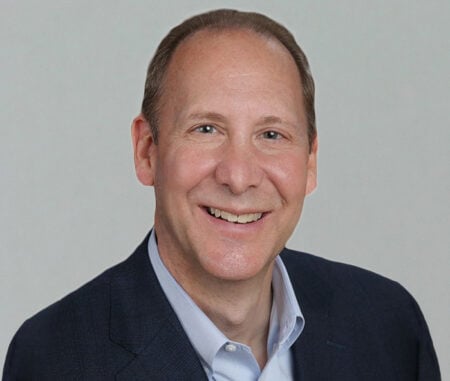
Russ Cofano
NAR’s decision to spotlight its advocacy work was a smart move, Alloy Advisors co-founder Russ Cofano, a former state association CEO and industry relations executive, told Inman. While issues like NAR’s three-way agreement, Clear Cooperation and private listing networks are a source of strong division, housing legislation is a rare area of unity.
“Having run a state association of Realtors myself, I can definitely say that it’s not easy to be effective in that way. It takes money, organizational structure and political savvy,” he said. “And quite frankly, that is still the most valuable element of the Realtor organization — protecting the economic elements around homeownership rights and the brokerage business.”
Realtors seem aligned with Cofano, with 78 percent of members telling NAR that advocacy was a “somewhat or very valuable” part of the strategic plan. However, several areas ranked higher — like helping Realtors thrive in their day-to-day business (79 percent), recommitting to professionalism (81 percent), cultivating trust in the Realtor brand (83 percent), and protecting and advancing the legal interests of Realtors (83 percent).
During the first half of the year, NAR released a new consumer campaign, “More Than Opening Doors,” hosted more than 60 live events and broker summits, debuted a new Learning Management System and educational offerings, updated the committee structure and application process, and clarified MLS guidance on broker communication and pre-marketed listings, among several other things.
As for how NAR is executing on those higher-priority goals, an Inman survey revealed a slight disconnect.
Only 21 percent of Inman survey takers named “tools, benefits or data” as an argument in favor of the value of a NAR membership. Meanwhile, “events and networking opportunities” was the least-selected argument in favor of the value of a NAR membership (8 percent). Only 20 percent of respondents agreed that NAR’s “professional designations and certifications are valuable to agents,” a decline from 30 percent in Inman‘s November survey.
Several brokers told Inman they appreciated the strategic plan — one was particularly excited about Real Property Resource (RPR)’s new AI-driven Metro Market Statistics dashboard — but still worried whether it would reach the average Realtor and have an impact they could feel now, not years later.
William Raveis Broker Associate Matt Brown said agents need “immediate relief during this difficult post-settlement market.”
“The gap isn’t the content; it’s the altitude,” Manhattan Miami Real Estate Managing Partner Anthony Guerriero added. “The plan speaks to the Association’s problems, and the agent’s problem is much smaller and much more urgent than that: What do I put in writing about how I get paid, and will it hold up when a buyer pushes back? Any plan that doesn’t reduce to something you can hand a client on a Tuesday reads as housekeeping.”
Bridging the communication gap
As part of its overhaul, NAR tapped veteran media relations and public affairs leaders Raffi Williams and Bennett Richardson to align the Association’s marketing and communications with leaders’ focus on increasing transparency and rebuilding trust. Williams and Richardson told Inman their team is striving to be more open with the media, has crafted a more engaging social media presence, launched the new Change Agents podcast and increased the number of member focus groups, surveys and newsletters.

Raffi Williams
“Trust is rooted in transparency,” Williams said. “And so that’s why we’re trying to take the approach of being as transparent an Association as possible to answer the questions our members have about what we’re doing on their behalf day to day … We’re making sure that we are being transparent in how we communicate about legal risk.”
“We also are constantly doing quarterly focus groups and surveys with our members to make sure that we are hearing their concerns and make sure that we are addressing [them]. And then when we address it, we are communicating to them about how we are addressing it,” he added. “There’s also the way that we are now engaging with media like yourself. We are commenting. We are responding to any questions the press has when it comes to our business.”
The push towards transparency hasn’t been without its roadblocks, with NAR CEO Nykia Wright recently detailing the challenges of effectively reaching a membership that rivals the size of global retailer Walmart.

Nykia Wright
“Communication is very, very difficult, and that has nothing to do with [Bennett]. I’ve got best in class,” she said during a one-on-one interview at Inman Connect San Diego. “But the problem is, how do you meet 1.4 million people at the optimum time for them to be met? How, when their attention is already divided amongst their family, amongst their business, amongst activities of pleasure, do you get to slide in and say, ‘This is what we’ve done for you today; we would like you to fill out this survey to help move this forward?'”
“And so all of the work that we are doing trying to get it all the way down to the average Realtor is the most difficult part,” she added. “I wouldn’t say it’s falling flat. I would just say it is a continual thing, and the ball continues to move as more information is coming into the industry.”
Clever Real Estate Agent Network Head Cameron Walker — who spends much of his time navigating the same comms challenges as NAR’s team, albeit on a smaller scale — said the Association’s lingering antitrust fears are what’s keeping it from reaching Realtors in a more meaningful way.
Walker said his colleagues are navigating increasingly difficult conversations about commissions with cynical consumers, and said NAR needs to create “talking points and tools to have those conversations this week, not some [three]-year vision statement.”

Cameron Walker
“The public message is that NAR has changed its practices and is moving forward — but this is a compliance story, not a trust story,” he said. “A trust story would focus on actual consumer outcomes, as opposed to policy changes.”
“Right now,” Walker said, “the message is, ‘We changed the rule, and we complied.’ Trust would begin with consumers and focus on sellers’ real competition and choice with respect to commission, buyers’ value and upfront explanations [and] concrete improvements in satisfaction.”
“This is the difference between saying, ‘We changed the process’ and ‘Here’s how the process is better for you,'” he added.
Walker said the Sitzer | Burnett buyer-broker commission lawsuit is still a sore spot for Realtors, although the $418 million settlement and ensuing change to the Cooperative Compensation Rule is now two years in the rearview mirror. Agent commissions have remained largely unchanged since 2024. However, macroeconomic pressures matched with consolidation and the intensifying industry split over private listings mean the commission talk is getting muddier.
“In order to achieve this change in the trust story, NAR leadership needs to be able to speak about the settlement in simple terms,” he said. “Agents do not follow the settlement; the message they receive is based on their broker and NAR’s failure to adequately explain the settlement.”
When met with these criticisms, a NAR spokesperson said the Association has heard similar sentiments from members in its quarterly focus groups, but added that NAR is working to provide new resources and guides to help them navigate their day-to-day business.
Regarding commissions, the spokesperson pointed to NAR’s facts.realtor homepage, launched in 2024. The page features multiple FAQs and guides, including two PDFs for buyers and sellers.
“Just a reminder that our Strategic Plan, which is the roadmap for how we will deliver for members from this year until 2028, was directly informed by more than 150,000 members and industry participants,” the NAR spokesperson said. “We still have two and a half years of work left to accomplish on the Strategic Plan. However, as our updates from the first half of the year show, we are making progress at fulfilling our commitments and making NAR a stronger association that better helps members get to their next transaction.”
Walker said he hopes NAR can make the shift, as large industry players like Zillow use their massive communications machines to increasingly influence the way that consumers, and on some level, agents, think about real estate.
However, he has his doubts — similar to 38 percent of Inman survey takers who said they found none of the presented arguments in favor of an NAR membership persuasive, down from 31 percent in November. And when given the option to select multiple arguments, like the Code of Ethics, the power of the Realtor brand or the settlement’s effectiveness in mitigating hits to commission rates, the typical agent respondent affirmed 1.8 pro-NAR arguments on average, down from 2.2 in the previous survey.
“Most [consumers] trust Zillow and Redfin. A national association most consumers have never heard of isn’t going to win the trust game,” Walker said, in contrast to NAR’s reports about the effectiveness of its latest campaign, which they said increased consumers’ likelihood to use a Realtor by 89 percent. “I believe NAR should be devoted to aiding agents and local brokerages to do the trust conversation rather than dealing with consumers to win trust.”
Building trust, making amends
Even as NAR attempts to redirect Realtors’ eyes to the future, the Association’s missteps over the past seven years remain a source of pressure — with Wright candidly discussing the challenge of revamping an 118-year-old organization while still in the hot seat.
The CEO talked about media influence in NAR’s trust-building mission, saying that the Association’s “entrances, exits, successes, failures, misunderstandings” have been scrutinized with a heavy hand, skewing how the industry sees the work they’re doing.
“Don’t cut off your nose to spite your face. There is no other organization in the country that does what the National Association of Realtors does on behalf of the real estate industry and the ecosystem,” she said. “No other company in the country. And so, while we lost our way before, we ask you to continue to lean in and give us your feedback. My leaders have the same appetite that I have. The hungry wolf gets fed. We are hungry. We are trying to ensure that we are turning this industry around, that people are looking at this profession as something to admire and not admonish.”

Craig Cheatham
Former Alabama Realtors COO and Realty Alliance CEO Craig Cheatham said he sees the hunger Wright talked about at Inman Connect San Diego. Cheatham said NAR’s broker forums have made a difference in rebuilding confidence in the Association, with brokers trusting Wright to execute the reform she’s promised since officially taking the helm in October 2024.
“Understandably, [these forums] have been largely focused on addressing internal issues such as moving to a system of bids for products and services, adding more transparency to its financials and making progress on streamlining the staff,” he said. “NAR has hired a CEO familiar with what it takes to bring about internal, organizational reform, and she has been earning everyone’s confidence in this area.”
Cheatham said internal reform is just a first step to getting the Association back on track with its members — but that meaningful trust lies in NAR’s ability to effectively “move the mountains that face the industry,” including improving affordability and housing availability, boosting credibility in the Realtor brand, and establishing clarity and safe harbors in real estate practice.
However, Cheatham said one of the most significant things NAR could do to make amends is to tie up the loose ends created by the Sitzer | Burnett buyer-broker commission settlement.
The settlement, whose terms were affirmed by the 8th Circuit Court on Aug. 18, didn’t cover roughly 93 brokerages with more than $2 billion in annual sales volume. Some brokerages were eligible to buy into the deal. However, as a previous article explained, determining eligibility was cumbersome, with some brokerages opting to negotiate separate settlements.

Victor Lund
Strategy and consulting firm WAV Group’s founding partner and Co-CEO Victor Lund agreed, saying, “They paid for following the rules. Now, did any local or state associations pay? No. Could the local and state associations and the [multiple listing services] dip into their reserves and pay these brokers back to cover the part that NAR didn’t cover? Absolutely. Have any of them done it? Nope,” Lund said. “So all these companies that paid hundreds of millions of dollars or just millions of dollars with their small businesses … These came out of people’s families’ pockets; just look at [Howard Hanna].”
Lund acknowledged that the Association gave all it could in 2024, with former NAR president Kevin Sears telling Inman in December 2024 that the group narrowly avoided bankruptcy in the aftermath of the lawsuit’s verdict. But now that NAR has done a financial overhaul, Lund said they should consider a reimbursement.
“They could give an IOU, or they could encourage the state and local associations to fund the payments,” he said. “They haven’t done that.”
A NAR spokesperson said the Association, as a tax-exempt nonprofit, is “restricted in its ability to reimburse brokers for their separately negotiated settlements” for Sitzer | Burnett. However, they said NAR’s Legal Action Program offers financial support and amicus (i.e., friend of the court) participation for Realtors involved in active litigation important to the industry, such as a 2025 Missouri case that protects Realtors from copyright infringement claims when they use designer floorplans in marketing materials.
The spokesperson also said NAR’s legal team has been negotiating more favorable terms in other buyer-broker commission lawsuits like Tuccori, which offers a “level of protection and release that’s broader” than any previous settlement.
Cheatham said he understands the legalities behind why NAR hasn’t proposed a way to make brokers whole; however, he said now is the best time to begin having those conversations.
“While it might be too early to have detailed discussions about how to make this work because not all settlements are final and because NAR will need years to come up with these funds, it is not too early to be coming to terms with this reality,” he said. “It is a matter of basic fairness. Brokers are confident we can work this out together in the coming years and expect NAR will do their part.”
In the meantime, Cheatham said the best thing NAR can do is continue to welcome constructive feedback and act — especially as competitors, including the American Real Estate Association, attempt to influence industry guardrails.
“Not long ago, the thought of any association outside the NAR umbrella taking the lead in advocacy would have been unthinkable, but now we see ‘competition’ in this space,” he said. “NAR and our state associations should be at the forefront of setting policy and practice, not tech companies.”
“Successful brokers welcome constructive feedback, knowing it can be the most valuable avenue to make the most meaningful improvements in their operations,” he said. “Our leaders are hopeful NAR will continue to be open to our input, no matter how unpleasant it might sound, and view it as constructive and not adversarial.”
Read Part 1: ARA has the stage. What will it take to stay in the spotlight?
Read Part 3: The ‘R’ in Realtor used to mean something. Here’s how NAR can restore trust
Inman data editor Daniel Houston contributed to this report.