
This is the first installment of a three-part series examining the National Association of Realtors and the American Real Estate Association and their roles in an industry navigating immense change — from the rise of AI to the potential fall of the current multiple listing service system.
The National Association of Realtors has been the strongest piece on the chessboard that is the real estate industry, moving with a freedom and force that other players — franchisors, brokerages, multiple listing services and other associations — aim to have.
However, the past few years have cracked at the 118-year-old group’s power, with a $418 million buyer-broker commission settlement, a wave of sexual misconduct allegations and the specter of further antitrust woes driving the Association to make procedural changes, that seem to have added to, rather than assuaged, some Realtors’ frustrations.
With NAR in the hot seat, luxury brokers Mauricio Umansky and Jason Haber seized the opportunity to launch the American Real Estate Association in January 2024, a new option aimed at offering a leadership and dues structure designed to meet the needs of Realtors.
Moving the building blocks
As a brand new association, no president, vice president or extensive committee structure meant the organization could move quickly for its members, the duo said, while $20 dues allowed the group to fund its beginning efforts without overextending its members’ pockets.
“Right now I don’t feel like anybody is caring; we’re in a lot of trouble,” Umansky said at ARA’s launch, which took place onstage during Inman Connect New York. “We need better advocacy, we need better lobbying, we need to make sure we’re taken care of.”
Since then, ARA has had to beef up, with the group’s organizational chart now including a board of directors, a management board, and department heads for communications, events, member engagement, social media and lobbying.
The board of directors includes Umansky and Haber, alongside Briggs Elwell, Deva Roberts, Dan Kennedy, Danielle Garofalo and Andrew Dodge, and the management board includes Stef Berkin, Michael Leibowitz, William Watson and Chris Lim.
There’s no list of department staffers, outside of John Blount, who became the group’s first-ever chief lobbyist on Friday. Industry veteran MaryFrances Coleman quietly left the executive director seat earlier this year and told Inman that she stepped down to focus on practicing law.
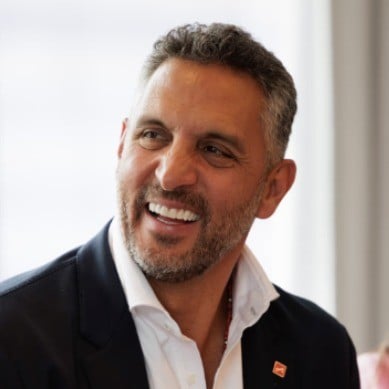
Mauricio Umansky
“Department heads change based on timely priorities,” an ARA spokesperson said. “ARA is an all-volunteer organization.”
Through grit, passion and connections — Haber is a growing force in NYC real estate and politics, and Umansky is a mainstay in luxury real estate — ARA has grown its membership to 30,000 agents in less than two years.
Still, the group is far from widely recognized, and that’s where the group’s recent hot streak comes in, with REMAX and Compass International Holdings both joining the Association this summer, offering complimentary memberships to their company-owned affiliates through 2027.
A recent Inman survey, conducted between announcements about the REMAX and Compass ARA partnerships, found that 53 percent and 52 percent of readers, respectively, who were affiliated with the brokerages were aware of the Association before their companies announced their own partnerships. That awareness dropped to 38 percent for readers affiliated with other brands.
Former REMAX President and Chief Growth Officer Chris Lim and Compass Chairman and CEO Robert Reffkin both acknowledged ARA’s potential, and their co-signs put the spotlight on ARA like never before. Inman reached out to Lim and Reffkin for further comment. However, Lim declined, and Reffkin pointed back to his comment in the ARA partnership announcement.
Lim is no longer at REMAX; however, Haber said there’s no indication that the partnership with REMAX is in danger, and that ARA reps have been registering agents for memberships at the franchisor’s broker-owner conference this week.
“There’s no secret that in order to be taken seriously, you have to have some growth, and you have to have members, ” Umansky said of the partnerships. “I think it shows a couple of things. No. 1 is that it shows tremendous distrust and a tremendous disappointment in NAR because people are looking and trying to find alternatives. I think our messaging that we’re a trade association that’s built by agents for agents is critical, and it’s resonating with the right people.”

Russ Cofano
Although a growing list of partnerships, which also includes Douglas Elliman and The Agency, goes a long way in boosting brand awareness, several industry thought leaders told Inman that ARA can’t just rely on making noise with big announcements — they’ve got to build a sharp value proposition and record of success that signals they’re ready to play, either as NAR’s competitor or collaborator.
“I realize they’ve done some brokerage-related deals. I don’t know the economics around those, but honestly, I don’t know what the stated value of those deals is to their membership today,” said Alloy Advisors co-founder Russ Cofano, who’s a former state association CEO and industry relations executive. “I’m not saying there isn’t any, but they have to make it deliver some specific value at the local level, where real estate is actually done. They’ve got an opportunity to define what that value is.”
“As more and more multiple listing services make Realtor membership optional, people will have an opportunity to evaluate what they want — whether they want to join another Association, and whether ARA is the right one,” he added. “ARA needs to have a bucket of things that justify why agents should write a check.”
Facing an ‘800-pound gorilla’
ARA has high hopes for 2026 and 2027, which Umansky characterized as “build years” in a previous Inman interview.
The Association is working on a new website, which will serve as the hub for ARA’s education and training initiatives, member services and social events. Haber said ARA has been using the New York Residential Agent Continuum (NYRAC), which it absorbed in January 2025 as its first local chapter, as a testing ground for what the group can eventually bring to members across the nation.
“It’s been a laboratory for us to see what works and what doesn’t. We’ve done some amazing events through NYRAC and members in New York. If you’re a member of ours, in, let’s say, Wyoming, you wouldn’t have felt that yet,” he said. “But if you’re a member of ours in NYC, you’re like, ‘Holy cow, this is amazing.'”
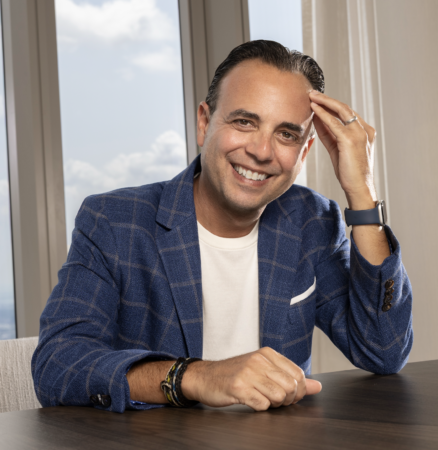
Jason Haber
“So we’re touching different agents with different touch points right now,” he added, reiterating that’s part of the reason why ARA dues are still at $20. “Some are getting more than others. That’s just, you know, that’s just part of growth.”
While the group figures out how to take its NYRAC formula nationwide, it’s banking on something else to keep members engaged: its burgeoning advocacy arm.
Haber had been building an advocacy profile well before ARA, lobbying against the Fairness in Apartment Rental Expenses (FARE) Act and starting the NAR Accountability Project, a grassroots effort created amid sexual misconduct allegations against former NAR President Kenny Parcell.
At ARA, Haber has upped the ante, successfully working with the Missouri Association of Realtors to strike down a state income tax bill that would’ve expanded state and use taxes, and potentially opened the door for lawmakers to overturn a ban on real estate transfer taxes. Now ARA is turning its attention to New York City’s pied-à-terre tax, whose rollout has been fraught with issues.
Although ARA’s moves, thus far, have been concentrated on local and state-level issues, the group’s decision to hire former NAR congressional affairs VP John Blount as its first-ever chief lobbyist signals higher hopes for national prominence.
“With Blount, ARA gains a Washington veteran who knows the industry’s legislative priorities, from housing supply and affordability to tax policy, homeownership costs and consumer protection,” the group said on Friday. “He also brings deep relationships across Congress and in federal agencies throughout the Executive Branch.”
ARA said its members prioritize political advocacy, reflecting what NYRAC co-founder and Douglas Elliman broker Heather Domi said has been ARA’s main value to the 8-year-old organization. “Jason has come in and helped us move things forward more effectively. He’s got that institutional knowledge to help us advocate for ourselves and our clients,” she said.

Amit Kulkarni
However, Alloy Advisors co-founder Amit Kulkarni, who’s written several recent Inman op-eds about the association system, said ARA has a hard road ahead, given NAR’s influence in the political system.
NAR has had its hand in most of the landmark housing bills of the past century, with 2026 President Kevin Brown saying the Association met with lawmakers an astonishing 10,000 times in 2024 and 2025 to move Acts, like the 21st Century ROAD to Housing, to the finish line.
“NAR is the 800-pound gorilla in the room when it comes to advocacy. I give [NAR Chief Advocacy Officer] Shannon McGann and her team a ton of credit,” he said, referencing the Association’s 21-month campaign to get the 21st Century Road to Housing Act passed. “ARA doesn’t have that kind of influence. Nothing happens on Capitol Hill regarding real estate without NAR being involved.”
Still, ARA believes its smaller size is an advantage — allowing it to quickly jump into the fray.
“Politics makes strange bedfellows, but we want ARA to be the bat signal for the industry,” Haber said. “You have a problem, you have a hot spot, you have an emergency — political, educational, advocacy, whatever — we want to answer the call. We’re nimble. We have only a handful of board members, unlike NAR. We can dance. We can move quickly. That’s our advantage.”
Sustaining momentum
Although some of the industry has dismissed ARA as a quixotic passion project — “They said we were nuts … They said we would fail, and a lot of people thought we would just fade away,” Haber said at ICNY in January — both leaders said passion is what keeps the ARA engine going.
Neither Umansky nor Haber is being paid, and all of the growth thus far has been funded by member dues. However, the duo is at a tipping point, with its membership projected to jump from 30,000 to 100,000 by the end of the year — roughly 70,000 members of whom won’t pay dues until 2027.
ARA has been adamant about keeping investors and shareholders out, and Umansky told Inman he doesn’t “have the full solution” on how the Association will make the math work until those members with complimentary memberships become paying members. However, he hopes the group’s plans for the coming year and the influence from management board members, like Chris Lim and Michael Liebowitz, will be enough to keep current members engaged and draw in new ones.
“We’re tiny; we don’t have the pocketbook that NAR has today. They have all of the opportunity and all of the ability to win, but they’re not,” Umansky said, referencing the Sitzer | Burnett settlement and missteps he believes NAR has taken with Clear Cooperation and private listings, which is at the center of his lawsuit against the Association. “We have a huge uphill battle. We have to prove ourselves and build an association that is delivering. An association that’s there to work for and to defend real estate agents.”
Only 8 percent of Inman survey takers, when asked whether they would prefer to be a part of their existing Realtor associations, the ARA, both, or neither if the choice was solely up to them, chose an option that involved ARA membership. And 3 in 4 agents in this group preferred to be members of a Realtor association and ARA, rather than solely ARA members.
Of the survey takers who said they’re disillusioned with Realtor associations, 55 percent said they’d rather be part of no association — NAR, ARA or otherwise. Still, there’s a strong pool of potentially winnable agents: 48 percent of all respondents did not explicitly rule out ARA membership or expressed a desire to be part of the group.
Haber said it’s less about replacing NAR — which would be a near-impossible task given the group’s influence and rules like the three-way agreement — and more about becoming a reliable supplement that answers agents’ needs.
“We’re coming up on the three-year anniversary of what was a very rough fall for NAR,” Haber said. “I think that was just like a tipping point where people thought, you know, it may be good to get supplemental voices out there.”
“We have no interest in competing with NAR, being seen as a competitor. I don’t think of it as us versus them. I mean, all the trade associations writ large, I think we all make each other better,” he added. “How can we help change the narrative within the industry and the public? I think we can do it. I know we can do it.”
Umansky said ARA is building for longevity. However, he acknowledges the magnitude of the challenge in front of them. “We’re going to fight until something changes, even if that’s something as simple as NAR being better. We could not survive, but at this point, I don’t see that. We’re doing this with nothing, but I think we can build a really competitive association.”
As for the way ahead, strategy and consulting firm WAV Group’s founding partner and Co-CEO Victor Lund said ARA needs to do one thing: “I mean, they just need to follow NAR’s roadmap.”
Read Part 2: NAR has written the roadmap. Are Realtors down for the ride?
Read Part 3: The ‘R’ in Realtor used to mean something. Here’s how NAR can restore trust
Inman data editor Daniel Houston contributed to this report.