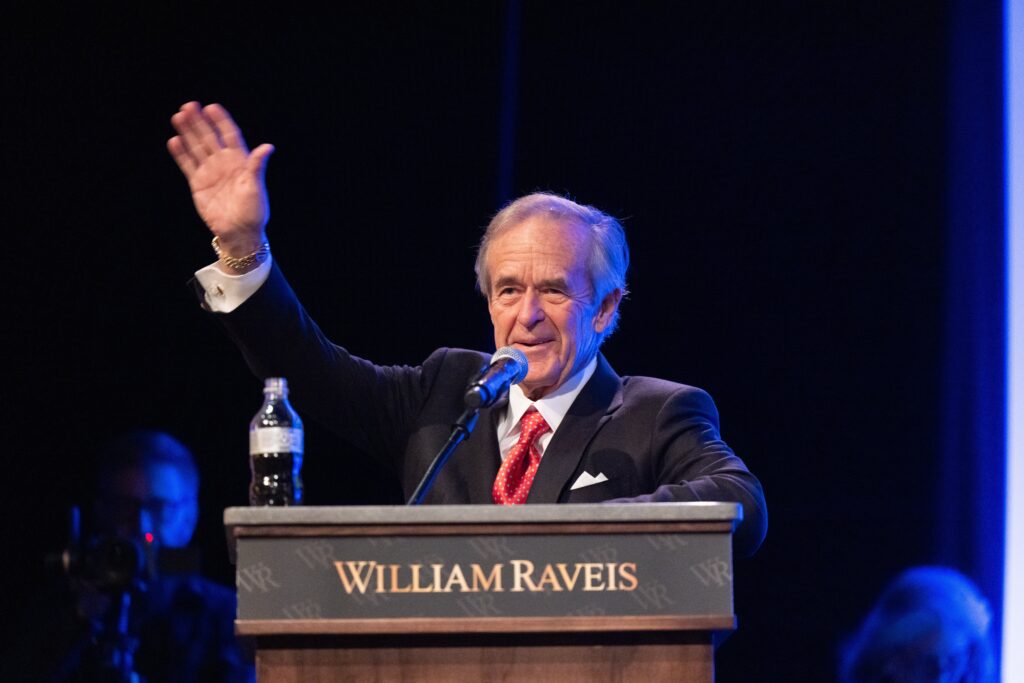
William “Bill” Raveis is an expert in turning lemons into lemonade.
The industry has been grappling with a sour, sticky and pitted bunch, as the National Association of Realtors buyer-broker commission settlement, difficult market dynamics, accelerating consolidation and an escalating fight over the multiple listing service (MLS) system have put brokers under immense pressure.
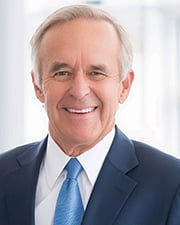
William Raveis
Yet, Raveis — who started his namesake firm in a one-room office above a grocery store — is unshaken. The shifts of the past few years have stretched the founder’s imagination, leading him to complete the transformation into a full-service luxury brand with real estate sales, mortgage, insurance and title, and wealth management.
The firm enables homebuyers to opt into the full suite of services through their buyer-broker agreement. Roughly 40 percent of the 3,000 buyers who’ve signed agreements with Raveis agents over the past three months have taken advantage. As of last month, the expansion also comes with a brand new name, William Raveis Elite Concierge Services, which represents the new experience that consumers can expect from the 52-year-old brand.
“We would never have this opportunity if [NAR] didn’t split up the seller and buyer agreements. We never thought about it,” he told Inman. “So, what everybody thought was a negative in terms of the NAR settlement became a positive for us.”
Raveis said he’s steering clear of other industry landmines, like the “turf war” between Compass International Holdings and Zillow over listing data ownership and distribution. The founder said he supports the idea of a national MLS, saying it would “do a lot of good for a lot of folks” as long as it’s broker-owned and the listings are publicly and broadly syndicated.
“Having these secret listings … that is, to me, a disservice to the buyer and seller, and by the way, may be discriminatory,” he said.
The veteran broker said he used to get in the middle of the muck, but has since focused his energies on running his firm in a way that serves his agents and their clients.
“What we’re doing is running our business the way we want to run it,” he said. “I used to get involved with this stuff. I used to be on the board for the National Association of Realtors for like 10 years, way back when. It’s just a bunch of roundabout work that does nothing. So what we decided to do is focus on making sure the agents are happy, and our consumers are happy.”
Inman: Your firm has gone through multiple changes over the decades while keeping the William Raveis Real Estate name. What made a name change necessary this time around? How does it help signal where you’re going next with the business?
Raveis: It’s the industry right now. The industry’s got a lot of consolidation, [changes in] commission splits and other stuff. We have a servicing model that differentiates us from others — I don’t know anybody with the exact combination under one roof: real estate [sales], mortgage, insurance, title, and wealth management, all coordinated for the clients.
That’s five services we’re delivering through one person — the client doesn’t have to talk to five different people anymore. I thought that was a powerful enough game changer to emphasize with the Elite Concierge Service name. I thought it was appropriate at this time to really change up our website [and] change up the way we deliver services.
Can you walk me through the process of evolving your firm’s model? How did you decide what puzzle pieces were needed to create this kind of experience for buyers and sellers?
So, the NAR settlement actually initiated this a bit. The settlement separated the sellers from the buyers, so we now have a buyer agreement that we never had before. Maybe in some states we [had that agreement], but in terms of the national scope, no. We’re in nine states, and in those states there had never been a buyer agreement before.
So that initiated our thinking: “Oh well, we are now going to have the buyers sign an agreement. Why don’t we offer the elite concierge service to our buyers all under one roof, with one person directing them?”
We’ve had 3,000 buyer agreements signed within the past three months, almost 1,000 a month, and 40 percent of them are opting into the service. So we’re having a humongous return on this stuff. We’ve never anticipated it. It did start slow — 10 percent, then 15 percent adoption. Now we’re up to 40 percent of people who are signing the buyer agent agreement who want access to our services.
That’s big.
We’ve had our mortgage company for almost 40 years. We’ve had an insurance company for almost 40 years. We’ve had a title company for almost five years, and wealth management is new to us. We got Securities and Exchange Commission (SEC) approval to be a partner with Moran Wealth Management, and all of this came together within the past six months, and we’ve seen overwhelming support and response.
What did it take to move adoption from 10 percent to 40 percent? What work did you have to do in educating consumers about what your firm now offers?
It’s all laid out in our buyer agreements. So, the hardest, quite honestly, pitch has not been with the consumer; it’s been with the agents because it’s a whole new way of doing business for them. We have high-touch teaching and coaching, and we spent several months mentoring our agents on our new offerings. The consumers got it right away. The agents took a little more time.
So, what everybody thought was a negative in terms of the NAR settlement became a positive for us.
As you were speaking, I thought of the ongoing conversation about who should be the brokerage’s North Star. Should it be the consumer? Should it be the agent? What’s your answer?
Let me give you a story.
Sure!
So, I was working from a phone and a desk above a grocery store 52 years ago, and I was deciding, “Well, what should I do here?” I didn’t have anybody working for me, but I realized the agent actually brings the money into the company. So the focus has got to be on being the operating partner of the agent, so they could be more efficient at bringing the money into the company. So we were the first in the nation 50-plus years ago to say that the agents are the customer, and I still believe that, too.
It’s not about how high can you go in terms of the commissions you’re going to give to the agents. We’re very good at that; however, we balance it off with giving services to the agents who can then, in turn, attract the customers. So the North Star is the agent. It’s always been that.
Let’s circle back to consolidation. How will independent brokerages like yours compete? These large franchisors have the budgets to acquire and recruit at a massive scale — but what gives indies an edge right now?
It’s a very good question. We’re a family business. We have 5,000 agents [and] 140 offices. My two sons are here. They’re the best in the business. My granddaughter looks to me [as a role model].
We have a niche, a lane that focuses on delivering white-glove service. Our recruiting has gone up because of that lane, meaning people don’t want to be in these huge conglomerates where the only person who matters is the stockholder.
The agents don’t really mean too much to these folks because they can lose a half a dozen, 20 or 50 agents, and it’s, “Who cares? We want to make sure the stock’s up.”
The only reason why they’re consolidating is they’re not making money because of the high commission rates and low service rates, and they don’t have any ancillary businesses. We don’t need to do that. So, I think the best thing that’s ever happened to us is the consolidation. I am so happy about it.
They’re doing the best for their own companies — we get that — but they are helping us out tremendously because of how we’re able to distinguish ourselves.
We’re not going to sell. It’s a family business. We’re not going anywhere. It’s a luxury brand, and we’re going to compete, and then the consumer will make a choice about where they want to go.
This conversation has been edited for length and clarity.