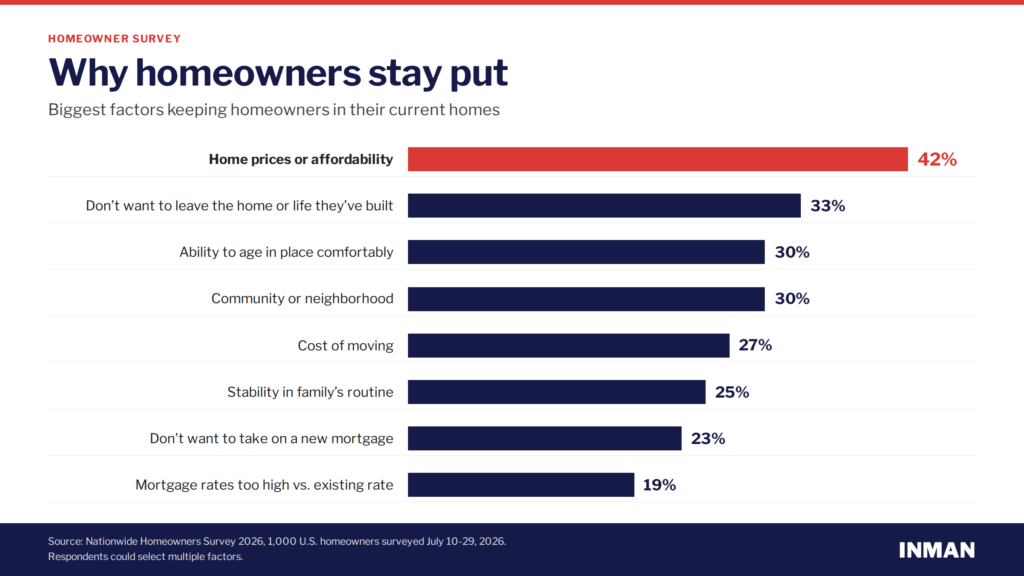
Home prices/affordability is the most common reason homeowners give for staying in their current homes, cited by 42 percent in a Nationwide survey released Thursday.
Nineteen percent pointed to current mortgage rates being higher than their current rate, and 7 percent cited limited housing inventory.
The survey of 1,000 homeowners and 400 independent insurance agents also tracked costs that continue after closing, from insurance premiums to repairs owners are putting off.
Owners expect to stay longer
Forty percent of homeowners said they did not expect their current home to be their forever home when they bought it but believe it will be. Twenty-seven percent said the reverse: They bought thinking it would be a forever home and know it won’t be.
Thirty-eight percent said they would move if market conditions were more favorable, a share that rises to 52 percent among urban homeowners and 64 percent among millennials. Twenty-eight percent said they feel financially stuck in their homes.
Sixty-four percent have made or plan to make changes to support living in their homes for the long term. The most common changes include upgrades for energy efficiency or weather resilience, improved stair and entryway lighting, and bathroom safety modifications.
Costs that surface after closing
The top surprise for clients after closing is the speed at which unexpected costs add up, cited by 44 percent of the independent insurance agents surveyed.
Forty-two percent named the difficulty of finding reliable contractors, 36 percent the cost of homeowners insurance and 34 percent the frequency of breakdowns and needed repairs.
Questions buyers wish they had asked
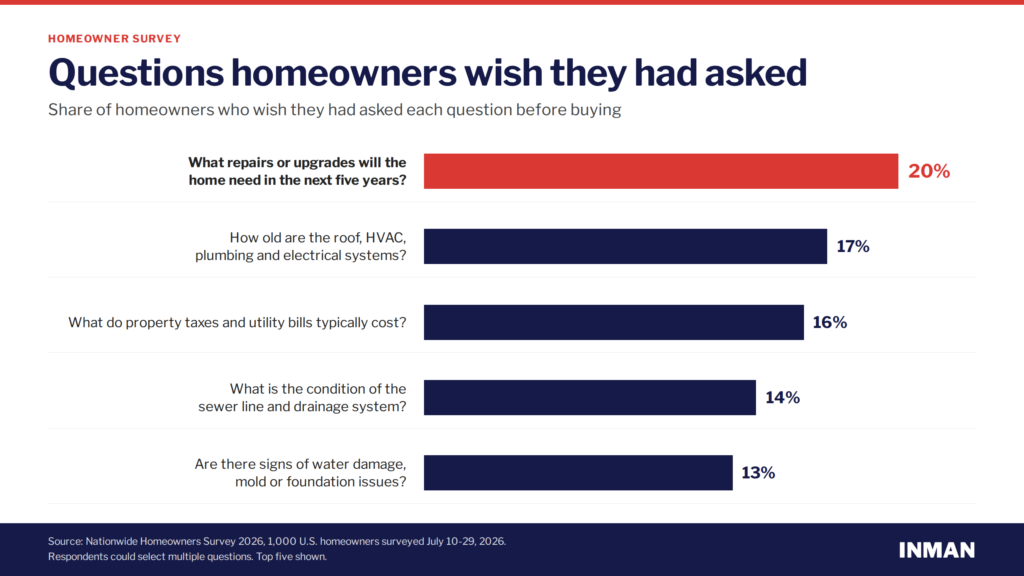
Homeowners surveyed identified the questions they wish they had asked before buying:
- What repairs or upgrades will the home need in the next five years? (20 percent)
- How old are the roof, HVAC, plumbing and electrical systems? (17 percent)
- What do property taxes and utility bills typically cost? (16 percent)
- What is the condition of the sewer line and drainage system? (14 percent)
- Are there signs of water damage, mold or foundation issues? (13 percent)
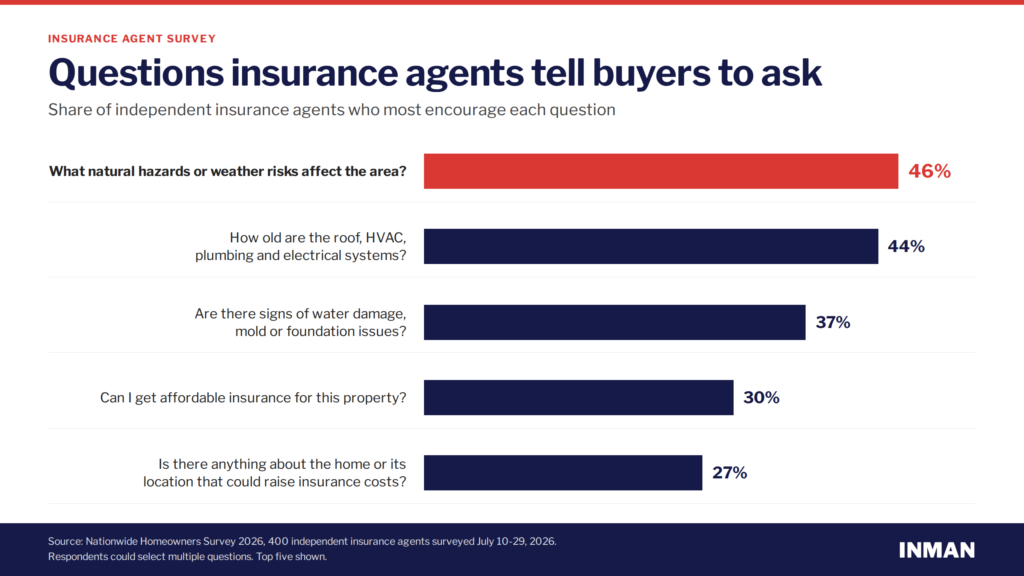
Independent insurance agents named the questions they most encourage prospective buyers to ask:
- What natural hazards or weather risks affect the area? (46 percent)
- How old are the roof, HVAC, plumbing and electrical systems? (44 percent)
- Are there signs of water damage, mold or foundation issues? (37 percent)
- Can I get affordable insurance for this property? (30 percent)
- Is there anything about the home or its location that could raise insurance costs? (27 percent)
“Buying a home is one of the biggest financial decisions people make, but the purchase price is only part of what that home will ultimately cost,” Helen Simonett, vice president of personal property lines at Nationwide, said in a statement. “Understanding the age and condition of major systems, the repairs that may be coming and the ongoing expenses associated with the property can help buyers get a more realistic picture of what homeownership may cost over time.”
Owners weigh insurance coverage and repair costs
Fifty-eight percent of insurance agents saw an increase in clients shopping for lower premiums over the past year, and 46 percent saw more clients choosing a lower price even if it meant less coverage or support. Sixty-seven percent said homeowners’ conversations about insurance affordability focus more on cost than they did a year ago.
Ninety percent of homeowners said their policy provides adequate coverage. Fifty-two percent of insurance agents said customers overestimate what their policy covers “often” or “very often.”
Weather damage is the most common claim type among clients, cited by 58 percent of insurance agents. Seventy-three percent have seen weather-related claims increase over the past year.
Twenty-two percent of homeowners delayed necessary renovations or major repairs in the past year. Among homeowners who put off any maintenance or renovation, 62 percent said it cost too much and 45 percent cited other financial priorities such as paying off debt. Forty-three percent of homeowners follow a preventive maintenance schedule, and 19 percent wait until a problem occurs.
“Homeowners who thought they would move after a few years may now be looking at their homes very differently,” Simonett said. “If you’re going to stay longer than planned, it becomes even more important to understand what parts of the home may need attention over the next several years and take steps now to help prevent avoidable damage.”
Nationwide commissioned Edelman Intelligence to conduct the online survey July 10-29. The homeowner sample is nationally representative by age, gender, race, region and household income, according to the report.