This October, as always, it feels as though the world is awash in pink, the ribbon color honoring breast cancer.
Retail brands release pink versions of their best-selling products, and consumers gladly round up their purchases to fund research and support services for patients. And to cap off the month, millions of Americans lace up their sneakers and take over their downtowns in honor of the more than 380,000 people who will be diagnosed with breast cancer this year alone.
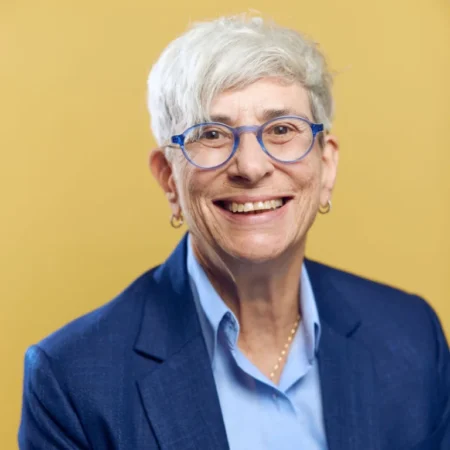
Janis Lippman
Common Ground Collective co-founder Janis Lippman, a 33-year breast cancer survivor, appreciates what the month represents. However, she wants people to understand what happens once the awareness messaging slows down and the pink banners are shelved for another year — the reality of a life turned upside down and the ongoing challenge of balancing grief and gratitude.
“I was traveling and had forgotten it was Breast Cancer Awareness Month because I can forget the pink ribbons. I can forget the month. I cannot forget breast cancer,” Lippman told Inman, reading from a Facebook post. “This year marks 33 years since my diagnosis … I am extremely fortunate. I am alive. I got to continue living. I had access to excellent medical care, and treatment worked.”
“Survivorship has had a cost. My body bears the evidence of that every day. I’ve spent my entire adult life managing the effects of surgery, radiation, chemotherapy, and years spent with the physical and psychological consequences of treatment,” she added. “Awareness [is] something other people can turn on and off. Survivorship isn’t.”
Not a failure
Lippman was 33 years old when she found a lump in her breast while taking a shower. Her brain, she said, tried to ignore the nodule moving underneath her fingertips — she was young and active, had a fulfilling career as a theater manager and director of theatrical operations, and was 10 years into a loving relationship with her now wife, Ellen Grubert. Life was good, and cancer didn’t fit into the plan.
“For maybe 10 seconds I hesitated, and then said, ‘No, I have to bring this to the attention of my doctor,'” she said. “He said, ‘It’s probably nothing, but let’s biopsy it.’ And of course, it ended up being breast cancer.”
Lippman, an agent with Compass, attempted to keep a sense of normalcy during her treatment, which included riding a bicycle to her radiation treatments at the teaching hospital for Harvard, Beth Israel. But chemotherapy proved to be more taxing, forcing Lippman to hang up her wheels and rely on Ellen to get to and from appointments. Lippman said she received groundbreaking care and poured out praise for the oncologists, radiation oncologists and other medical professionals who helped make her survival possible.
Yet, some of the most life-changing relationships she built at that time were with fellow patients and survivors, all of whom introduced Lippman to cutting-edge research about breast cancer prevention and the environmental risks that contribute to young, healthy people being diagnosed with advanced and aggressive forms of the disease.
The typical breast cancer patient is 62 years old, and women 45 and younger account for 10 percent of all annual diagnoses. However, the rate of breast cancer among young women is increasing roughly 1.4 percent per year, according to the National Breast Cancer Foundation.
Lippman took what she learned and leaned into advocacy, supporting the Silent Spring Institute, which pioneered environmental risk research, and volunteering with the Massachusetts Breast Cancer Coalition, where she served as president for several years. She’s also made herself a resource to patients and fellow survivors, even lending a helping hand to colleagues and clients who’ve found themselves hearing three unconscionable words: You have cancer.
“So many women have had to work through cancer treatment. It’s very physical. It’s very demanding. It’s very psychological,” she said, noting that she transitioned to real estate four years after her diagnosis. “It fogs your brain a bit, and you have to stay sharp, really be on your game, and it’s hard.”
Ninety percent of cancer patients and survivors report challenges maintaining work, school and volunteering obligations, according to the American Cancer Society. Another 32 percent say the disruption lasts well beyond active treatment, causing financial (27 percent) and psychological (50 percent) stress over medical bills and other cancer-related costs.
The broker said much of her advice centers on the delicate dance between having control and creating agency.
Control, she said, pins outcomes totally on cancer patients and survivors, forcing them to think about their diagnosis as the result of a failure to maintain perfect health habits.
“Eating healthy, not drinking that much, exercising and keeping your weight down are good, but I think a part of that is trying to control whether, God forbid, the cancer is ever going to return or not, right?” she said. “But there’s no sufficiently clean way of living that guarantees you will not develop cancer or guarantees that it will not return or cures you once you have it.”
Instead, she asks people to think about their lifestyles as a way to cultivate agency and live thoughtfully, whether they live in remission forever or face a recurrence. She also said preventing cancer is a community project, as social, cultural and political standards shape the way patients and survivors navigate their journeys.
“[It’s about] being honest about what we can and cannot control, and making sure we never turn cancer, or health more broadly, into a referendum on whether someone did everything right,” she said.
The power of a team
Like Lippman, Jacquelynn Rossiter’s breast cancer diagnosis came as a complete surprise.
Rossiter was a 37-year-old mom of three who’d just had her newest bundle of joy — a daughter — 10 months earlier. However, she began experiencing brain fog and fatigue beyond what she’d had during her previous pregnancies, leading her to visit her doctor multiple times, asking for blood tests that she hoped would reveal the source of her illness.
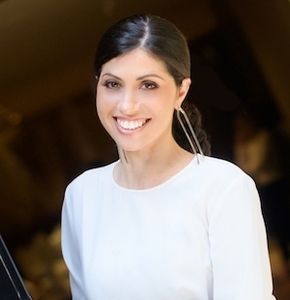
Jacquelynn Rossiter
“I thought I was deficient in some vitamins and minerals or something like that. I ate organic. I exercised. You know, all that stuff,” she said. “It doesn’t run in my family. It’s never really touched super close to home. And they were like, ‘No, you’re fine. Your blood work looks good. It’s probably you’re just tired, right? You’re breastfeeding.'”
The explanation eased Rossiter’s anxiety, until she found a lump while taking a shower. Her doctor quickly scheduled a mammogram and ultrasound, which led to an emergency biopsy that revealed invasive ductal carcinoma in her left breast and non-invasive ductal carcinoma in the right. Rossiter was also HER2-positive and had to be tested for lymphoma, as the lymph nodes surrounding her breast tissue were inflamed.
The now-Compass team leader had a bilateral mastectomy and started chemotherapy, but had to continue working as her family’s primary breadwinner. She sold her investment property to build up her savings and leaned on her colleagues at Brown Harris Stevens, where she worked at the time. They banded together to help with open houses and showings.
“What felt good to me was to liquidate that asset and live off of it, so that I didn’t have to stress financially, and that I had a little bit more money available to me to be able to heal properly,” she said. “But that wasn’t something that I decided immediately. My husband was starting a a startup business, and it was me making the money. I was at Brown Harris Stevens at the time, and the agents were amazing. They’d hop in on a showing. They weren’t looking to split the commission.”
Rossiter said she focused her energy on remaining positive about her diagnosis even as the toll of cancer treatment started to show. One of the first things to go? Her trademark chocolate locks, which had earned her the moniker, “Jackie with the hair.”
“I was extremely open about it,” she said, noting that her dramatic hair loss left her with no option but to do so. “I have very long hair, and my hair was even longer and thicker before I lost it. It came out in clumps. When I woke up, I’d see it on my pillow, and it was really hard for me; it was the first thing people noticed. So, if I hadn’t seen somebody in a long time, you could just see the reaction on their face.”
Rossiter said her business dropped by 50 percent during the year of treatment, as some clients heard about her diagnosis and decided to hire other agents to list their homes. Her manager told her about the Real Estate Board of New York’s Member in Need grant, which provided $10,000 to members who were facing significant hardship due to situations like cancer. A friend helped her apply, giving her a major financial lifeline.
Some brokerages and Realtor associations offer medical hardship grants. Keller Williams, eXp Realty and the Real Brokerage are among the largest firms that offer medical hardship assistance, and several associations in Arizona, Georgia, Ohio and Washington also offer help. Most cancer associations have hardship funds, and hospital social workers can help patients find and apply for financial assistance.
“The [clients] said, ‘Well, I didn’t want to bother you. I know that you’re going through a lot right now,’ And I’m like, ‘Oh, and I get that,'” she said. “As a cancer patient, you lose your hair, your eyebrows, your eyelashes, and that’s what they see. But working was like a good distraction for me, too … I got to be Jackie, the real estate agent and the mom, not Jackie, the cancer patient.”
It’s been 11 years since Rossiter rang the bell signaling the end of treatment; however, she still, at times, grieves the person she was before breast cancer. Now, a migraine triggers worries that her cancer has returned and metastasized to her brain. While she still gains strength from connecting with other survivors and patients through groups like Five Under 40, which focuses on young adults with breast cancer, there are times when hearing those stories becomes too much — like picking at a still-healing wound.
Cancer patients and survivors experience depression at rates two to five times higher than the general population. Roughly half of survivors experience long-term anxiety, the National Institutes of Health (NIH) found in 2025. Both diagnoses are often connected to fears about recurrence.
“When I’m in that kind of place, I can’t talk to people. I can’t hear stories. I don’t want to talk about cancer. I want it to be as far away from me as possible,” she said. “But then there are other times when I’m feeling really powerful and grounded, and I want to be of service, and I want to be that voice to somebody, and I want to be that ear to somebody. I really have to check in, be real with myself and take radical personal responsibility for where I am, which can be hard to do.”
Rossiter is steadily finding balance, though, through mindfulness, practicing gratitude and leaning into the things she loves, like teaching salsa dancing.
“Salsa is a lead-and-follow dance, and I generally dance the follow role … When I dance, I get to relinquish that control. I don’t have to make the decisions or figure out what comes next. I can simply listen, respond, move and be present in my body,” she said. “After everything my body had been through, being able to reconnect with it through something that brought me so much joy felt incredibly healing.”
A helping hand
Jenna Hoyas has never had breast cancer; however, that hasn’t stopped her from supporting the millions of people who will be diagnosed during their lifetime. Hoyas has volunteered for Cocktails for the Cure, and her team co-leader, Kristina Quesada, has given much of her time to Courtney’s Courage, an organization dedicated to supporting children battling cancer and their families.

Jenna Hoyas
Hoyas, a Douglas Elliman team leader, said she and Quesada recognize the power of community and financial support for cancer patients and survivors, and she said that’s especially true for real estate agents, whose income relies on a lot of public-facing activities, like open houses, showings and other events that can be hard to keep up with during treatment.
“Real estate is a unique industry because, for most agents, taking time away from work also means stepping away from their income,” she said in an emailed statement to Inman. “When someone is facing a serious illness like cancer, they shouldn’t have to choose between their health and their financial stability.”
“Through our involvement with Cocktails for the Cure and Courtney’s Courage, we’ve come to appreciate how much a cancer diagnosis impacts not just the individual, but their entire family,” she added. “It reinforces how important it is to have people around you who are willing to step in when you need them most.”
Hoyas said Breast Cancer Awareness Month should be a reminder for all agents to build relationships with their colleagues and collaborators beyond the office, so they can offer a helping hand — or ask for one — in times of need.
“In real estate, we’re constantly talking about the importance of relationships, but those relationships should extend beyond transactions,” she added. “Whether it’s covering showings, helping manage listings or simply making sure a colleague’s business continues operating while they focus on treatment, there are meaningful ways we can support one another.”
Hoyas also called on brokerage leaders to invest in their agents’ health, whether it’s forming a hardship fund or offering healthcare coverage. Hoyas said agents give their all to real estate, and that effort should be returned.
In a 2020 Inman survey, 55 percent of agents said health insurance was important to them; however, only 26 percent reported having access to insurance through their brokerage. The National Association of Realtors 2025 Profile of Real Estate Firms provides a more recent snapshot: 81 percent of firms don’t offer insurance — a 2 percent increase from 2023.
“We would love to see more brokerages establish systems that allow agents to take necessary medical leave without feeling like they’re putting everything they’ve built at risk,” she added. “At the end of the day, we’re all human, and no one should have to navigate a health crisis alone.”