
New York’s biggest office-to-apartment conversion nearly became a cautionary tale this week — real estate professionals should know how to spot the difference before their next listing does the same.
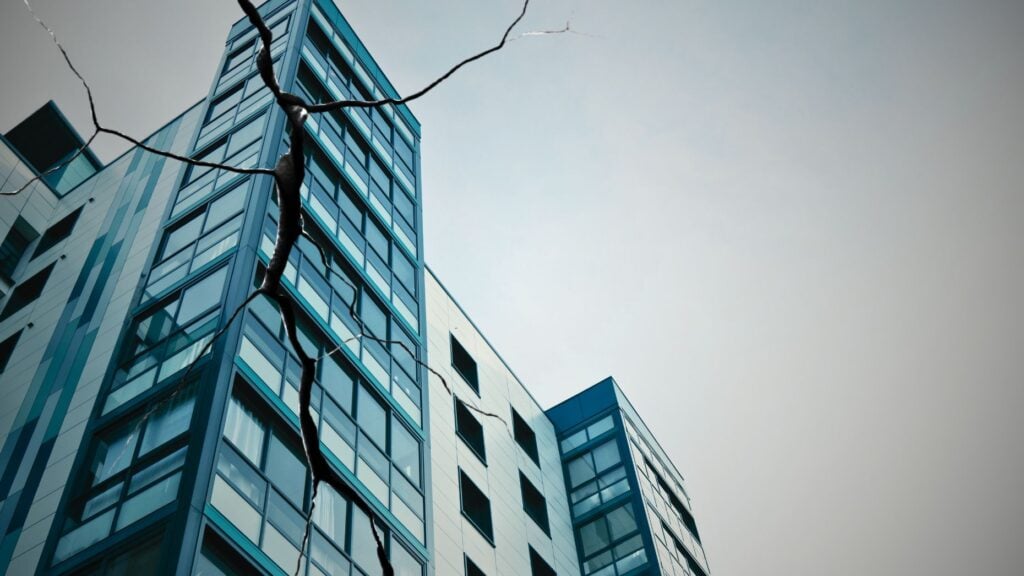
A high-rise office building at 235 East 42nd Street in Midtown Manhattan showed signs of structural failure Tuesday, prompting evacuations and street closures near Grand Central Terminal, according to The New York Times. The building, the former corporate headquarters of Pfizer, is being converted into what developers have said will be one of the largest office-to-residential projects in the country.
A safety manager reported a compromised steel beam on the 21st floor, and fire officials said two support columns were buckling while several upper floors were sagging, the Times reported. No injuries were reported. New York City Buildings Commissioner Ahmed Tigani said Tuesday night the building was stable, though he cautioned the surrounding area could remain tense “for the next couple of days.”
Office-to-apartment conversions reached a record 90,300 units in the national pipeline at the start of 2026, up 28 percent from the year before and nearly four times the number in the pipeline in 2022, according to a report from RentCafe.
New York leads the country by a wide margin, with 16,358 units underway. Office buildings now account for 47 percent of all future adaptive reuse projects nationwide, ahead of hotels and industrial properties.
In New York, a 467-m property tax exemption program enacted in 2024 has helped sustain the wave, requiring participating buildings to reserve 25 percent of units for households earning on average 80 percent of the area median income, according to the New York City Comptroller’s office.
Not every building has the right bones, according to Peter Zaitzeff of SERHANT.

Peter Zaitzeff | SERHANT.
“Part of educating buyers is understanding not just a building’s history, but how it was built,” Zaitzeff told Inman. “The developer, engineering team, construction quality and even the history of the block/City all play a role in evaluating a property.”
Zaitzeff said he generally approaches office-to-residential conversions with caution, given the complexity of adapting an existing structure to a new use. He carved out an exception for a specific category of older buildings: the historic loft buildings of Tribeca and SoHo.
“The exception is many of the historic loft buildings in Tribeca and SoHo, which have been standing for well over a century and were originally built with exceptionally robust construction that’s stood the test of time,” he said.
What this means for real estate professionals
Zaitzeff’s framework gives agents a due-diligence checklist to bring into conversations with buyer clients considering a converted building, separate from a standard resale evaluation:
- Developer track record: Who built it, and what’s their history with similar projects?
- Engineering team and construction quality: Who assessed the structure, and what standards guided the conversion work?
- The building’s own construction history: When and how was it originally built, and does its age work for or against it?
- Block and city context: What’s the surrounding infrastructure and regulatory environment?
Age alone doesn’t determine risk in either direction. A newer conversion isn’t automatically safer, and an older building isn’t automatically a liability — a century-old Tribeca loft built with heavy timber or cast iron may have more structural margin than a mid-century office tower converted decades after it was designed for a different use entirely.
Agents advising buyers in any conversion property, new or old, have reason to ask who did the structural assessment and what it found, not just when the building opened.