In many U.S. markets, housing transactions have been stuck far below normal levels as consumers continue to mostly balk at today’s home prices and interest rates.
But in certain places — including some of the most expensive metros in the nation — investors see the same market as a buying opportunity.
In this week’s report, Inman’s data team crunches numbers from Redfin and government construction surveys to identify how investor appetite for homes is shifting over time, and where they’re increasingly buying into a potential resurgence of rents and home values in the long run.
Inman’s analysis reveals that investor demand, like most housing transaction activity, has pulled back from pre-pandemic levels in most parts of the country. Despite this, investors are still significantly more likely to remain active in the market than a typical homebuyer.
And they’ve identified several parts of the country as particularly good buys.
Opportunity strikes
Early in the post-pandemic housing boom, investors capitalized on ultra-cheap mortgage rates in what they saw as a once-in-a-generation buying opportunity.
Prices had been rising, but capital was dirt cheap. And to some, a long-term trend of under-building promised to continue to place upward pressure on home values and rents, regardless of the ups and downs the market might experience in the intermediate future.
- All this ensured that even though consumer demand for homes skyrocketed, more than 1 in 5 single-family home sales in late 2021 and early 2022 were scooped up by an investor — the highest share recorded by Redfin since at least the turn of the century.
And as consumer appetite for homes fell in response to higher rates, investors actually pulled back from the market even faster.
But they have settled into a level that takes up a larger share of the remaining market than investors have enjoyed in decades.
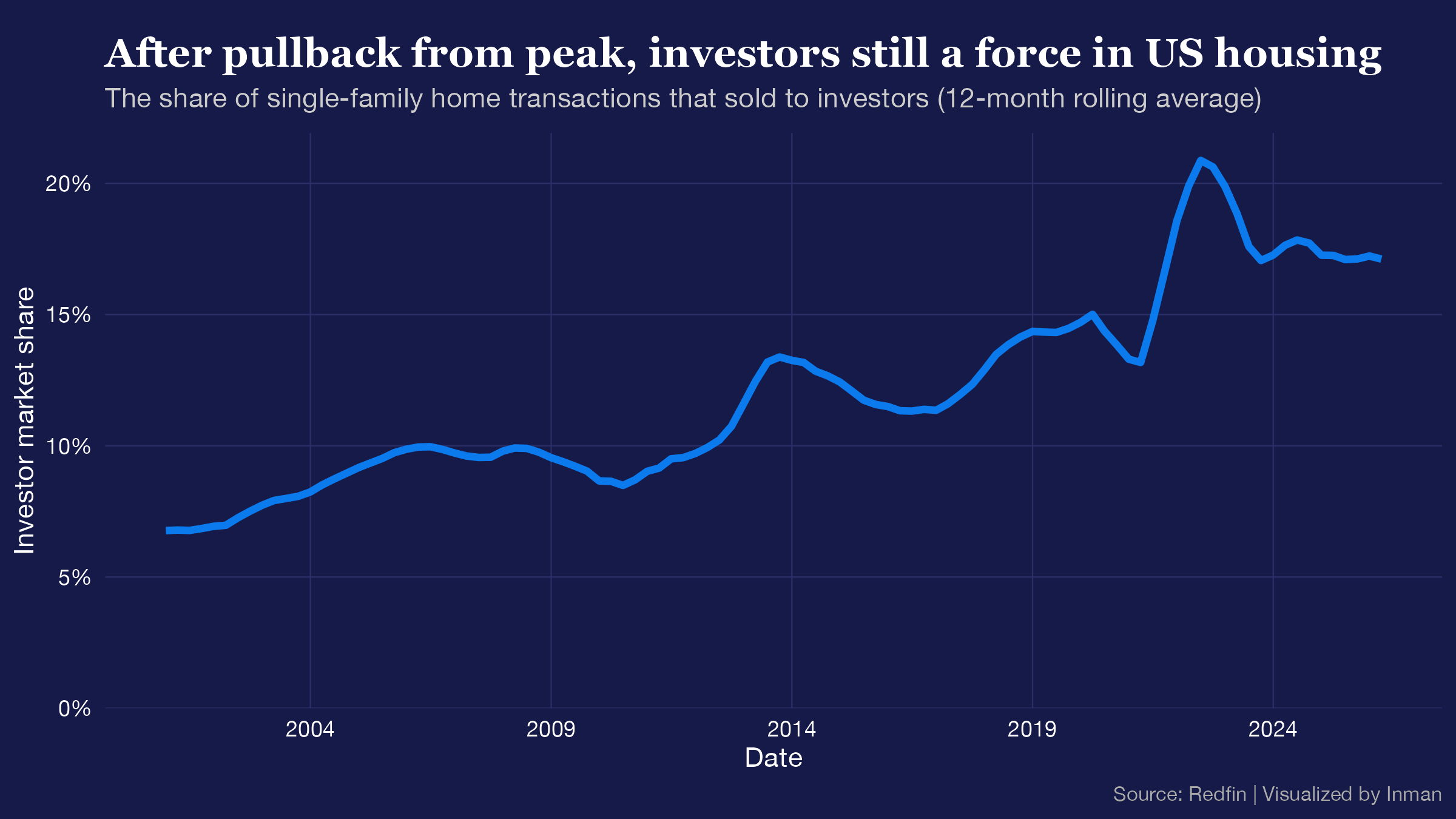
The chart above represents the share of the total single-family transactions accounted for by investor purchases, not the total.
Like transactions elsewhere, investor activity remains lower than it was immediately before the pandemic struck, an Inman analysis of Redfin data suggests.
But as seen in the chart below, not only are investor purchases holding up stronger than consumer housing demand, but investors are even buying into certain markets that consumers have backed away from in recent years due to especially high prices.
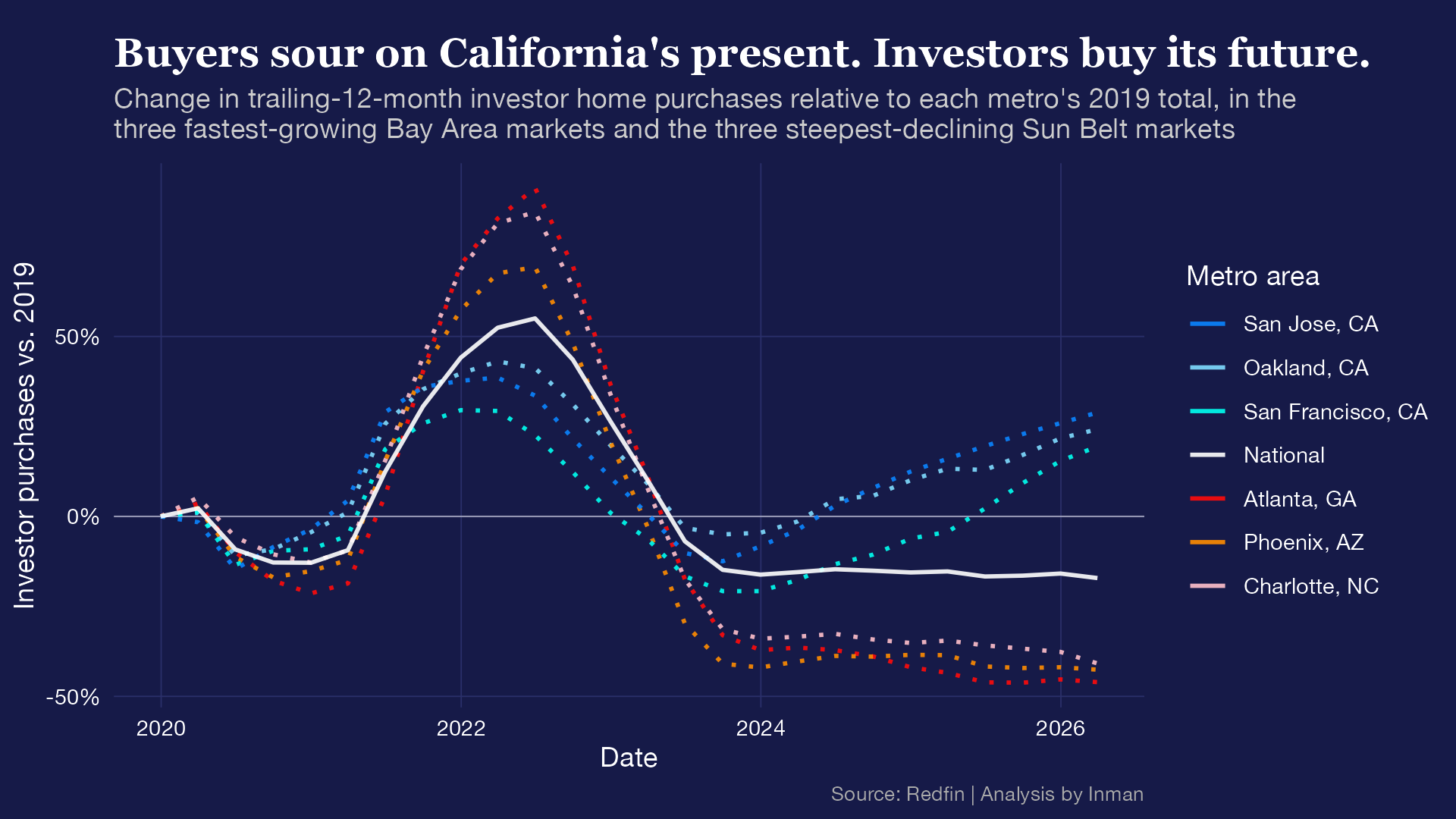
Although investors were enamored with Sun Belt markets during the pandemic housing boom, they’re now backing off. Instead, they’re increasingly focusing on some of the higher-price markets on the West Coast, where transaction levels have collapsed, but future prospects for rental revenue and home-price growth may be more promising.
These Bay Area investor purchases may be explained partly by the success of certain Silicon Valley tech companies and the highly anticipated public offerings that are expected to make their stock-owning employees newly wealthy.
However, data from recent months demonstrates this trend extends well beyond a single tech hub.
The table above reveals that investors in recent months have grown increasingly interested in a wide variety of high-price metros spanning the West Coast — not just in the Bay Area, but in Seattle; Portland, Oregon; San Diego and Los Angeles as well.
But the West Coast isn’t the only place where investors see potential for near- and long-term growth.
- Investor purchases in Virginia Beach, Virginia, were up 15 percent year-over-year over the six months ending in March.
- Investor purchases also rose by nearly 15 percent over the same period in Milwaukee and by nearly 8 percent in Cincinnati.
On the other end, investors have continued to cool on some once-hot markets in recent months.
- Detroit’s housing market has been particularly hard-hit, with investor purchases falling by 24 percent year-over-year for the same six-month period, Redfin’s data shows.
The rest of the list is populated primarily by markets throughout the South, as well as the greater Washington, D.C., area, and Las Vegas.
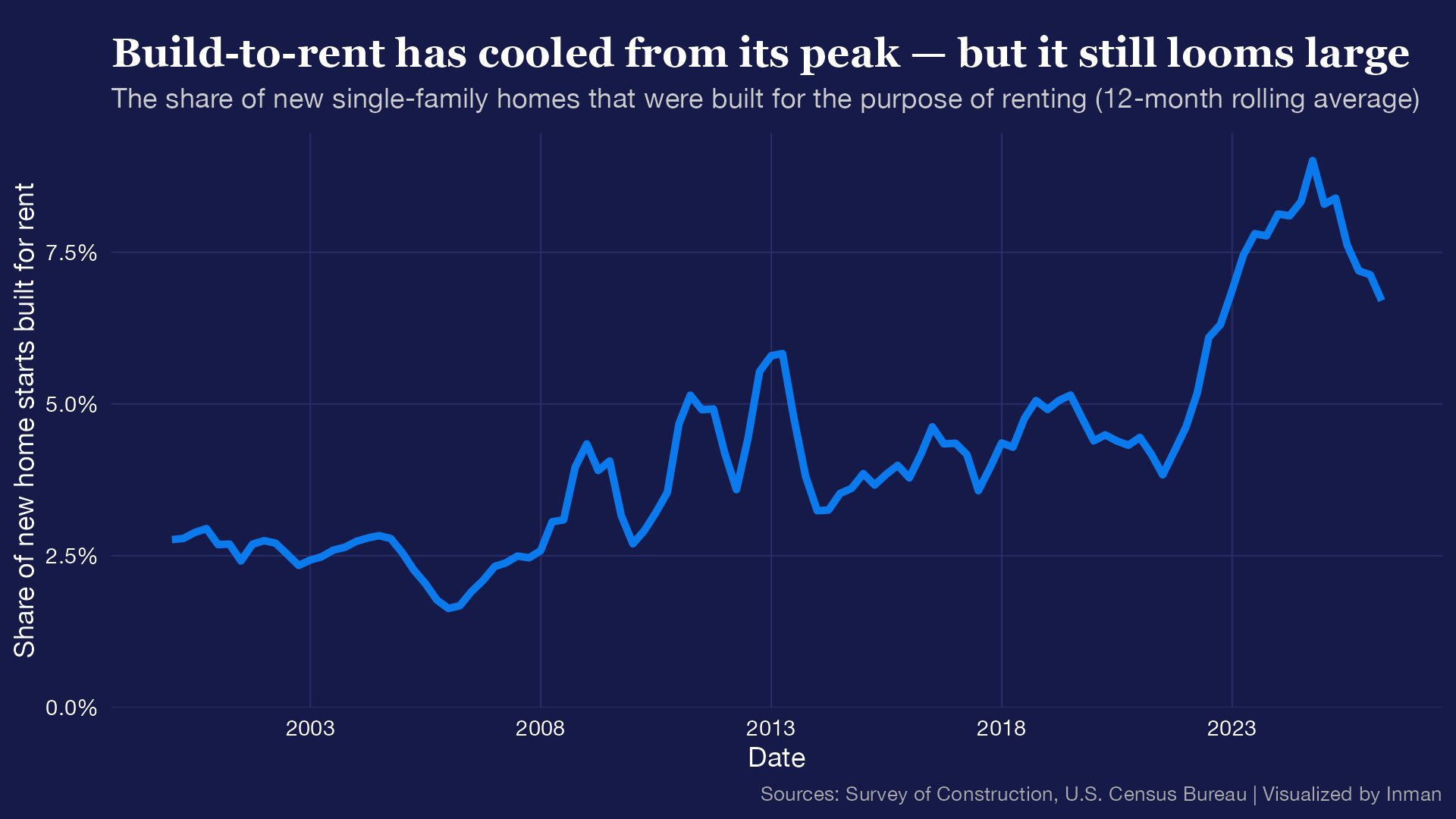
With investors maintaining a disproportionately large footprint in an otherwise depressed market, homebuilders have attempted to capitalize by focusing on building structures explicitly designated as rental properties, according to data from the U.S. Census Bureau’s Survey of Construction.
But those levels have come down quite a bit from their peak.
Ultimately, investors live in a different world than most consumers, tend to be less reliant on day-to-day movement in interest rates and have an ability to transact in cash for the right opportunity. The places where they’re buying homes today may not be where consumers will be able to afford homes tomorrow.
But the places where investors are especially active deserve close attention in the months and years ahead.