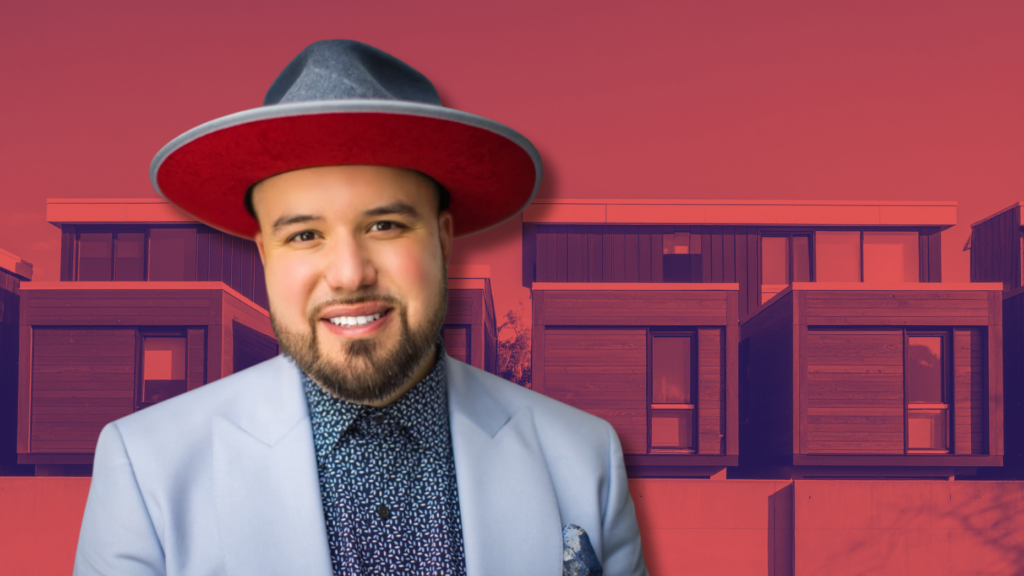

Two international trips changed the trajectory of Scott Malouff’s professional life, with the Keller Williams team leader getting a front-row seat to the booming modular housing industries in Europe and Asia.

Scott Malouff
“I took a trip to Europe, and I saw some modular builds that were being built there. I came back and talked to Jason Abrams about it, and he said, ‘Do some more research and come back again,'” he said. “So I booked a trip to China, and I spent a month there visiting a lot of the factories. And there, they’re building with steel, they’re building with concrete, they’re building skyscrapers in 10 days. It was different; everything was streamlined like the auto industry. It was something that I couldn’t unsee.”
As soon as Malouff came back, he began reaching out to the roughly 50 modular housing factories in the U.S. The Malouff International Group founder has toured half of them, forging the relationships needed to launch KW Modular, a new agent community geared toward putting agents affiliated with the Texas franchisor at the cutting edge of building technology.
The community, which will make its formal debut at Mega Camp, will educate agents on the ins and outs of the modular industry and help them build relationships with factory owners. Malouff said modular housing has yet to fully reach the mainstream in the U.S., and now is the time to put KW agents at the forefront — giving homebuyers the inside track to a quicker, more affordable option for a new build.
“We’re not waiting for the future of housing. We’re building it together,” he said in a written statement. “Modular gives builders a way to keep building when labor and costs say they can’t, and it gives families a real path to a new home on their own land. Now we’re putting the largest agent network in the country behind it. When you connect agents to the factories building the next generation of American homes, you don’t just sell more houses; you change what’s possible for buyers.”
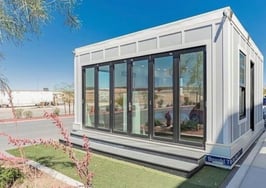
Malouff said modular building offers greater speed, quality control, cost certainty and affordability for homebuyers compared to typical on-site builds. The base cost of a modular home is, on average, 10 to 25 percent lower than that of stick-built homes, the term for new homes built on-site.
The savings primarily come from reduced labor and waste costs and a shorter build timeline (three to five months vs. eight to 12 months), which means homebuyers accrue less interest on construction loans.
Homebuyers still need to pay for site preparation (e.g., clearing land, pouring a foundation and installing utility hookups) and contend with local zoning and permitting laws, some of which still lump modular builds in with mobile homes.
Malouff said KW Modular is designed to help agents navigate all the potential roadblocks through a 12-step virtual course that explains zoning and permitting, financing and appraisal, and what it’s like working with the factory and general contractors. In addition to the course, the community will host monthly webinars to keep agents at the cutting edge of what’s happening in the modular housing industry — which is projected to grow 6.5 percent by 2030.
The ultimate goal, the KW Modular president said, is to help agents build strong relationships with modular builders in their regions and solidify Keller Williams as the leading brokerage presence in the modular industry.
“I think about Wayne Gretzky. When people asked him why he was so good, he said, ‘I skate to where the puck is going to be, not where it has been,'” Malouff said. “That’s what we’re doing. When you look around the world, modular has taken off. [The U.S.] is behind, but it provides what homebuyers need in terms of speed, affordability, etc.; it checks all the boxes. This is going to be the next wave of how homes are built.”
“Once [homebuyers] see that it is not any different than a home built on-site, they’ll know the future of housing is modular.”