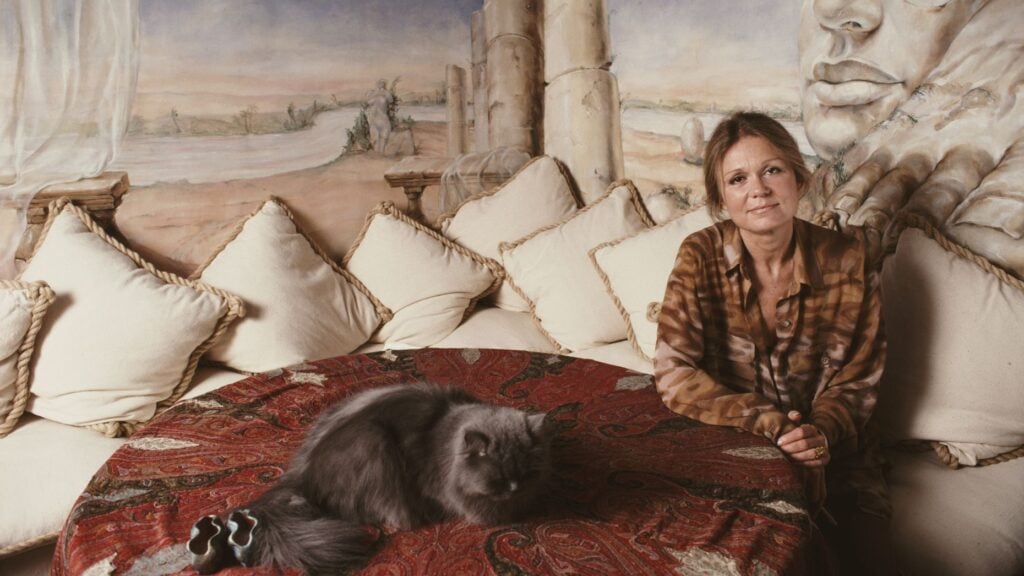
The world lost Gloria Steinem this week. For more than six decades, she was one of the fiercest and most enduring voices for women’s equality and human rights.
A journalist, author, organizer and activist, she lived through some of the most turbulent periods in modern American history and spent much of that life challenging the idea that inequality, discrimination or injustice should simply be accepted as the way things are.
She helped give women language for experiences they were told to keep private. She helped create places for their voices to be heard. She fought, organized, wrote, listened and kept showing up, even when the battles were difficult and the progress painfully, and sometimes agonizingly, slow.
I’m certain there will be many poignant retrospectives about Gloria Steinem’s extraordinary life. But for those of us in this industry who believe fervently that a home is so much more than walls and a roof, there may be another way to understand her legacy.
Look at the house she built.
Not physically, of course. The 19th-century brownstone on Manhattan’s East Side was standing long before Gloria arrived. But what happened after she walked through its doors is a remarkable reminder that the true value of a home has never been measured entirely in square footage or sales price.
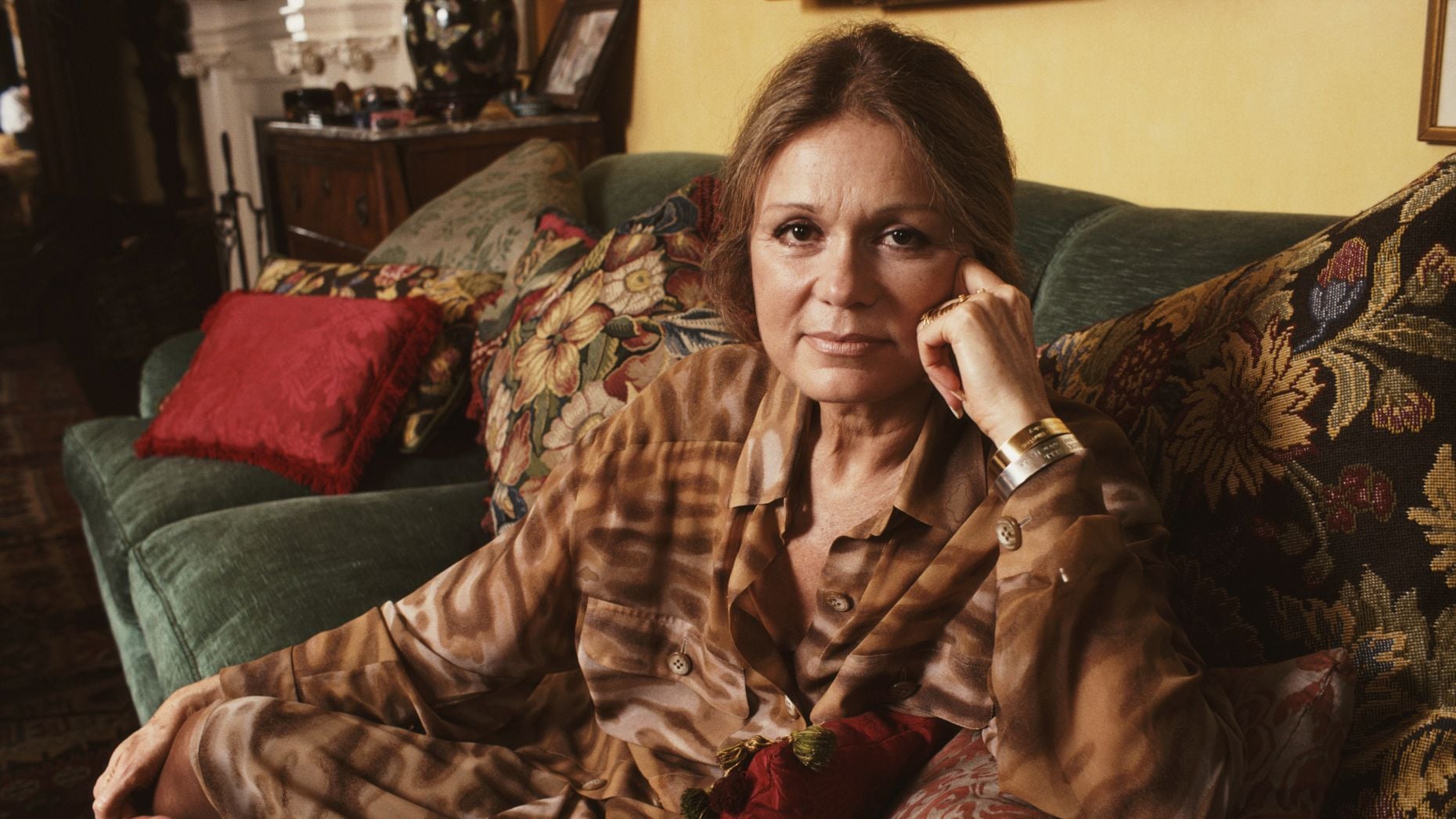
American journalist, activist and feminist Gloria Steinem in her New York City apartment, 2nd November 1990. (Photo by Barbara Alper / Getty Images)
A lucky break becomes a legacy
Gloria bought her first piece of the brownstone in 1968, early in the career that would eventually make her one of the most recognizable activists in America.
“It was somewhat accidental since it just turned out that brownstone was available for sale,” she later told Architectural Digest. “We lucked into buying at the all-time low of real estate in New York.”
Over the decades, she expanded within the building, acquiring additional floors and gradually creating more space.
But here’s what I really love about that story. The remarkable part isn’t that Gloria Steinem bought Manhattan real estate at exactly the right time.
It’s what she did with it.
The living room that helped build a movement
Real estate agents spend a lot of time talking about a property’s best features. We often refer to some of the most important conversations we have with friends, family and, yes, clients, as being “around the kitchen table.” In Gloria’s home, it wasn’t the molding, the architecture or the light that was the most compelling feature. It was the guest list.
Her living room became a political and cultural refuge, hosting conversations that helped shape Ms. Magazine, gatherings connected to the Women’s Media Center, and meetings of activists, farmworkers, political leaders, and women who simply needed a place to talk, listen, and organize. Rocket Mortgage described the home as a place where generations of women could safely gather and turn conversation into action.
The idea wasn’t accidental. Gloria recalled seeing a brownstone in London bearing a plaque explaining that suffragists had gathered there while organizing for women’s right to vote. It stayed with her. She wanted her own home to become that kind of place for another generation.
And it did.
Her home may eventually have been photographed by Architectural Digest, but for most of its life it was staged for something entirely different. It was staged for democracy and for the decidedly unglamorous, folding-chairs-and-endless-coffee work of building a movement one conversation at a time.
A different kind of equity
There is a beautiful double meaning in the word “equity” when we talk about Gloria Steinem’s home.
In real estate, equity is the ownership we build in a property over time. Inside Gloria’s brownstone, people were working toward another form of equity entirely.
Her own relationship with money makes that even more interesting. Gloria spoke candidly about growing up with financial uncertainty and watching her mother save small amounts of money “just in case.” She even carried a fear that she might someday become what she jokingly called a “bag lady.” Her answer was classic Gloria: If that happened, she would simply organize the other bag ladies.
As Psychology Today explored, Gloria’s relationship with wealth was complicated. Accumulating money for its own sake was never particularly interesting to her.
Neither, apparently, was owning property simply for the sake of owning it.
She once said money “has been used to rank us. It could be used to link us.” Her brownstone became physical proof of that philosophy. A home that could have simply appreciated in value instead appreciated in purpose.
The door stays open
Perhaps the most beautiful part of this story is that Gloria never intended for the work of that house to end when her own life did.
Even in her final years, she continued to view the apartment not simply as private property, but as a gathering place. She made plans for that legacy to continue beyond her lifetime, so future generations of women and organizers could still come together there, exchange ideas, share stories and carry the work forward.
Think about that for a moment.
Most of us imagine what we leave behind as static things. A name. Photographs. Money. Property. Things that once belonged to us. When we are very, very lucky, we leave behind something far more important: the knowledge that the people who mattered most to us knew how deeply they were loved.
Gloria Steinem certainly did that. But she also left behind an open door.
Those of us in real estate know better than most that a home’s value has never been measured by numbers alone. Yes, we look at comparable sales, location, condition, inventory and market demand. But we also have a front-row seat to what homes mean to people. They hold beginnings and endings, celebrations and heartbreaks, families and friendships, and entire chapters of people’s lives.
And every once in a while, a home like Gloria’s gives us an extraordinary example of just how much can happen within one address.
They are where people gather. Where families grow. Where difficult conversations happen. Where someone feels safe enough to speak. Where people laugh, argue, grieve, dream and decide what comes next.
Sometimes, they are even where movements begin and flourish.
So perhaps the most interesting appraisal question about Gloria Steinem’s brownstone isn’t, “What is this property worth?” but instead, “What did this property make possible?”
By that measure, her small stretch of a Manhattan block may be one of the most valuable pieces of real estate in modern American history, not because of what someone would pay for it, but because of who was invited inside and the words they shared within the walls.
Toward the end of her life, Gloria offered a beautifully simple definition of the movement she had spent so much of her life advancing. A feminist, she said, is “anyone who recognizes the equality and full humanity of women and men.”
For more than six decades, Gloria Steinem used her voice, her work and even her home to bring people together around that belief. People gathered there to speak up, organize, challenge what wasn’t right and remind one another that democracy only works when we participate in it.
Maybe that’s one of the simplest ways we can honor her now. Use our voices. Stand up for the full humanity of one another. And when it’s our turn to vote, show up.
Gloria spent a lifetime opening doors. The best tribute we can do to honor her may be to keep walking through them.