The run-up in mortgage rates tanked the September housing market, according to reports on pending sales and new construction released Tuesday.
Pending home sales, which track contract signings for existing homes, declined 7.3 percent month over month and 11.3 percent year over year in September. Homebuyers in the West retreated the most, with pending sales declining faster than the national trend by 1.9 and 3.7 percentage points, respectively. The South also posted a double-digit annual decline (12 percent), as did the Midwest and East, which fell by nearly 10 percent.
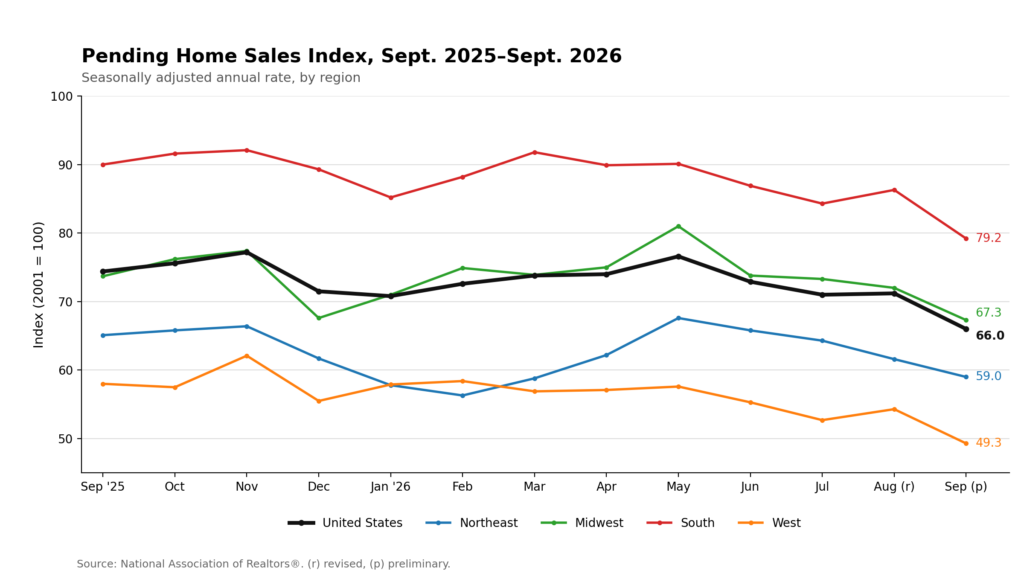
NAR Chief Economist Dr. Lawrence Yun said nosediving pending sales are directly tied to mortgage rates, which jumped past 7 percent during the last week of September and have since held between 7.23 percent and 7.66 percent, depending on the index.

Dr. Lawrence Yun
Rates, along with rising consumer price index (CPI) trends, have reduced buyers’ purchasing power by an average of $22,000. Strong job and income growth offset inflationary pressure through much of the year, Yun added, but not in September.
“Market conditions weakened in September due to fast-rising mortgage rates,” he said. “Although job growth and income gains can support home purchases, housing affordability is more affected by changes in mortgage rates.”
Realtor.com Senior Economist Hannah Jones said mortgage rates will likely continue to undercut homebuyer activity, limiting buyers’ ability to take advantage of the tailwinds they’ve been waiting for.
“The fall season typically favors buyers, and this year was no exception, with home asking prices falling for an 11th straight month in September, price reductions ticking higher and inventory climbing,” said in an email statement. “The market conditions buyers have been waiting for have arrived in much of the country, but with rates reaching their highest level in nearly three years, many households are finding they can’t capitalize, leaving them stuck on the sidelines just as the market tilts in their favor.”
A lack of new construction
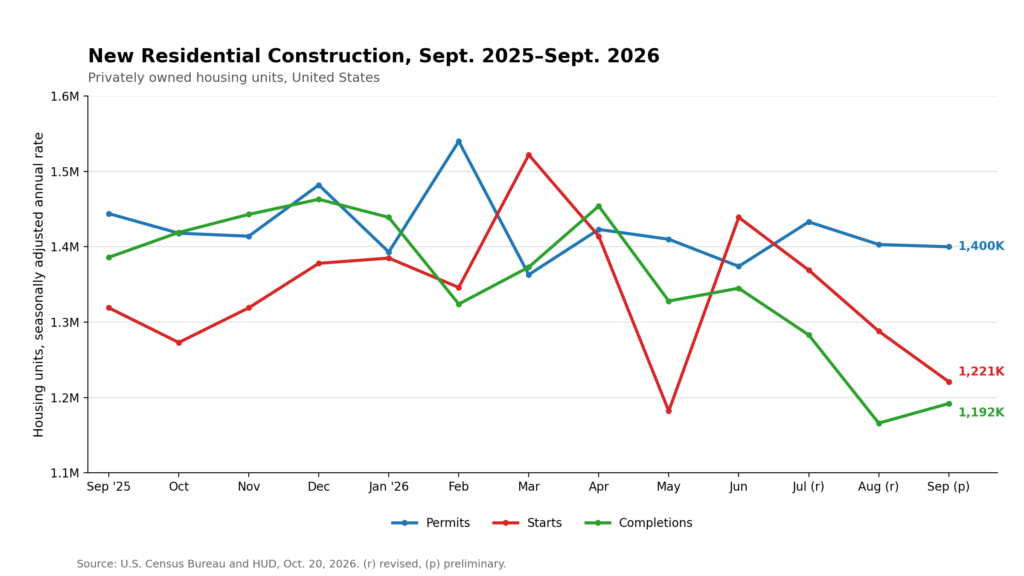
Mortgage rates also constrained homebuilders in September, with housing permits (-3 percent), starts (-7.4 percent) and completions (-14 percent) all declining year over year, according to the U.S. Census Bureau. Overall starts dropped 5.2 percent to a seasonally adjusted annual rate of 1.22 million.
The National Association of Home Builders (NAHB) said the decline reflects affordability challenges stemming from higher borrowing, land, labor and overall construction costs.
“Housing starts declined in September as high mortgage rates, persistent affordability challenges and rising construction costs held back homebuilding,” NAHB Chairman Bill Owens said. “High land, labor and construction costs are eroding builder confidence. A sustained increase in homebuilding is key to long-term affordability, but near-term construction depends on mortgage rates, financing conditions and efforts to ease regulatory barriers.”
A lackluster forecast
The forecast for pending sales and housing starts is dim, with NAR, the NAHB and Realtor.com saying declines will likely continue well into 2027.

Hannah Jones
Jones said mortgage rates will stay elevated, given the probability that the Federal Reserve will raise the federal funds rate again at its next meeting on Oct. 28. Mortgage rates don’t always move in tandem with short-term rate increases or declines, but they’re a helpful indicator.
“Mortgage rates are expected to stay elevated after the latest CPI data showed both headline and core inflation picking up,” she said. “As a result, markets are pricing in the possibility of another Fed rate hike before the end of the year.”
“Against that backdrop, buyers will likely keep facing tough affordability conditions through year-end, especially as wage growth runs below inflation and further erodes real buying power,” she added.
Yun did offer a sliver of hope in his remarks, saying the market could be at the upper end of feasible rate increases.
“Given that mortgage rates have already risen much more than the Federal Reserve’s short-term interest rate hikes, mortgage rates could be topping out,” he said. “However, increasing energy prices and the resulting inflationary pressure are highly uncertain.”

Joel Berner
As for builders, Realtor.com Senior Economist Joel Berner said pockets of opportunity remain, mainly in the South, where activity is still hot. Berner also said permitting trends signal that starts and completions could rebound sooner rather than later. In the meantime, buyers can find great deals on new builds, with price cuts and other incentives, such as rate buydowns.
“Builders are facing some challenges, and this month’s new construction data shows that clearly,” he told Inman. “On the flip side, buyers hold the negotiating power in the new home market and can find some exceptional deals on new homes. Mortgage rates are certainly a deterrent for prospective buyers, but our research shows that new home buyers, who often take advantage of reduced rate offerings from builders, pay as much as a full percentage point less on their mortgage.”