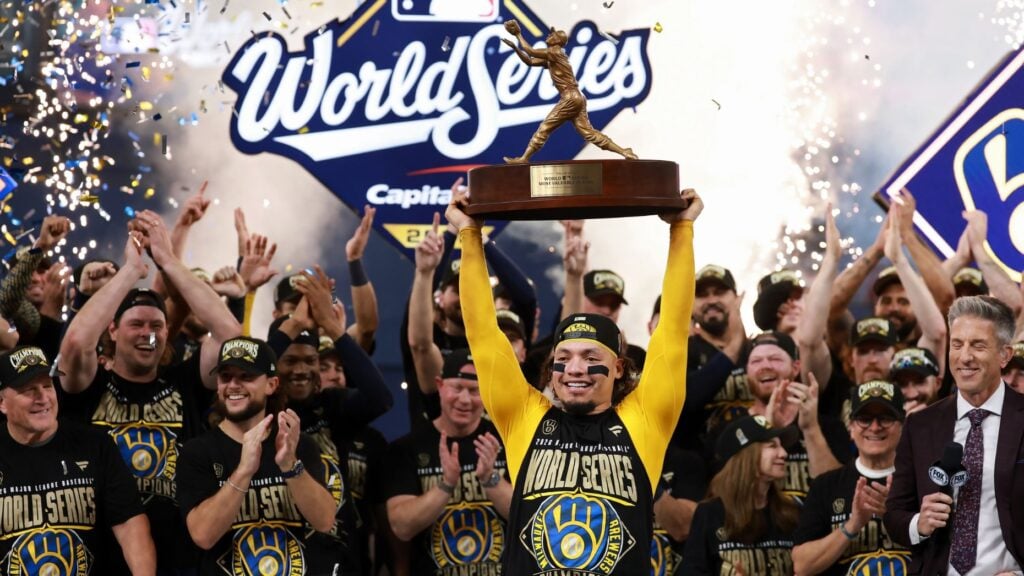

The Milwaukee Brewers just won the World Series, and while I love baseball, I’ve been watching with a question that has very little to do with it: What happens to your attention when the outcome matters more than you can afford to think about?
Nobody at the plate can win a championship with the swing they wish they’d taken last inning. The players can only deal with the pitch (or batter) in front of them.
That sounds obvious until you notice how often we walk into a seller conversation still arguing with the deal that fell apart yesterday.
What’s interesting to me is that baseball has stopped treating this as a personality trait. Both the Rays and the Brewers have extensive mental performance training programs (as do all Major League ball clubs), but most brokerages treat mental health as a wellness issue, not a performance one.
Whatever name your office gives this kind of work, baseball has made it somebody’s job.
The breathing specialist nobody took seriously
What makes this baseball tale useful to brokers and team leaders, though, is how much resistance the work still meets in a sport that has every reason to embrace it.
Andy McCullough’s recent reporting in The Athletic examines meditation in Major League Baseball, and I found the takeaways instructive.
For over two decades, most teams have invested in behavioral science and expanded their mental-performance staffs. It’s a sport that measures everything, with tens of millions of dollars on every roster, and it has decided the mental side is worth paying for.
What I find fascinating is that even as the evidence piles up, many players remain skeptical. Some call it “woo-woo.” One of the game’s best pitchers says he doesn’t need it. Coaches avoid the word “meditation” altogether because, as one put it, it intimidates people, and if you push it, they’ll tune you out.
My favorite part of the Athletic piece was this: The San Francisco Giants brought in a consultant, titled “Breathing Specialist,” and the players made jokes about it. The next season, the same man did the same work but with a new title: “Human Performance Coach,” and the resistance started to fall away.
By the time he left, about 15 players regularly attended his sessions (complete with Tibetan singing bowls). He concluded that the stigma had more to do with the title than the practice.
I don’t call it meditation when I train real estate teams either. But that doesn’t mean you can’t intentionally sharpen the skills involved.
Caring without getting captured
When the market tightens, brokerages usually prescribe more activity: more calls, more door knocks, more open houses. We can count activity, so we reach for it. Ballplayers do the same thing when they skip the mental work and take extra swings.
The trouble is that pressure narrows attention, and narrowed attention is as poor a state for a batter with two on, two outs, behind two, in the bottom of the ninth as it is for a seasoned agent on a listing appointment, a price-reduction conversation or a buyer about to walk.
Don’t get confused. This kind of performance coaching is not about caring less about the result; it’s about letting go of the need to make it happen. A hitter can care enormously about winning the World Series and still recognize that thinking about winning doesn’t help him see the next pitch.
The same is true when a seller is deciding whether to take your advice. You need the listing, but needing it more isn’t any more effective than gripping and swinging the bat harder.
The goal isn’t calm, either. Mental-performance people who work with ballplayers talk about finding a usable level of activation for the task, since too much overwhelms you and too little leaves you flat. I’m not trying to produce agents who feel peaceful about losing business. I’m trying to help them notice when fear has taken over the conversation so that they can let it go and hear the client again.
There’s sports research worth knowing here. One study of Division I basketball players found that higher measured mindfulness predicted better free-throw percentages in games, a 5.75-point delta, to be exact. A separate training study found something more useful: under high stress, the gap between athletes who trained their attention and those who didn’t was larger than under low stress.
I won’t tell you a practice will add a specific number to your agents’ closing rates. Nobody can honestly promise that, and even baseball struggles to quantify the benefit. What I will tell you is that the moments that make or break an agent’s year are high-pressure, and training for them is a performance issue, not a wellness perk.
Mindfulness for real estate: 3 moves this quarter
- Don’t call it meditation. Call it what it is: training attention under pressure. Baseball needed a title change to get players in the room, and you probably do, too.
- Run a small group, not an app. Most people who download a meditation app quit within weeks. A handful of agents meeting weekly, practicing daily and holding each other to it is a training program. An app is a content library.
- Measure something you already track. Before and after, look at a number your office already reports: appointments set, conversions, the share of listings priced right the first time. Test it like a business decision, because it is one.
In each World Series game, every player must let the last pitch go before the next one arrives. Your agents face the same job on a smaller stage every week.
You don’t need agents who identify as meditators. You need agents who can hear what a client is saying while a deal they “need” is coming apart. That capacity deserves practice before the conversation, not a reminder to calm down halfway through it.
Aaron Hendon is the Managing Broker for Christine & Company with eXp and a mindfulness teacher. Connect with Aaron on Instagram and LinkedIn.