Housing may not be on many ballots by name on Nov. 3, but it’s running through nearly every race.
With the midterms set for Tuesday, candidates from both parties are pitching voters on affordability. Lawmakers are campaigning on the recently passed 21st Century ROAD to Housing Act, states from California to Massachusetts are voting on measures meant to make building easier, and homebuilders are grappling with tariffs and immigration enforcement that have driven up costs and thinned out job-site crews.
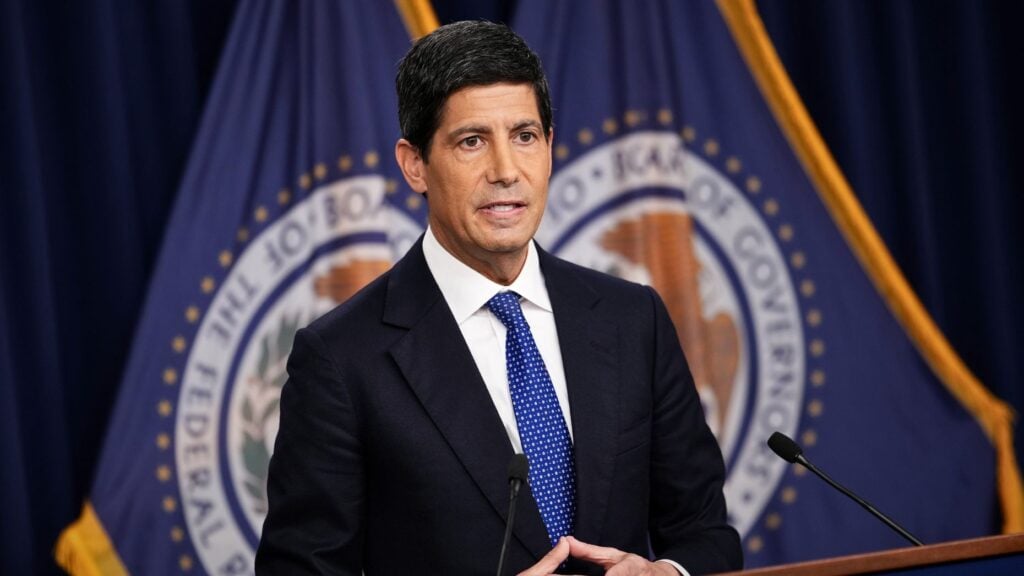
Inman spoke with Ken Wingert, chief advocacy officer at the National Association of Home Builders, about the races and ballot measures NAHB is watching, whether data centers are really competing with housing for land, and what agents should keep an eye on as votes are counted.
Inman: What are two or three outcomes to the midterms you think matter most for housing — on the federal- level and state-level?
Ken Wingert: The overall theme is that this is turning out to be, once again, an affordability election, and housing is at the top of that pain point … because we don’t have enough of it. So regardless of who controls Congress or who wins the governor’s race in any given state, I think housing will be near or at the top of the agenda going into 2027. That gives us, and other groups you’re probably talking to, a lot of opportunity to advocate for more housing supply.
On specific issues, people are starting to understand that supply matters. You’re seeing ballot initiatives in a number of states aimed at making it easier for builders to build and cutting some of that red tape. Members of Congress are running on the 21st Century ROAD to Housing Act. Congress is still debating permitting reform that may pass in the lame-duck session or get kicked to the next Congress.
From a congressional standpoint, if Democrats win at least one chamber, there will probably be more pushback and oversight on issues like tariffs and immigration, which have made it harder for builders to build more housing, or at least more expensive.
Are there specific races that NAHB is watching closely, at the state, federal or local level?
We’re not quite NAR size, but we’re involved in a lot. At the federal level, I think we’ll see how big a wave is, if one materializes, and whether it takes out some folks who have been very helpful on housing over the years.
Financial Services Chairman French Hill will be fine, I think, but he’s in a tighter race than expected. Mike Hill, chairman of the House Financial Services Subcommittee on Housing and Insurance, faces the same challenge. In Michigan, Bill Huizenga is a former Realtor and builder. Sherrod Brown, former chair of the Banking Committee, is potentially coming back to the Senate from Ohio. A lot of folks are watching that race.
But really, at the state level: California has a couple of ballot initiatives, one in particular we’ve been involved with on changes to CEQA, the California Environmental Quality Act. The legislature had made some changes, and this would codify them in state law. In Massachusetts, we’re supporting a ballot initiative that would reduce minimum lot sizes, meaning how big your lot has to be to build on it. And there are a bunch of funding ballot initiatives around the country. All of those aim to increase supply, so we’re keyed in on those state-level races.
I’ve seen candidates from both parties campaigning on the recently passed ROAD to Housing Act. Does that kind of policy achievement resonate with voters, or does a general affordability pitch resonate more?
Both parties are campaigning on the fact that Congress passed major housing legislation with overwhelming bipartisan support. Beyond affordability, another theme in this election is that people want less divisiveness and more collaboration to solve problems. ROAD to Housing was a great example of both parties giving up a few things to get a bill they wanted.
I don’t know that the average voter is digging into a bill with 60 titles, but they understand that Congress recognized a housing supply problem and is at least trying to fix it. If I’m running for Congress, that’s something I’m going to go out and tell people.
Have you noticed more local candidates running explicitly on pro-housing or YIMBY platforms? Any examples?
Our state and local associations make their own endorsements and funding decisions, so, honestly, I’m too far removed to say whether a certain state rep in Texas is doing X.

Ken Wingert
One interesting part of this election is that the NIMBY focus has shifted from housing to data centers. The recognition that we need more housing has shifted more in the YIMBY direction. That’s a dynamic we’re not encouraging, because data centers are a separate issue, but it’s been interesting.
Talking to our locals, more folks at the city council and county level, where the rubber really meets the road on development, are talking about the need to build more affordable and workforce housing.
We’ve seen in our own polling a real desire, and real angst, from younger voters who feel they can’t afford a home, and from their parents, who are also worried their kids can’t afford a home, may be living with them for a long time, and want them to stay in their state and area and raise their families there. That underlying affordability challenge is driving a lot of the rhetoric and, quite frankly, a lot of the ads. They may not mention housing specifically, but it’s embedded in broader affordability concerns.
You mentioned data centers. I’ve written a couple of stories about data centers competing with housing development for the same land. Is that something NAHB has seen? Is it a real phenomenon?
I think it’s a little overblown, at least right now. A lot of the areas where they’re looking to build data centers aren’t necessarily areas where you would build housing. So there may be some competition over land, but it’s not as big an issue as people may think.
The larger issue is competition for labor. Residential construction always competes with commercial construction for talent and labor, whether it’s somebody building an office building or a house. That competition is real, but it also means more investment in workforce training and more attention to the trades.
We’ve seen many large tech companies announce they’ll fund apprenticeship and training programs because they also need those workers. So there may be some trickle-down help for homebuilding. But it’s still too soon to see real impact, beyond utilities and similar things.
Speaking of labor, I’ve seen quite a few stories about how immigration policy and enforcement have affected construction labor. Has NAHB seen that, what’s your stance, and how have you worked with lawmakers on it?
We’ve definitely heard a lot about it, especially in the last few months. It’s been primarily in Southern states, but not exclusively.
The big concern from members is that the way enforcement is being carried out, whether at the local level, by ICE or some combination, is scaring off all Hispanic workers, regardless of immigration status or citizenship. They’re coming onto job sites, rounding everyone up and detaining folks for hours, repeatedly showing up or pulling people over in a van on the way to a job site. That’s made it very hard to retain workers or get them to show up, because there’s a fear factor in the Hispanic community about even U.S. citizens and green card holders getting roped in with folks who may not be here legally.
That’s caused delays on job sites and made it hard to find labor, period, because there’s no immediate replacement. That’s why we’re so focused on workforce training.
I think it’ll be a factor in places like Texas and Florida, and in the electoral outcome. You’re already seeing Hispanic turnout larger than historic levels. Some polling shows that even folks who supported the president on immigration, who maybe voted for him based on closing the border and enforcement, feel the enforcement has gone too far. It’ll be interesting to see what the exit polls show.
Inman’s core audience is real estate agents. What should agents pay the most attention to in these midterms? Does it depend on their local market, or is there something general to watch?
Disclosure: I used to work for NAR, too, so I understand where they’re coming from. I don’t know if there’s one particular issue, or whether it’s about the House or Senate flipping. It’s the overall voter mindset. If Congress changes control, or a governorship flips one way or the other, does it have an immediate impact? Does it change the [Trump] administration’s course? Those are all open questions.
Ultimately, voters hope inflation can be tamed, and interest rates obviously drive much of this for agents. Resolving the situation in Iran, and maybe dialing back some tariff policies, could affect the inflation numbers driving interest rates. If we can get rates back down, certainly below 7 percent and into the mid-6s, that will unlock a lot of demand that’s still out there but has moved to the sidelines over the last six months.
It’s hard to see how those things will change, no matter the outcome. They all feel very up in the air.
Yeah, but there’s a certain psyche to it. We saw this after the 2024 election. Everyone’s so wrapped up in politics now that people go into a weird holding pattern for the last month or two before an election. They say, “I’m going to wait until after the election and see, and then make a major decision.”
Uncertainty is a factor, and depending on your political outlook, you may be much happier on Nov. 4, or you may not be. But at least it resolves one more question mark for the next two years before we start a presidential cycle.
I hope that, whatever the outcome, having the election behind us will ease angst for potential buyers and sellers, calm the overall market, and get it moving again.
This interview has been edited for length and clarity.