
With Thanksgiving approaching, thoughts often turn to the historic events surrounding the birth of our nation. Our heritage. And nothing suggests heritage more than historic homes.
Ironically, our houses — even though categorized as historic — are young in comparison to Europe. In fact, the González–Álvarez House, built around 1723, is billed as The Oldest House because it’s believed to be the oldest house in St. Augustine, which is recognized as the oldest city in the U.S. Comparable homes in Europe can easily be centuries older.
What counts as a historic home
How do you categorize a “historic home?” I’m not referring here to an official designation from a municipality or state but a broader category of houses built before a certain time. For a house to be categorized as “old,” at a minimum it must have been built more than 50 years ago. From my perspective, however, I believe the line should be further back to properties built prior to the early 1940s.
Prior to World War 2, homes were usually custom-built for individual families and had features designed to set them apart from other homes in the area. With the need to consolidate workers around factories producing vehicles and armaments for the war, and funded primarily through the federal Lanham Act of 1940, mass-produced communities began to spring up, which focused not on individuality, but on the ability to duplicate identical buildings as quickly as possible.
This trend escalated as waves of GIs, looking to settle down upon their return, needed affordable homes to begin their new lives at home. The result was the birth of suburbia as thousands of homes were built outside of urban cores to accommodate the burgeoning need.
The case for character
As a result, it is possible to draw a line in the sand of history before which homes could be categorized as historic primarily because of the way they were constructed.
Personally, I love historic homes. I admire the character, the millwork, attention to detail and quirks that have been ironed out of modern homes by increasingly stringent building codes and changing tastes.
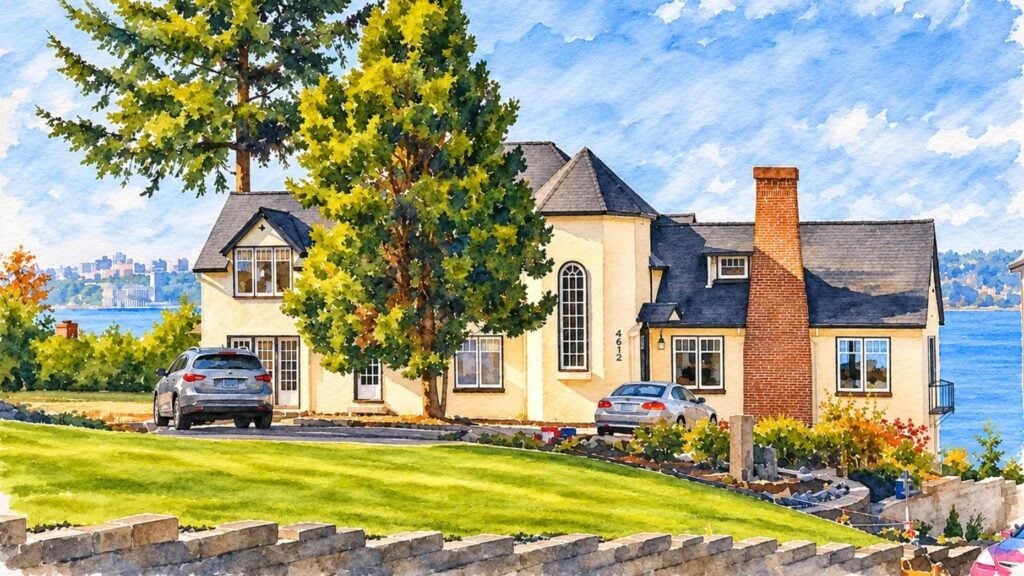
As an example, our home, a vintage 1928 French Provincial Revival with Tudor Revival influences, features coved ceilings, a turret, steeply pitched roofs, an asymmetrical façade, a number of fireplaces and tons of timeless old-world character.
It has a few doorways I have to stoop to pass through (this would not be possible with today’s building codes) and oozes with classic features and built-in millwork. It is also located in a historical neighborhood with many mature trees and large lots.
When I think of heritage and Thanksgiving, it always brings up memories of families gathered around a table enjoying a feast of some sort. One of the most iconic pictures of an American Thanksgiving is Norman Rockwell’s Thanksgiving cover for the Saturday Evening Post. Looking carefully, you will see classic historic home details, from the blue patterned wallpaper, lace curtains and white wainscot.
The hidden headaches
Not everything is champagne and roses, however. Historic properties all have one thing in common: They are old. Translated, this means the potential of lead, galvanized or cast-iron pipes (our home had all three), obsolete wiring (knob and tube), asbestos and other toxic materials, leaky single-pane windows, little or no insulation, plaster and lathe, ancient heating systems, “unsettling” foundation issues, dry rot, insect infestations and more.
Here are f5 questions would-be historic home buyers should ask:
- What is the primary reason you are interested in a historic property?
- Are you OK with segmented rooms (enclosed dining room, kitchen, etc.), small bedrooms, tiny closets, low handrails on stairs, non-conforming items (low doors, small stair treads, low basement ceilings, etc.), hardware that may be difficult to replace and so on?
- What is your comfort level for maintaining an elderly home?
- Do you have adequate reserves to cover unanticipated issues?
- If the home is largely unimproved, do you have adequate resources to update, including removing hazardous materials (including lead-based paint), redoing plumbing, removing and replacing antiquated electrical systems, upgrading heating (and cooling, if applicable) systems and more?
While a home on the West Coast may be ancient at 100 years of age, many East Coast homes were standing well before the West was even explored. Some of these properties were built with no interior plumbing or electrical and, in some cases, no foundations.
Bringing one of these homes up to modern living conditions can be a huge undertaking, especially if the overarching intent is to leave as many of the historical features in place as possible.
READ: No ‘Money Pit’! 14 things to watch for with historic homes
Bringing it back to life
While I understand that many do not want a historic property with all of its foibles, my wife and I searched for over 40 years before finding our current property. We wanted a home with character and charm not found in contemporary houses.
For years, we have made a habit of driving through historic neighborhoods whenever we had the chance, stopping frequently to admire a specific house or just soak in the beauty of the historic facades.
Looking for available properties close to family, the home we now live in popped up the same Saturday morning my wife was scheduled to fly into the area to spend time with grandkids. I sat for a moment and looked at the pictures, hardly believing such a home was available.
My wife called me from the property the next day and said, “Get your butt up here — you have to see this.” A week later, it was ours.
Many can move into historic properties that have been fully updated and modernized, but our home came with a caveat: It had been neglected for many years and, in fact, neighbors assumed we would tear it down and build a McMansion of some kind.
As we moved in and began the arduous task of bringing the home back to life, we realized it needed three new bathrooms, a kitchen, a roof, windows, refinished hardwood floors, a new heating system, major electrical upgrades, completely new plumbing throughout, a garage — and so much more. The standard joke from our neighbors was that we had a fan on our bank account blowing thousand-dollar bills down the street.
As we approach Thanksgiving this year, we feel blessed and grateful. In addition to the hours spent renovating and revitalizing our home, we’ve spent time sorting through records to learn more of our home’s history and, with the tasteful upgrades we’ve made, the historical character of the home is intact and, in a very real way, we feel connected to those who had the privilege of living here before us.
We are thankful.
Carl Medford is the CEO of The Medford Team.