
SpaceX’s IPO created an estimated 4,400 new millionaires overnight. Anthropic and OpenAI are reportedly next, with Stripe and Databricks rumored as potential future IPO candidates.
The wealth is already moving real estate markets in New York and the San Francisco Bay Area — and according to the people closest to those transactions, supply isn’t anywhere near ready to absorb it.
SpaceX completed the largest IPO in history on June 12, pricing shares at $135 and raising $75 billion, debuting at a roughly $1.8 trillion valuation. Shares jumped 19 percent on Day 1, pushing the company’s market cap past $2 trillion and making Elon Musk the world’s first trillionaire.
The listing, backed by a Starlink-rockets-AI business mix that posted $18.7 billion in 2025 revenue and a $4.9 billion net loss, is widely seen as the opening act of a broader artificial intelligence IPO wave that’s expected to include Anthropic and OpenAI.
Anthropic confidentially filed a draft S-1 with the SEC on June 1. No date, price, or share count has been set, but bankers and prediction markets are coalescing around an October 2026 Nasdaq listing.
OpenAI is now leaning toward delaying its IPO to 2027, after SpaceX’s stock tumbled from above $225 to $153 in the two weeks following its record debut.
Employee wealth creation is a genuine and substantial byproduct of these IPOs.
SpaceX’s debut alone generated tremendous employee wealth across a workforce far broader than just executives, and Anthropic and OpenAI are structured similarly after years of handing out equity during explosive valuation growth.
But it’s not the stated purpose. Companies cite capital needs, such as massive compute and data-center spending, as the driver, with employee liquidity arriving as a delayed consequence once lockup periods expire.
Either way, the IPOs are poised to affect the luxury housing markets in New York City and the San Francisco Bay Area. And in some cases, the impacts have already begun.
Tech wealth is flooding NYC rentals
According to one New York-based broker, the scale of these IPOs has no clean historical comparison.
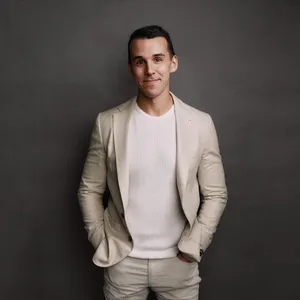
Ian Slater | Compass
Ian Slater, co-founder of New York brokerage Trove Partners, says even the dot-com boom doesn’t quite match it because that wealth was largely confined to San Francisco and the real estate market looked nothing like it does today.
The 2021 buying frenzy is closer in spirit, Slater says, but that was federal government stimulus money, not equity from companies this far into their life cycle going public all at once.
“I don’t think there’s ever been a moment in history when you’ve seen this many IPOs so late in a company’s life cycle, creating so much wealth at once,” Slater told Inman.
In New York, Slater said that almost none of this money is being used to buy homes yet. It’s renting them, at extreme price points.
Slater says he’s currently working with three tech clients with budgets ranging from $50,000 to $150,000 a month, and Manhattan luxury listings hit a near-20-year low in Q1 2026, down 27 percent annually, according to appraiser Jonathan Miller.
Slater couldn’t divulge too much detail due to privacy agreements, but by and large, his clients want to rent houses.
“Many of these people are coming from San Francisco and are used to having houses,” Slater said. “So either you’re looking at a very nice high-floor apartment, which is a unique New York thing, or they want homes.”
Slater said that one client moved to a very large rental on the Upper East Side, and another moved to the West Village. He also currently has another three tech clients looking for rentals.
“It’s not that they’re looking for anything hyper-unique,” he said. “It’s more about the immediate gratification.”
Slater said there are a few reasons why these tech employees are leaving California.
“One of the biggest trends we saw in 2021 was San Francisco going through a very tough period,” Slater said. “It was really hurt by COVID, and many people moved to Texas, Miami and New York.”
Slater added that many of these tech employees have been head down, working in San Francisco, there to make money and be part of that Silicon Valley ecosystem.
“They’re not really there for fun, for meeting people, for culture,” he said. “Once they cash out or are able to, they want to come to New York. They want to party, meet people, experience the city, send their kids to schools here. A lot of these San Francisco people are just kind of bored. It’s the same reason a lot of people move to New York from other places.”
‘Buy, borrow and die’
Slater explained that there are also various reasons why these newly wealthy tech employees are choosing to rent. One of those centers around the concept of “buy, borrow and die.”
“If you have a massive run-up in your stock price, instead of selling and triggering a taxable event, you can borrow against your stock, which doesn’t trigger a taxable event,” he said. “You hold on to the stock, and when you die, you get a death step-up. So you never have to pay capital gains tax, your kids never have to pay capital gains tax, and they can just repeat the process.”
Many lawmakers are trying to close this loophole. Slater said it’s similar on a smaller scale in the rental market: If you own stock that’s going up 30 percent per year, there’s a very low likelihood you’ll want to sell it, which is usually what’s required to buy the type of apartment or house these clients want.
“They can borrow against it or just use their incomes — which aren’t nearly as high as the returns stocks can generate — to rent instead,” Slater said.
Slater said that the IPO wealth has also created a significant number of luxury renters because “these people tend to be much younger, and with younger, tech-oriented tenants, they want immediate gratification and they don’t like responsibility.”
“Renting absolves you of all of that,” he said. “You can move whenever you want, change your mind, and if anything breaks, it’s someone else’s problem. That mindset drives a lot of it.”
Slater also admits that the New York pied-à-terre tax, passed in May, is driving more rentals among this new cohort.
“None of these people are New York tax residents, or it’s fairly rare for them to be,” he said. “So renting makes a lot more sense than owning here because, at a high price point, you’re paying closing costs, carrying costs, and the pied-à-terre tax. All of it pushes more people into the rental market.”
‘A real fracture in society’
While New York’s new tech wealth is renting, the Bay Area is seeing it convert directly into homebuying demand.

Maor Greenberg | Spacial
Maor Greenberg, CEO and co-founder of Spacial, a Palo Alto-based construction tech firm, said that, from his perspective, demand in the Bay Area for luxury finished and move-in-ready homes has “really skyrocketed.”
“I’m aware of one home that sold two weeks before it was set to hit the market,” Greenberg told Inman. “It sold two weeks before it had even posted as ‘coming soon’ on Redfin.”
Greenberg said most of these buyers already have wealth management accounts set up and ready for the IPOs before the IPOs happen. Banks are also helping them secure financing in advance, even before they can liquidate.
Since SpaceX went public, Greenberg said the number of phone calls his company is receiving has increased. People are inquiring about $5 million to $6 million homes they want to build.
“I had three of those meetings just this past weekend,” he said. “And I believe Anthropic employees are already getting ready, because the IPO is coming. They’re either starting to look for homes or have bought something, and they’re just holding off on new construction or remodeling until after the event.”
The Bay Area housing market is among the most supply-constrained in the country, with San Francisco’s unsold inventory index sitting at just 1.2 months and the broader Bay Area at 2.2 months — well below the 4- to 6-month threshold considered balanced — while the regional median home price sits around $1.25 million.
California inventory actually fell 2.1 percent year over year in March 2026, meaning the new wave of tech IPO demand is landing on a market with essentially no slack to absorb it.
When asked how this new wave of luxury demand will impact the market, Greenberg was blunt.
“Honestly? It creates a real fracture in society,” he said. “What’s happening is that previously affordable homes aren’t affordable anymore.”
Greenberg pointed to East Palo Alto, where people used to buy a home for $400,000 to $500,000, and today homes are already selling for $1.5 million to $2 million. “The house that needs to be torn down costs $1.2 million,” he said.
Greenberg added that cities such as San Francisco are changing their character and losing their middle class.
“Everyone wants to be near the best schools, so you’re also seeing a rise in private schools,” he said. “People who suddenly have a lot of cash also tend to want security, like gated communities and controlled access. It widens the separation between classes.”
Rich on paper, locked out of cash — for now
One of the things that complicates the rental deals Slater has been working on in New York with his tech clients is the lockup period for their company stock.
A lockup period means that if someone holds stock in a company that goes public, they can’t sell it right away once it becomes publicly traded. It’s a protection so the stock doesn’t crash immediately.
Slater explained that in a housing transaction, if a client has a lockup period and is planning to sell stock to buy or rent a home, you need to understand how long that period is because the valuation can change. A lot of the clients he is working with have six-month lockups, or tiered ones where they can access some at one point, more at another.
“I have a client right now who’s heavily invested in SpaceX,” Slater said. “They technically have a bunch of liquid stock, but they can’t access any of the money for a year. So they can look, but they can’t do anything for a while.”
He said those people tend to be more interested in pre-leasing new developments — buildings that won’t be finished for a year or two. They’re eager to get in first and know the lockup will end before the building is done.
Slater gave another example of a client who’s heavily invested in Anthropic.
“He’s buying a building that will be finished in two years — he’ll theoretically be liquid about six months after Anthropic goes public — but he estimates the stock will keep climbing,” Slater said. “So he doesn’t really want to be closing on anything until around 2028 or 2029.”
This fall and winter, the money arrives
Slater said luxury real estate agents need to be prepared for this new wave of wealthy tech-employee clients, especially as the IPOs of Anthropic and OpenAI are expected later this year or next year.
“Agents in New York need to understand, to an extreme degree, how tech people get paid,” Slater said. “I run into this over and over again, and so do co-ops. They’re used to clean financials they understand, and now you’re getting stock options, lockup periods, really confusing paperwork and sometimes private information that can’t legally be shared about how much money someone actually has.”
Slater said this new rental cohort in New York can’t always get into co-ops, and sometimes they can’t even define their own net worth on paper because so much of it is illiquid and held in private stock.
He thinks there will be continued demand for renting until the stock market shifts significantly.
“It’s going to take a lot for people to sell out of these positions and pay the taxes when the market is this high,” he said. “If it takes a major dip, it will be a different scenario. But agents need to uncover as much rental inventory as possible and understand that this is a real thing with legs.”
Lastly, Slater suggests New York real estate agents prepare for how much money is likely to enter the housing market in the fall and winter.
“It’s very much incoming at the moment,” he said.
 All July, it’s Luxury Month, and we’re going deep — surveying the market, spotlighting the top producers who own it and bringing you the playbook for breaking into high-end deals. The month caps off at Luxury Connect in San Diego, where we’ll announce this year’s Golden I Club honorees.