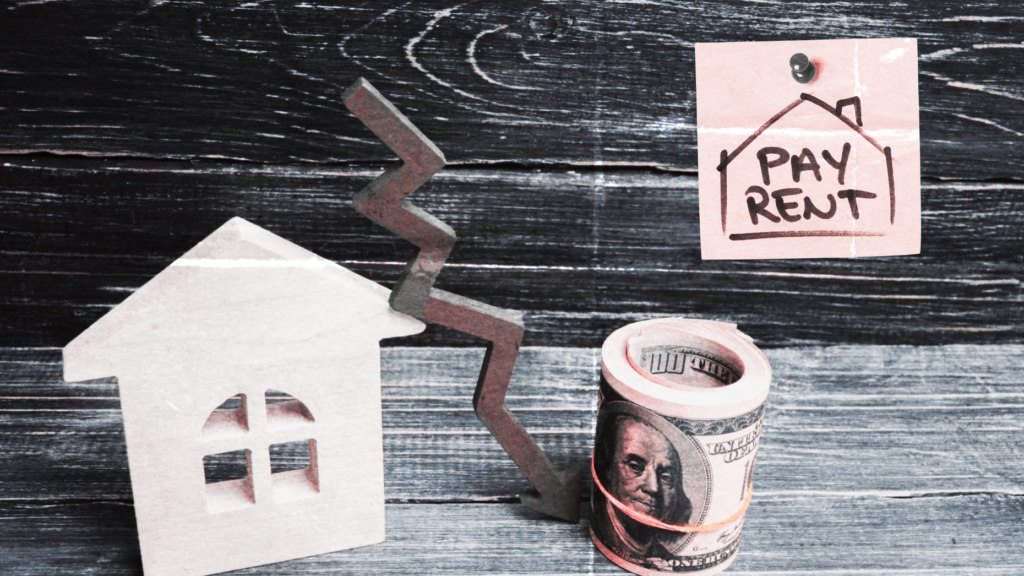

The median asking rent in the nation’s 50 largest metros fell to $1,692 in June, down 1.5 percent year over year, according to Realtor.com’s June 2026 Rent Report. It was the 35th consecutive month of annual declines.
But where that relief actually shows up next may depend on a question cities are answering very differently: Are they building, or are they legislating?
Nationally, rent is now $72, or 4.1 percent, below its 2022 peak, though still $238, or 16.4 percent, above pre-pandemic levels.
In the report released Tuesday, Realtor.com credits a multiyear boom in multifamily construction for outpacing demand and driving the streak. But that boom isn’t evenly distributed, and the report’s permitting data shows the gap widening between cities leaning into supply and cities leaning into regulation.

Jiayi Xu
“This didn’t happen by accident. Builders spent years playing catch-up after the pandemic rent spike, and that supply is why rents have fallen for nearly three years straight,” Jiayi Xu, economist at Realtor.com, said in the report. “Now it comes down to geography: Cities like Columbus, Ohio, and Orlando, Florida, are ramping up construction and are set up for more relief, while places like New York and Boston pulled back, which may raise concerns about the affordability path ahead.”
Supply matters. But is it the whole story?
Builders pulled permits for 302,730 multifamily units nationally in 2025. That was up 1.9 percent from 2024, but still 13.1 percent below 2019 levels and 34.4 percent off the 2022 peak. According to Realtor.com, the metros seeing the most rent relief track closely with where permitting has run hottest.
This mostly holds true after analyzing Realtor.com’s data table of the 50 largest U.S. metropolitan areas, which lists year-over-year rental price fluctuations and multifamily units permitted per 1,000 residents in 2025. Across the 46 U.S. metros with complete data, year-over-year rent growth and 2025 permitting rates show only a weak negative correlation.
Inman’s analysis of the data table shows the correlation is directionally consistent with Realtor.com’s framing that more building cools rent, but not necessarily statistically significant. Permitting alone explains roughly 4 percent of the variation in rent growth across metros.
Ten metro areas saw year-over-year rent increases in June, including Baltimore, Chicago, Kansas City, Minneapolis, New York and San Francisco. The average permit rate across those 10 metros with year-over-year rent increases was 1.12 units per 1,000 residents. That is well below the national permit rate and lower than metros with falling rent tend to run.
For comparison, that’s roughly half the permit rate of Columbus, Ohio (4.3) or Orlando, Florida (4.5), the report’s fastest-building cities, and reinforces the loose pattern: Cities with rising rent tend to have lower permitting, even though the correlation across the full dataset is relatively weak.
Some cities fit the narrative cleanly. Austin, Texas; Columbus, Ohio; and Orlando, Florida, all combine high permitting with falling rent. New York; Virginia Beach, Virginia; and Pittsburgh combine low permitting with rising rent.
San Jose, California, breaks the correlation. Permitting there is mid-pack, not depressed, yet rent is up 3.3 percent year over year, the highest in the dataset. Memphis breaks the correlation from the other direction. The city has the lowest permit rate in the set, paired with one of the steepest rent declines.
In addition to multifamily permitting, demand-side forces may also impact rental prices, including job and wage growth, migration patterns, and mortgage rates, which keep people renting longer.
Other supply factors, such as existing vacancy rates and competition from build-to-rent housing, also likely matter as much as, or more than, permitting alone.
The relationship may also be understated by using asking rent instead of effective rent, which misses concessions landlords use in soft markets, and by the small 46-metro sample size.
The slowest builders are fighting over rent control
New York and Boston are both in the midst of a fight over rent control this year. New York City’s Rent Guidelines Board approved a rent freeze, and Massachusetts’ Supreme Judicial Court struck down a statewide rent control ballot initiative.
Both are also simultaneously building at their slowest pace since 2019. New York permitted 1.6 new multifamily units per 1,000 residents in 2025, down from 2.3 in 2019. Boston permitted 1.1, down from 2.0.
In June, New York’s median asking rent rose year-over-year by 1.7 percent to $2,968. In Boston, the median asking rent declined 4.1 percent year over year, but it was still at $2,903, among the highest asking rents of all the 50 largest U.S. metro areas included in Realtor.com’s report.
Washington, D.C., and Seattle show a similar pattern. Both cities are permitting at their lowest rates in the past seven years, even as asking rents in D.C. and Seattle sit above the national median.
“Rent control and rent freezes can protect the renters already in a unit, but they don’t do anything to bring the market rate down for everyone else,” Xu said. “Sustainably lower rent comes from more supply, and right now that effort looks very different from city to city.”
Where more supply is actually showing up in rent
Columbus, Ohio, is the report’s clearest counterexample.
The city is permitting at its fastest pace since 2019 — 4.3 units per 1,000 residents in 2025, more than double its 2019 rate. This is being helped by its “Zone In” zoning overhaul, which the city projects could enable up to 88,000 new homes over the next decade. Median asking rent there is $1,180, down 1.5 percent year over year.
Florida tells a similar story after a rough 2024. Orlando, Florida, permitting rebounded to 4.5 units per 1,000 residents in 2025, and asking rent there fell 1.9 percent to $1,683. Miami permitting climbed to 2.6, and rent there dropped 2.6 percent to $2,277.
Las Vegas also hit its highest permit rate since 2019, though Realtor.com frames that more as a rebound from a 2024 dip than genuinely new momentum.
Cleveland, Oklahoma City and Birmingham, Alabama, are climbing too, each off a historically low base. The median asking rents across those cities have declined between 1 percent and 2.1 percent year over year.
What this means for agents
San Jose, California, is the outlier that complicates the building-solves-everything theory.
Permitting there rebounded alongside the broader supply boom, but asking rent still hit $3,423 in June. That’s the highest asking rent in Realtor.com’s data history, which stretches back to March 2019, and up 3.3 percent year over year.
Realtor.com attributes it to the AI boom in the Bay Area continuing to outpace new supply, which may or may not allow a rebound.
For real estate agents working rental-heavy markets, the split is worth tracking client-by-client rather than city-by-city.
A renter in Columbus, Ohio, or Orlando, Florida, is operating in a market that’s actively loosening. A renter in New York, Boston or San Jose is not, regardless of what local policy promises.
Agents in supply-constrained metros may find rent-control debates dominating client conversations, even as the underlying data suggests it won’t move their numbers.
Realtor.com expects year-over-year rent declines to continue through 2026, despite a seasonal summer bump, as construction already in the pipeline continues to work through the market.