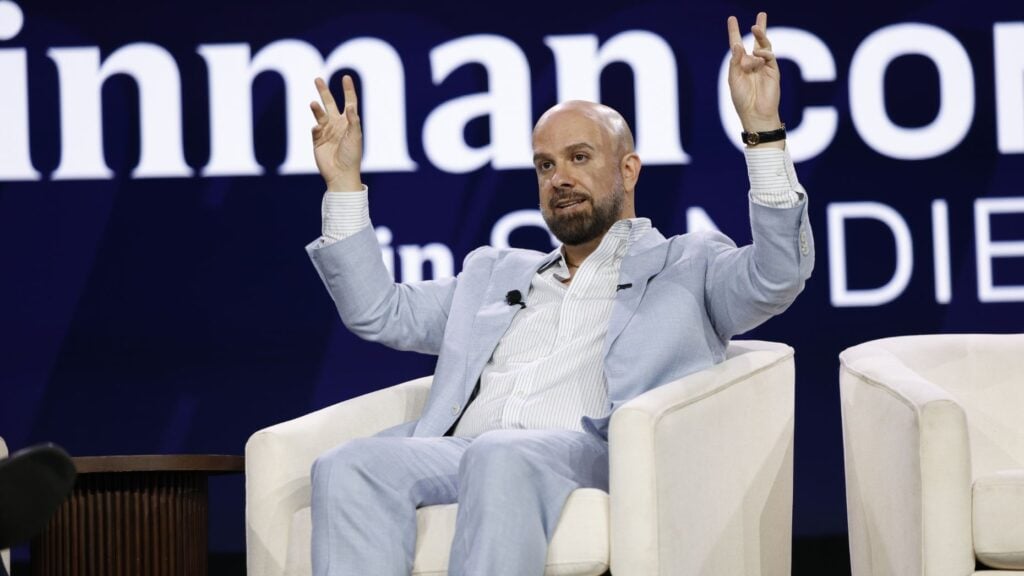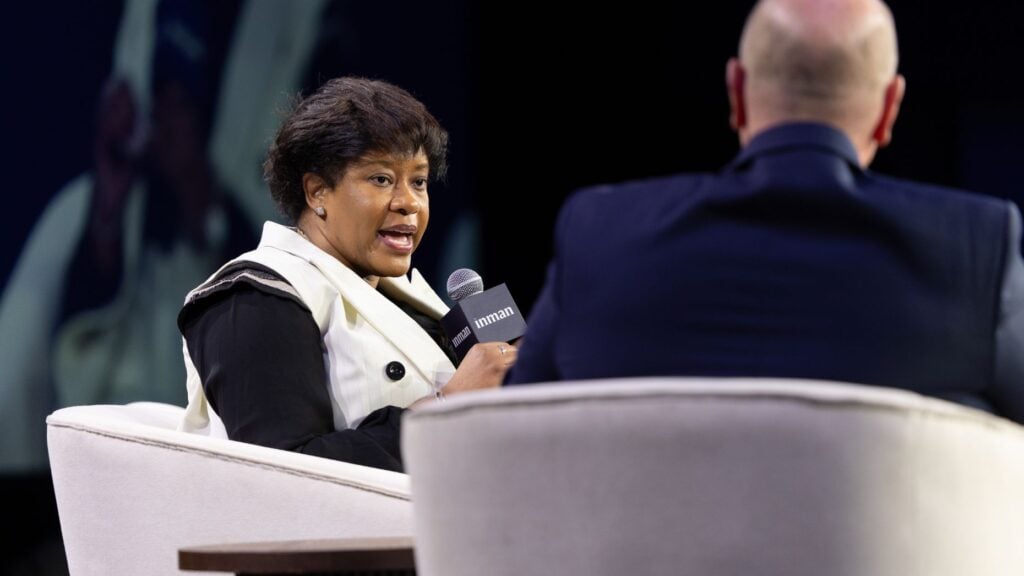

SAN DIEGO — Nykia Wright didn’t hold back when asked about media coverage of the National Association of Realtors at Inman Connect San Diego.
During the event’s NAR Unfiltered session, Wright had a candid conversation with Inman CEO Tom Bohn, who asked the NAR CEO whether trade outlets like Inman are doing a good job covering the association’s successes or leaning too heavily into “clickbait”.
Wright responded by asking Bohn whether he had just answered his own question, drawing a mixed reaction of laughs, gasps and murmurs from the audience.
The exchange came five months into what Wright has described as a turnaround at NAR. Over the course of the session, she detailed how the association’s Strategic Plan is playing out for members, how NAR has restructured internally and legally since the Sitzer | Burnett settlement, and what she believes still stands between the association and rebuilding member trust.
Rebuilding trust with members
Wright said reaching NAR’s 1.4 million members remains the hardest part of the turnaround. She described a member base whose attention is already divided among family, business and other demands, making it difficult to reach people “at the optimum time.”
She said NAR now runs continuous focus groups and surveys each quarter to test whether its messaging is resonating, a practice she said the association did not previously prioritize. Members who tell her NAR “hasn’t done this,” she said, are often met with evidence the association has, in fact, already acted.
Reshaping the organization
Wright said NAR conducted layoffs for the first time in its history as part of the turnaround, alongside hiring outside leaders in communications and human resources from companies including Google, Politico and HBO. She said the goal was matching people’s talents to what the moment required, describing the culture shift as one built on urgency.
She contrasted the current period with what she called a “steady state business,” saying the scale of NAR’s turnaround has required drawing on her full professional background, from budget decisions to legislative relationships to marketing strategy.
Managing legal risk
Wright told the audience NAR’s legal department looks nothing like it did three years ago. She said the association has since built out a team that includes what she called “top antitrust attorneys from around the country,” brought on after NAR faced two dozen lawsuits and a Department of Justice investigation, and reached the Sitzer | Burnett settlement.
She described a monitoring system meant to catch legal risk before it reaches NAR directly, saying the team tracks court cases and media coverage, including Inman’s, to flag developments that could affect members.
Wright also pointed to a tension she said NAR has to manage in real time: the difference between collaboration and collusion. She said too much coordination among industry players risks drawing scrutiny from the Department of Justice, and NAR weighs that risk in decisions ranging from budget calls to how it responds to broker concerns.
She did not provide the size of the new legal team, its budget or specific hires beyond the general description.
What worries her most
Asked what concerns her most about the industry beyond market economics, Wright pointed to what she described as the anger driving legal strategy across the industry. She said the volume of litigation is putting stress on agents, consumers and journalists trying to understand the landscape alike.
She said she would use legal action differently than some in the industry have, attributing her approach to having built her career without the benefit of financial abundance.
On competition
Asked about a newer competing association, Wright characterized it as ordinary competition rather than a serious threat. She said NAR does not disrespect its competitors, citing lessons from the book Why Smart Executives Fail, but drew a distinction between NAR’s structure, including its registration and scrutiny as a political action committee, and what she called a “cocktail napkin business plan” at rival organizations.
Her standard for media coverage
Wright offered more on the subject of media coverage, citing her own media background and laying out four expectations she said she holds for journalists covering NAR:
- Understand the economics of the story before writing it
- Seek out both sides before publishing
- Give sources reasonable time to respond to a request for comment
- Apply the same scrutiny to NAR’s competitors that reporters apply to NAR
She said she expects that standard to apply broadly, not just to coverage of NAR specifically.