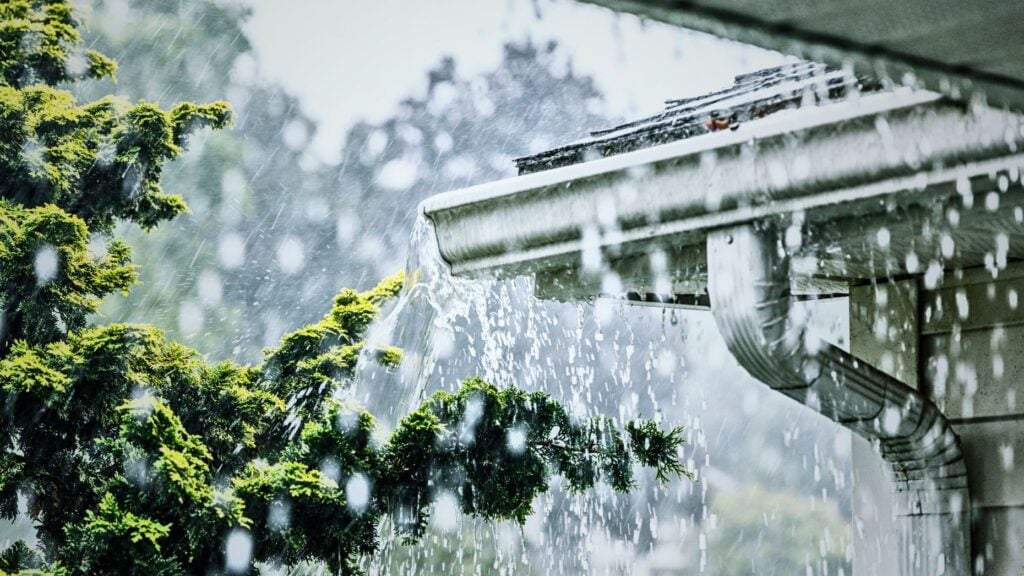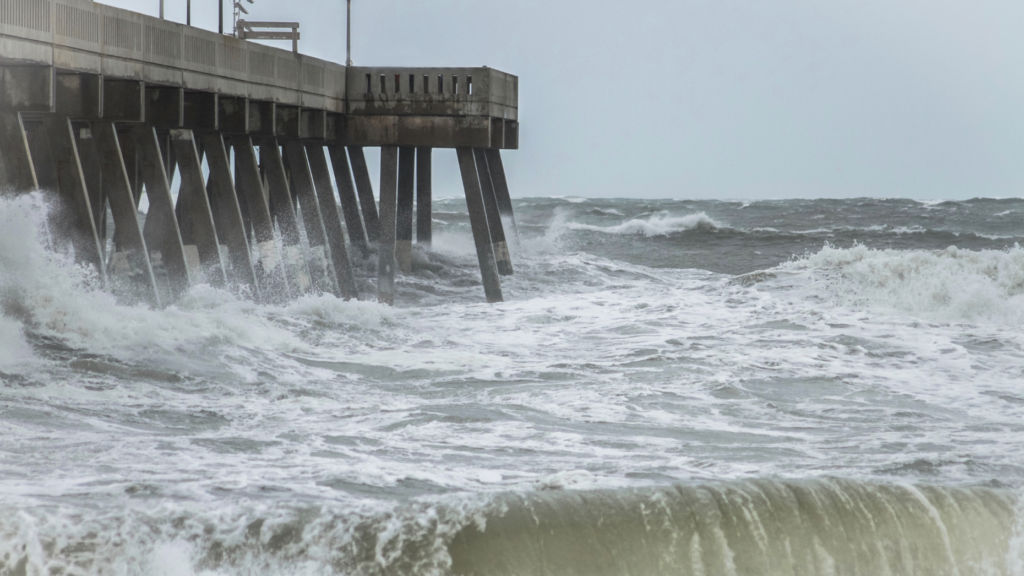
A powerful nor’easter has been battering the Atlantic Coast, leading to travel delays, coastal flooding, power outages and widespread debris. One incident led to the death of a Brooklyn, New York, man who was trapped underneath a downed tree.
Outside of the immediate impacts of the storm, homeowners along the eastern shore are grappling with a future where another nor’easter potentially pulls their most prized possessions into the ocean. Responsible agents who focus on these areas are also making sure that their clients are prepared when considering buying a home that may be impacted by severe weather.
Eroding shorelines — and fail-safes
Realtor.com analyzed six years of data from the U.S. Geological Survey National Shoreline Change Project, the National Park Service and the Cape Hatteras National Seashore, and found that the seashore erosion around North Carolina’s Outer Banks has begun to exceed more than 20 feet per year in some spots. That erosion has already claimed 32 homes, most of which were built in the 1980s and ’90s, when the shoreline was further out.
Cape Hatteras National Seashore Superintendent Dave Hallac told the portal on Friday that North Carolina state officials are diligently tracking erosion trends and, last November, compiled a list of 100 threatened structures in Rodanthe and Buxton, two of the hardest-hit communities. Since then, five of the homes on that list have succumbed to seashore erosion.
More could join the list in the coming week, Hallac said, as extreme tides damaged the state highway between Pea Island and Rodanthe. Local officials had built protective dunes ahead of the storm, but they couldn’t withstand the 15- to 18-foot waves that slammed the shore at the peak of the nor’easter on Thursday and Friday.
“If every one of those structures falls in,” he said, “there would be another 100 right behind them.”
Homeowners in the Outer Banks said they’re running out of solutions to save their homes. The luckiest have been able to use their remaining land and push their homes back, giving them precious time to strategize.
Others have been forced to see their homes slowly buckle and, in the meantime, wrestle with insurance providers over their claims. The Federal Emergency Management Agency (FEMA) oversees two flood policies — the National Flood Insurance Program (NFIP) and the Standard Flood Insurance Policy (SFIP). Neither option offers a clear path for homeowners losing their homes to high tides and erosion.
“The NFIP policy pays for a direct physical loss from flood,” Lisa Sharrard, a North Carolina flood insurance agent and Certified Floodplain Manager, told the portal. “So there has to [be] a flooding event, not normal high tide … The SFIP does not cover damage caused by gradual erosion.”
Even if the NFIP updated its policies to cover Outer Banks homeowners, the maximum payout for a standard policy is $250,000 — an amount that would only cover 35 percent of a median-priced home in the area.
“If they have a policy, the policy may pay if the house collapses due to erosion,” Sharrard added. “In the meantime, they have a house they cannot use and debris to clean up after. Most are trying to move if they can.”
“If you’re buying a property with a fairly substantial risk of not just erosion, but also flooding, you need to plan for the eventuality that this property may not exist in 30 years, or not exist in the capacity that you understand it right now.” — Jules Garcia, Christie’s International Real Estate New York
Insurers can’t keep up
Insurers are struggling to keep up with the demands of homeowners who’ve been flung into a world where major disasters are becoming more commonplace. Recent National Oceanic and Atmospheric Administration (NOAA) data revealed that the annual average of billion-dollar weather disasters in the U.S. has climbed from three per year in the 1980s to nearly 20 per year in the 2010s.
The nation’s largest insurers are pulling out of disaster-prone states such as California, Florida and Louisiana, and lenders are having an increasingly difficult time calculating a home’s risk. Propmodo dove into the dilemma on Sunday, talking to academics creating and testing new risk assessment models that could help insurers and officials better work out the financial side of shielding communities against climate change.
“Risk that is not measured does not get priced, and that is one of the things holding back much-needed preventive measures,” Propmodo reported. “Adaptation spending has to be justified against the damage that would have happened without the investment. When expected damage cannot be credibly estimated, the case for spending money to avoid it falls apart before it reaches a budget committee.”
Harvard Business School senior lecturer John Macomber told the publication that “people have a hard time calculating long-tail odds,” and that most state leaders have opted to “muddle through” their quandaries, rather than make a decision that would hurt their election chances.
Macomber has suggested that private players take matters into their own hands, pointing to a medical center in Houston that partnered with nearby institutions to fund upgrades that would make each building more floodproof. The lecturer said he’s unsure whether that model can be replicated at scale, but noted it’s worth a shot given failures at the public level.
Preparing for the realities of coastal life

Jules Garcia
In the meantime, homeowners across the country are preparing for what’s shaping up to be a historic El Niño. The Atlantic hurricane season has been oddly quiet with six tropical storms, while the Pacific is gearing up for its third category five hurricane. The winter is projected to be a mixed bag, with the worst storms expected to clobber the East Coast.
Christie’s International Real Estate New York’s Jules Garcia said agents play an important role in making sure consumers are prepared for the risks of shoreline living by having thorough conversations about climate risk, insurance options and financial planning if they find themselves in the same situation as the hundreds of households on the Outer Banks.
“The first part of due diligence is asking why they want to have a beach property,” he said. “Have you owned one before? Has your family had one before? Are you used to what comes with it? Is this just a flight of fancy, something that you thought about because you just think it’d be really cool to have a water view? Or have you determined this is what you really want?”
“A waterfront lifestyle is exactly that. It’s going to be a lifestyle purchase,” he added. “It’s not just something where you take it on and then try and cobble it together after. You’re truly going to be pragmatic and do the necessary preparedness so that in the event of these inclement weather patterns or expected weather patterns, you’re going to be OK one way or the other.”
Garcia said he has a multi-step process he takes every waterfront buyer through, which includes:
- Obtaining three insurance quotes and discussing them over the phone with the insurance broker
- Requesting flood declarations from the homeseller
- Asking for FEMA elevation certificates, which detail a building’s elevation relative to estimated floodwaters
- Checking permitting records for all updates made to the home, and understanding any remediation standards you’ll need to comply with
- Joining the home inspector walkthrough and creating a record of concerns or repairs needed
- Preparing an in-depth financial plan in case the home is destroyed by erosion, and they need to secure new housing
“It’s about taking ownership of the process,” he said. “Sorry if I sound preachy, but I come from a background where I spent almost 20 years in financial services. If you’re buying a property with a fairly substantial risk of not just erosion, but also flooding, you need to plan for the eventuality that this property may not exist in 30 years, or not exist in the capacity that you understand it right now.”