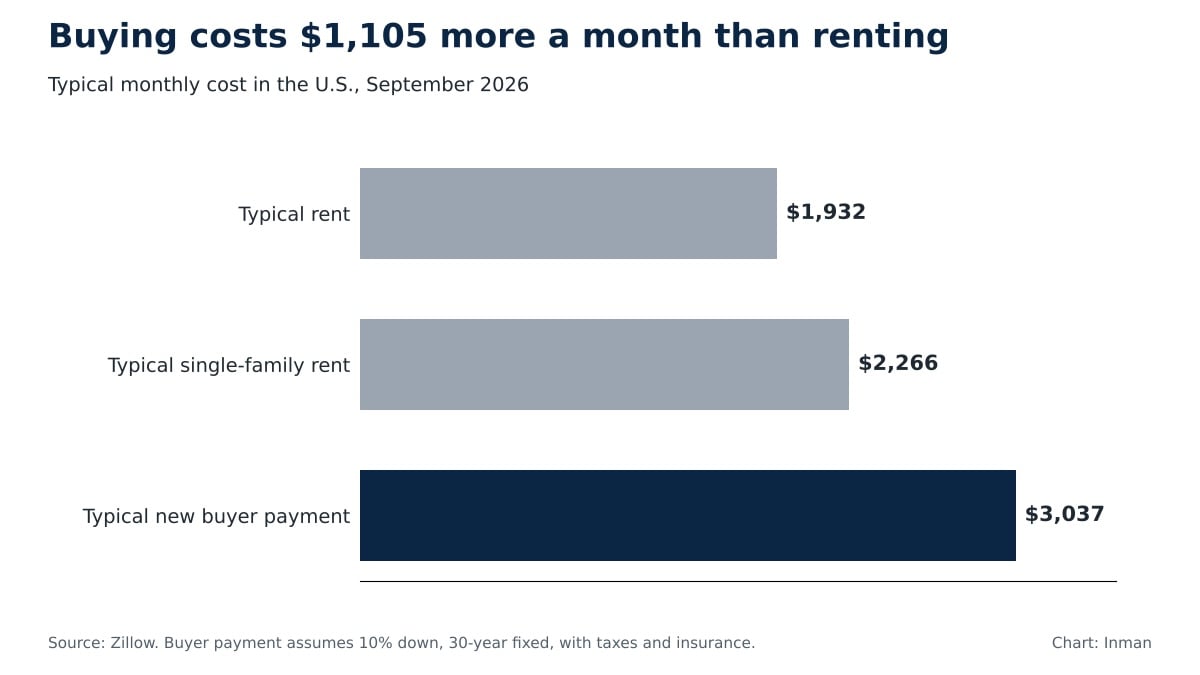
The typical new homebuyer pays $1,105 more per month than the typical renter, and Zillow says that the difference between renting vs. buying is turning would-be buyers into renters.
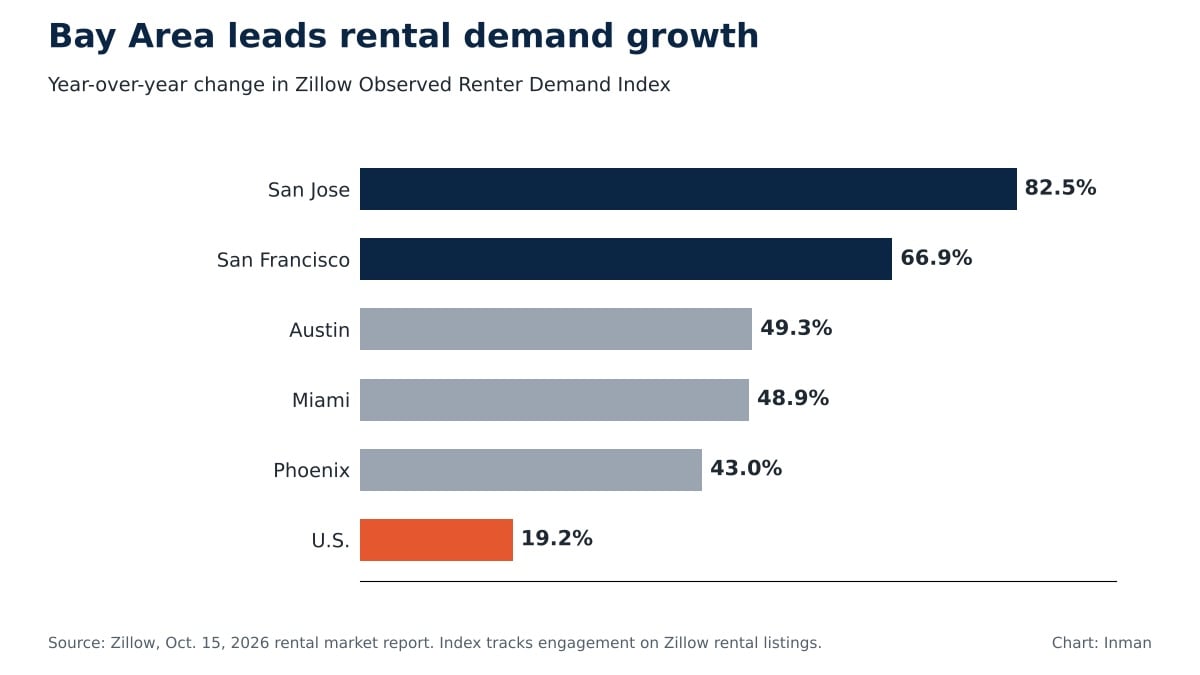
Rental demand rose 19.2 percent year over year, according to Zillow’s rental market report released Thursday. Zillow measures demand through engagement on its rental listings. The typical new buyer’s monthly payment climbed 5 percent from a year earlier, while typical rent rose 2.7 percent to $1,932 in September.
“Elevated mortgage rates have pushed homeshoppers straight into the arms of rentals,” Kara Ng, senior economist at Zillow, said in a statement. “Homeownership has long been a way for families to build wealth, but with the rise in borrowing costs, we’re seeing the rise of the deliberate renter, someone who chooses to bank the difference between a buyer’s monthly payment and rent, and build wealth without owning a home.”

Kara Ng | Credit: LinkedIn
A household needs an income of $77,278 to afford a typical rental and $121,496 to afford to own a typical home, according to Zillow. The median household spends 26.3 percent of its income on a new rental and 41.3 percent on a new home purchase.
Many of those renters want a house, Zillow reported. Demand for single-family rentals rose 21.6 percent, more than double the 10.1 percent increase for multifamily units. The typical single-family rent of $2,266 runs $771 a month below a buyer’s typical payment.
Realtor.com measures the market differently, tracking asking rents for studio, one- and two-bedroom units in the 50 largest metros. Its September rent report found the median asking rent fell 0.4 percent to $1,694. It was the 38th consecutive month of annual declines. That rent sits $214, or 14.5 percent, above the pre-pandemic level, and 43.9 percent of listings offered concessions.
“While asking rents are below their 2022 peak and concessions are still easy to find, for many households, relief is not the same as affordability,” Jiayi Xu, senior economist at Realtor.com, said in a statement.
AI hiring pushes Bay Area rents to records
Both reports put the Bay Area at the top of the rental market. San Jose, California’s median asking rent rose 6 percent to a record $3,565, according to Realtor.com. San Francisco’s rose 4.8 percent to $3,057, which is $48 below its summer 2022 peak. Realtor.com attributed the gains to the region’s AI boom drawing young professionals.
Landlords in both cities pulled back on incentives. The share of San Jose listings offering concessions fell from 51.9 percent to 24.3 percent over the past year. In San Francisco, it fell from 47.6 percent to 28.1 percent.
Zillow recorded rental demand gains of 82.5 percent in San Jose and 66.9 percent in San Francisco, the largest of the 50 metros in its report. Typical rent climbed 11.8 percent in San Francisco and 8.3 percent in San Jose.
Austin, Miami and Phoenix rounded out Zillow’s top five markets for demand growth. Rent growth in those metros held between 0.7 percent and 1.8 percent, which Zillow attributed to new construction keeping supply in step with demand.
Renters apply after hours
For agents who list rentals or manage leasing for investor clients, rising demand shows up in the application process. Fifty-five percent of those applications were completed outside 9 a.m. to 5 p.m. in the third quarter, according to the first quarterly report from leasing platform Findigs. Between 6 p.m. and midnight, the company’s network received 29 percent of the day’s applications and issued 12 percent of its decisions.
“Nobody wants to fill out a rental application from their desk at work, or while picking up their kids from school,” Findigs CEO Steve Carroll wrote in the report. “Renters apply nights and weekends, exactly when most property management teams don’t have anyone available to pick it up.”
That wait affects whether applicants follow through. For applications that took more than 48 hours to resolve, 18.2 percent ended in cancellation, according to Findigs. The rate was 2.2 percent for applications resolved within an hour. Carroll wrote that decisions across the industry often take one to three business days.
When a leasing agent made the final call, 22 percent of decisions came outside business hours, according to the company. The report draws on 68,689 applicant groups submitted from July 1 to Sept. 30 across 42 states and Washington, D.C.
Rents expected to soften this fall
Leasing activity typically slows in the fall, and Realtor.com expects rents to ease with it.
“As the market enters its typical fall slowdown, we forecast that monthly rents will soften, but the additional relief might be more limited,” Xu said.
By the numbers
- $1,105: Monthly difference between the typical new buyer’s payment and the typical rent (Zillow)
- 19.2 percent: Year-over-year rise in rental demand (Zillow)
- 21.6 percent: Rise in single-family rental demand, compared with 10.1 percent for multifamily (Zillow)
- $44,218: Additional annual income needed to afford a typical home instead of a typical rental (Zillow)
- $3,565: Record median asking rent in San Jose, up 6 percent (Realtor.com)
- 55 percent: Share of rental applications completed outside 9 a.m. to 5 p.m. (Findigs)