
For the past year, the real estate industry has been caught up in a fierce debate over private listing networks, multiple listing service (MLS) consolidation, and who has the final say over how listing data is displayed and distributed.
TAKE THE INMAN INTEL INDEX SURVEY
For National Association of Real Estate Brokers President Ashley Thomas, there’s an important piece of context that’s often overlooked: decades of discrimination that have etched itself into every facet of real estate — leading to weaker access to mortgages and financial assistance, lagging home price appreciation, lingering appraisal bias, and a widening homeownership gap.
“For the first 70 years of the organized real estate industry, we had a [listing system] that was not inclusive,” he said. “Black people, specifically, could not access that list, so we understand very well what it means to be on the outside and trying to get in… We’re not saying that discrimination or redlining is the intention [of PLNs], but it is the outcome. And that outcome cannot be supported.”
Thomas said the Juneteenth and Fourth of July holidays are the perfect time to discuss — and address — the historical context behind many of the conversations taking center stage today, like housing affordability, artificial intelligence and preserving a transparent multiple listing system. The NAREB president said both holidays are reminders of Black Americans’ fight for freedom and equality, which, he said, has always included access to real estate.
Black Americans created towns and communities despite a litany of broken promises — including a failed Reconstruction Era program that would’ve given some enslaved families ownership of the land they worked for centuries without pay.
Segregationist laws further complicated the push for equality, with Black Americans having every facet of their public lives controlled, from the schools they could attend, the restaurants they could eat in and the neighborhoods they could purchase homes in.
The Fair Housing Act and Civil Rights Act changed the playing field for Black Americans and many other minority groups; however, Thomas said discrimination is still weaving its way through American society — especially in real estate.
“I believe in the American Dream, which is homeownership. It’s key to what we do as an organization and how we move forward. But, in 2026, we still have financial institutions being fined and penalized for redlining,” he said. “As we move into Juneteenth and we move into the celebration of America being 250 years old, it’s a time to remember the barriers that still exist. I think it’s really time for our legislators, our practitioners and the industry to get very serious about addressing these issues.”

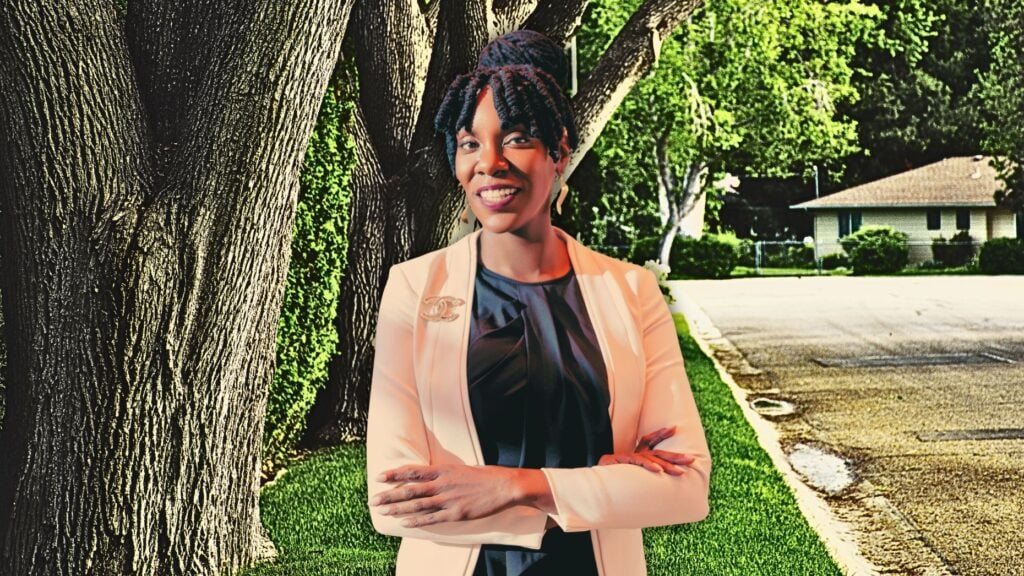
Ashley Thomas III | Credit: NARE
Thomas said combating discrimination is a multi-pronged effort that includes addressing housing affordability, access to mortgages and financial assistance, building equitable technology systems and preserving a transparent multiple listing service (MLS), which he said is key to upholding fair housing.
“The more time that goes by and we allow discriminatory policies and systems to stand, it waters down opportunities for the Black community,” he said. “The wealth gap and homeownership gap will continue to get wider and wider. We have to address it now.”
The following conversation has been edited for length and clarity.
Inman: Thank you for giving me some of your time this morning. I’ve read about you and your real estate journey, but I’d still love to learn more about your tenure as a leader at NAREB. What’s your mission?
Thomas: Absolutely. I’ve been in the industry for about 27 years. I started off in servicing and origination, really trying to help families start their homeownership journey on the right path, more so than trying to help them on the back-end when they’re trying to save their homes from foreclosure or whatnot. I’ve been a NAREB member for 16-plus years, and I have the incredible opportunity to serve as national president for the next two years. I went into office on Aug. 25.
There’s a lot happening in the industry right now, especially around MLS consolidation, private listing networks and who ultimately controls listing data. What’s NAREB’s take on MLS consolidation and PLNs? What does the data show about PLNs and how they impact Black consumers today?
Our position is very clear. Transparency is fair housing. Do [PLNs] pose a risk to Black buyers, Black sellers and Black agents? Absolutely. We don’t have to speculate that.
Zillow had a great report that came out last November, where they studied the Chicago area. Majority-white neighborhoods were more than twice as likely as Black neighborhoods to have private listings. I think it’s an unintended consequence, but in this age of technology, we have to be very careful about unintended consequences.
We’re not saying that discrimination or redlining is the intention [of PLNs], but it is the outcome. And that outcome cannot be supported.
That reminds me of an article I wrote in 2021 about pocket listings, which was the more popular term at the time. And the experts I interviewed explained how our market, despite the emergence of fair housing, is still impacted by decades of discriminatory real estate policies.
What do you think agents need to understand about the history of these policies, as they’re deciding how to approach the listing options that are being presented?
When we’re talking about private listings or internal brokerage listings, then we really have to look at the history of ‘The List.’
For the first 70 years of the organized real estate industry, we had a [listing system] that was not inclusive. Black people, specifically, could not access that list, so we understand very well what it means to be on the outside and trying to get in, and I think that’s replicated today through technology.
There were a lot of opportunities that our community was not able to obtain, and the consequences are still being felt today. The consequences are the struggle to build generational wealth and the loss of equity. This is a great time to talk about this, especially as we approach Juneteenth and celebrate what that holiday means.
We had people who did not know they were free (learn more about the history of Juneteenth here) , and for decades, Black sellers and buyers were locked out of a list that they didn’t know existed. So, there are some parallels there that we are very much invested in making sure they don’t exist.
So, again, transparency is fair housing. The more transparent you can be, the better it is for all parties involved.
What are the stakes for Black real estate professionals? How does consolidation and the stronger move toward PLNs impact them?
We’re not really focused on consolidation, whether it’s 800, 500, three or one. It really is about who controls the system and on what terms, right? Is it an individual brokerage that controls the system, pushing out many independent brokerages? About 70 percent of our membership is with an independent brokerage, so this trend is a very big problem for us.
I have a son; he’s 25 years old and in the industry. It’s very challenging [for Black professionals] to get up and going, and if you really look at it, for the same home that he puts on the market in a Black neighborhood, it’s undervalued by 20 percent versus the same exact home in a white neighborhood. That means that his income is 20 percent less, because we’re paid based on the sales price.
So, if you’re getting paid less and you’re doing less volume, and then we have a system that’s being created to keep you out of opportunity, that’s very dangerous for our industry as a whole, and I think anyone who understands fair housing and fair practices would agree with that.
Before our call, I researched NAREB’s history and how it was created to fill in the gap for Black professionals who were locked out of NAR. Could you share a little more about NAREB’s journey as an organization and how it’s specifically impacted the Black community?
In 1947, we were founded on the core principle of democracy in housing — everyone should be allowed to obtain the American Dream. However, it wasn’t until after the assassination of Dr. Martin Luther King, Jr., that we were able to have the passage of the Fair Housing Act.
But the homeownership gap has only widened since then, and Black homeownership rates are now about 30 percent lower than white homeownership rates.
And NAREB is at the forefront of closing that gap, and we’re focused on tackling bias through technology. If the data put into a system is biased, that’s exactly what will come out of the system. Just look at the fight to fix the appraisal system.
I’m glad that you brought up technology, which has been another big topic this year. There’s the push against data centers, which are predominantly built in lower-income, majority-minority communities. And then there’s the concern about establishing proper guardrails for AI use, especially as companies integrate the technology into every part of the transaction — from housing search to closing.
How has AI impacted NAREB’s mission to ensure fairness in technology?
I think when we’re talking about fair housing, it sometimes gets a little discouraging, and we get kind of worn down because it’s a moving target. Just when you think you have it, there’s another challenge that appears. Our theme for the year is closing the gap through advocacy, affordability and access — and access is a huge thing.
We talk about access to capital, but now we’re even talking about access to technology systems that are being built to exclude a certain portion of the population. We’re talking about MLS access, we’re talking about access to fair appraisals, which is still an issue, even though the social media spotlight on it has softened.
We’re working on policies to improve the appraisal process. We’re constantly reaching across the aisle to make sure everyone is part of this. Housing is a human rights issue, and shouldn’t be partisan.
What are your thoughts on the 21st Century ROAD to Housing Act? What parts of the bill are you particularly excited about? And what parts do you think need to be improved or even removed?
The bill, in its entirety, is something we support. Obviously, bringing more inventory to the market allows pricing to come down. One of the largest challenges that we have is affordability right now, and people of color, specifically Black people, face income inequalities in America, so it makes us less competitive for the properties that are available.
So being able to increase inventory is something that we greatly support. But we need to ensure there’s access to that additional inventory. We’re concerned about down payment assistance and helping first-generation homebuyers navigate the market.
I live in Los Angeles, and there are so many people, especially young people who are coming out of college, doing everything right and they still can’t afford their first home. Or they’re being forced to move and commute one or two hours [back to LA].
It’s a real challenge for all families, and we’ve been doing a lot of work. We had an Affordable Housing Bus Tour, and we actually were down the street from you in Tulsa. Fourteen percent of the population is Black, but they only make up 8 percent of mortgage originations. That’s the same in Gary, Indiana, and Memphis, Tennessee, places where we represent a majority of the population but are behind in access to mortgages.
Inventory without access doesn’t help our communities.