

Affordability is reshaping where Americans want to live, and a record share are willing to move to find it.
Nearly 1 in 5 U.S. house hunters looked to move to a different metro area in the first quarter of 2026, the highest share in records dating to 2021, according to a new Redfin analysis.
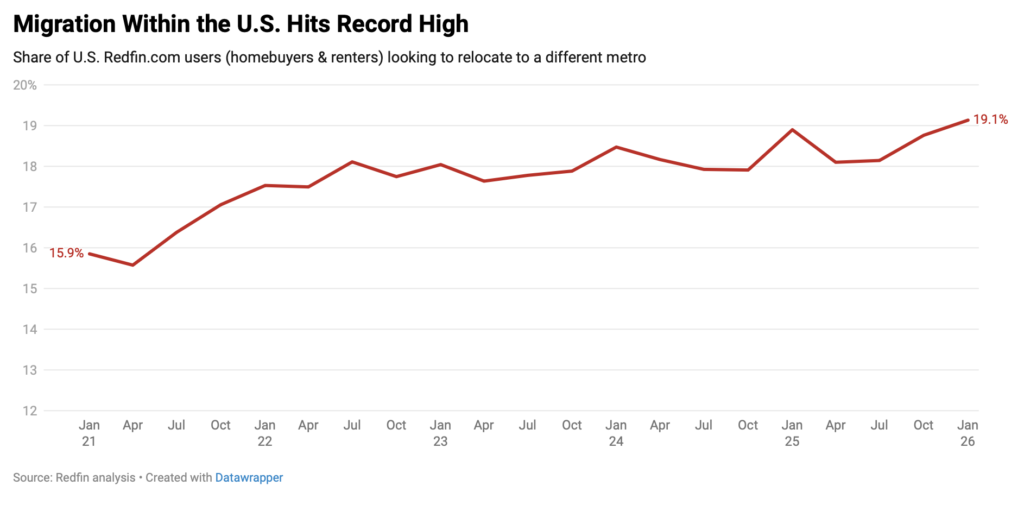
Redfin found that 19.1 percent of its users searched for homes outside their home metro in Q1, up from 18.9 percent a year earlier. Affordability pressure is the primary driver, the company said, with housing costs near record highs and inflation pushing up everyday expenses.
Florida dominated the list of top destinations, claiming four of the top six metros by net inflow. Orlando ranked No. 1, followed by North Port, Miami and Cape Coral. Las Vegas came in fifth, and Tampa sixth.
But the data also reflects a notable cooling. Miami’s net inflow fell to 6,576 in Q1 from more than 28,000 in 2022. North Port dropped from roughly 10,000 to about 7,000 over the same period.
Florida’s cooling mirrors a broader trend. The Wall Street Journal found that residents in their prime working years are leaving the state over affordability concerns, while the stream of new arrivals has shrunk. Home prices, soaring insurance rates and inflation that outpaced the national average have all contributed, The Journal reported.
Redfin’s data points to a separate but related dynamic it calls boomerang migration — not people returning to origin cities, but pandemic boomtowns losing the gains they made between 2020 and 2022. Austin went from a net inflow of 14,000 five years ago to a net outflow of roughly 300 in Q1. Charlotte, North Carolina, flipped from a net inflow of about 3,200 to a net outflow of about 1,700 over the same period.
New York, Seattle and Los Angeles led the list of metros people are leaving by net outflow. At the state level, California’s net outflow was roughly twice that of New York, the No. 2 state.
Remote work continues to enable relocation, Redfin noted, though return-to-office mandates have put some limits on movement from high-cost cities to Sun Belt markets.