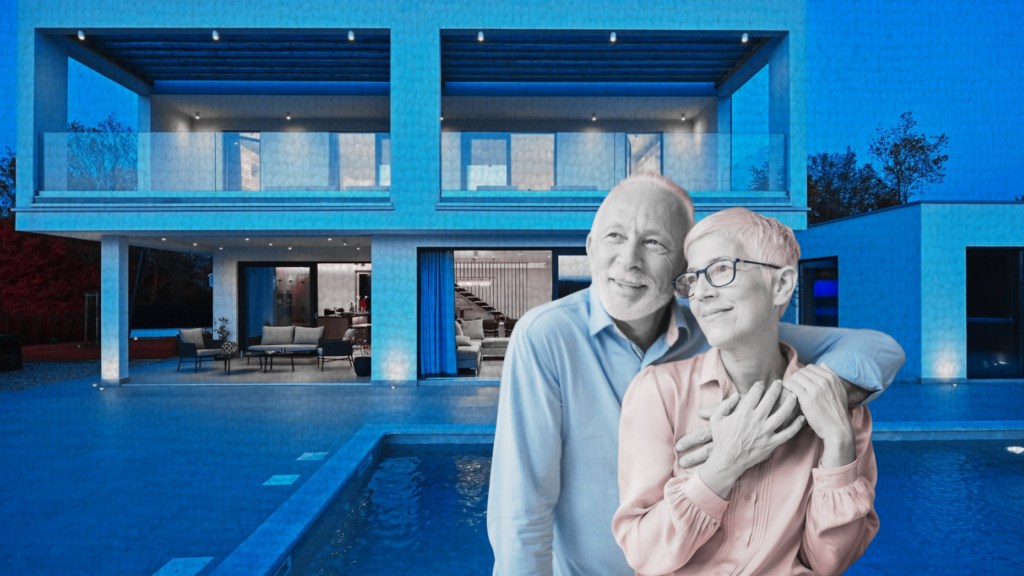

Nearly 38 percent of real estate agents working in the $10 million-and-above segment say aging in place has become a growing factor for buyers.
TAKE THE INMAN INTEL INDEX SURVEY
It’s a signal, according to Sotheby’s International Realty’s 2026 Mid-Year Luxury Outlook, that the property market’s long-operating generational churn is breaking down.
The report, drawing on input from Sotheby’s affiliated agents worldwide who specialize in $10 million-plus transactions, identifies longevity-driven living as the breakout trend reshaping high-net-worth homebuying this year.
Its data sources include the Federal Reserve, UBS Global Wealth Management, the National Association of Realtors and the Global Wellness Institute.
The headline thesis: Buyers aren’t downsizing on schedule anymore, and the entry-level luxury transaction is losing its defining logic.
Longevity is rewriting the luxury wishlist
The longevity angle isn’t anecdotal. According to UBS Global Wealth Management, the global longevity market, which spans medical technology, wellness products and services, and health-centered real estate, is projected to grow from $5.3 trillion in 2023 to $8 trillion by 2030.
Wellness real estate has more than doubled in size since 2019 and is projected to surpass $1.1 trillion by 2029, per the Global Wellness Institute.
The “forever buyer” isn’t necessarily older. It’s a buyer who’s selecting property with staying power as a primary criterion rather than resale or step-up potential.

Philip A. White Jr.
“It’s no longer just where folks want to live, but how they want to live as they age,” said Philip White, president and CEO of Sotheby’s International Realty. “What we are seeing in the industry is not a short-term change, but a sustained shift in how global wealth is stored, transferred, and expressed through property.”
5M new millionaires on the way
The wealth backdrop supporting that shift is substantial. The net worth of the top 1 percent of Americans reached a record of nearly $55 trillion in the fourth quarter of 2025, according to Federal Reserve data.
That figure provides the economic floor under sustained luxury market activity, even as the broader housing market has stalled due to rate sensitivity. The S&P 500 rose approximately 80 percent from early 2023 through 2025, and the report notes that crypto gains have also supported the index’s upper end.
More than half — 55 percent — of agents surveyed who specialize in $10 million-and-above properties reported an increase in luxury homebuyers over the past 12 months, with average price increases of 5 percent.
Nearly 40 percent of the world’s millionaires currently reside in the United States, and researchers cited in the report anticipate that 5 million new millionaires will emerge globally by 2029.
That supply of buyers is also getting younger. Sixty-six percent of agents surveyed reported an increase in millennial homebuyers, a figure that climbed to 73 percent among agents working in the $5 million-and-above segment.
Sotheby’s attributes the shift to earned wealth and accelerating intergenerational wealth transfers, a combination that has accelerated since the baby boomer estate transfer cycle picked up pace.
Lifestyle beats taxes, for now
On location, the report finds that global cities haven’t lost their appeal despite years of predictions of high-end urban flight.
Markets including New York City, San Francisco, Hong Kong and Milan continue to see steady activity at the top of the market, Sotheby’s reports, supported by sustained interest from international buyers in prime properties.
Lifestyle now outranks taxes as a purchase motivator, with 62 percent of agents surveyed citing it as an increasingly important factor — above taxes at 60 percent, economic stability at 53 percent and political stability at 49 percent.
That ranking may shift. The report flags the expansion of State and Local Tax Deductions (SALT) from $10,000 to $40,000 under the One Big Beautiful Bill Act as a factor anticipated to increase high-end purchases in states with elevated property tax rates, which could move the tax variable back up.
The trickle-down effect
For real estate agents working below the $10 million threshold, the longevity trend may have downstream implications.
If older, wealthier buyers are choosing to stay in their properties longer rather than downsizing, the supply compression that has defined the past three years may deepen at the upper-middle end of the market.
The “forever buyer” thesis, if it holds, also reshapes what agents pitch as lifestyle amenities. Health infrastructure, such as hospital proximity, fitness facilities, and walkability scores, may carry more weight in listing conversations than they did a decade ago, even at price points well below the ultra-luxury segment.
“Homebuyers aren’t just investing in a home,” said Bradley Nelson, Chief Marketing Officer at Sotheby’s International Realty. “They’re investing in how they want to live and age.”